I am a retired Naval Officer who is presently working as a Freelance Education Counselor. I am also writing several blogs starting from BestBookstoReadandListen, Travel, Adventure, Cricket and various activities about which I am passionate about.
My mission is to provide Free Education to over 24000 people over the next one year. My aim is to spread awareness about Fitness, Freedom from Diabetes and various activities related to its achievement. I enjoy reading and listening to Books and hence I am converting this hobby into a blog. I am sure all of you will enjoy your blogs.
I worked in the Indian Navy for about 34 years during which also I enjoyed reading and writing. I have several in service papers to my credit during my service. I have been awarded Vishist Seva Medal by the President of India. I have also been awarded Commendation by Chief of the Naval Staff and Flag Officer Commanding in Chief during my service with the Indian Navy.
I headed Warship Production Superintendent Organisation at Mazgaon Dock Limited which is involved in supervising the Warships being built there. I was closely involved with the Construction of Shivalik Class Stealth Frigates and also the Delhi class Stealth Destroyers for the Indian Navy. In addition I supervised the building for several crafts for the Indian Navy and closely monitored the Shipbuilding Yards in the Western Command.
I was also closely involved at Machinery Test Centre of Ship Building Centre where the indigenously built Arihant class submarines were built.
I served at Goa Shipyard Limited as a Director(Corporate Planning, Projects and Bussiness Development) on the Board of GSL. During my tenure several infrastructure projects were taken in hand and commissioned. Also several new business lines were given a fillip like the Boat building and also a line of Hovercrafts in Collaboration with a foreign vendor.
I am an avid technology fan and keep myself updated with various softwares and technology products in the market. At present I am also working as a Freelance art designer having learnt Adobe Illustrator, Adobe Photoshop and Adobe XD.
Please fill up this form to contact me. Enjoy your journey with my activities. Advice on any Books you have read and would like to read about. Thanks
The Amateur’s Edge: Why You Can Beat Wall Street’s “Smart Money”
Are you an average investor? Do you shop, eat, drive, and work? Good. Because according to Peter Lynch, one of America’s number-one money managers, the average investor can become an expert in their own field and can pick winning stocks just as effectively as Wall Street professionals.
The mantra is simple: You already have a built-in advantage over the experts. By simply observing business developments and taking notice of your immediate world—from the mall to the workplace—you can discover potentially successful companies before professional analysts do. This jump on the experts is what produces “tenbaggers,” stocks that appreciate tenfold or more and transform an average stock portfolio into a star performer.
Investment opportunities abound for the layperson. You don’t have to be trendy to succeed; in fact, many great investors, like Warren Buffett, are “technophobes” who don’t own what they don’t understand. Lynch himself was technophobic and understood companies like Dunkin’ Donuts and Chrysler, which both inhabited his portfolio.
The Disadvantage of “Smart Money”
Lynch’s Rule Number One is: Stop listening to professionals!. The so-called smart money is often exceedingly dumb, being wrong about 40 percent of the time. The amateur investor should outperform the experts, or else, why bother picking your own stocks?
Professionals often suffer from “Street Lag.” A stock isn’t usually attractive to large institutions until many respected Wall Street analysts have put it on the recommended list, meaning the amateurs have a huge head start.
For instance, the burial services company Service Corporation International (SCI) was overlooked by Wall Street oxymorons for years because it didn’t fit into standard industry classifications. Dunkin’ Donuts, a 25-bagger between 1977 and 1986, was followed by only a few regional brokerages, even as ordinary consumers noticed new franchises opening up.
Furthermore, fund managers frequently have restrictions, often being required to choose from limited lists of approved stocks, cutting out small, fast-growing opportunities that are often tenbaggers. Many portfolio managers are more concerned with not looking bad if they fail than with achieving unusually large profits. There is an unwritten rule: “You’ll never lose your job losing your client’s money in IBM”.
If you invest like an institution, you are doomed to perform like one, which often means performing poorly. As an individual, you don’t have a “Mr. Flint” hovering over your shoulder demanding immediate quarterly results or criticizing your choice of Agency Rent-A-Car instead of IBM.
Stalking the Tenbagger: Where to Look
The best place to begin looking for tenbaggers is close to home—at the shopping mall, the restaurant, or wherever you happen to work.
The Shopping Cart: Lynch’s wife, Carolyn, discovered L’eggs hosiery by going to the grocery store, realizing it was a superior product sold conveniently next to the razor blades. The fact that L’eggs was sold in grocery stores (visited twice a week) instead of department stores (visited every six weeks) made it an immensely popular idea.
The Workplace/Local Business: Executives, clerks, suppliers, and even cleaning contractors often observe a company’s success long before Wall Street analysts. For example, the success of Pep Boys was apparent to its employees and contractors. Similarly, customers and employees of 180,000 client firms could have known about the success of Automatic Data Processing, a 600-bagger over the long term, which uses computers to process paychecks.
Firsthand Experience: You develop a sense of what sells and what doesn’t during a lifetime of buying cars or cameras. Lynch found his best stocks through eating or shopping, sometimes long before professional stock hounds. He was impressed by Taco Bell’s burrito and liked Dunkin’ Donuts’ coffee. Customers and parents of college students likely noticed Cisco’s networking success.
Important Disclaimer: Simply liking a product or store is not enough reason to own the stock. Liking it is a good reason to get interested and put it on your research list, but you must do your homework on the company’s earnings prospects, financial condition, competitive position, and expansion plans before investing.
The Quest for the Perfect Stock
The ideal company is easy to understand, even simpleminded. “Any idiot could run this joint” is a plus, because sooner or later, any idiot probably will be running it.
Lynch identifies several favorable attributes of the perfect stock:
It Sounds Dull or Ridiculous: Boring names keep the professionals away. For instance, Pep Boys—Manny, Moe, and Jack is the “most promising name” Lynch has ever heard because it sounds ridiculous.
It Does Something DULL: Crown, Cork, and Seal makes cans and bottle caps—nothing boring about what happened to its shares, though. A company doing dull things gives you time to purchase the stock at a discount before it becomes trendy and overpriced.
It Does Something Disagreeable: Anything that makes people shrug, retch, or turn away is ideal. Safety-Kleen, which cleans greasy auto parts and recycles the sludge, and Service Corporation International (SCI), which does burials, were initially shunned by Wall Street, allowing amateur investors to buy shares in proven winners at much lower prices.
It’s a No-Growth Industry: Lynch prefers low-growth or no-growth industries (like plastic forks or funerals) because high-growth industries attract flocks of smart competitors and venture capitalists eager to make the product cheaper.
It’s Got a Niche: This is an exclusive franchise that competitors cannot easily invade. Examples include local rock pits (aggregate business) where trucking costs prevent rivals from competing, patented drugs (like Tagamet, which took years to patent), or powerful brand names (like Marlboro or Coca-Cola).
It’s a User of Technology: Instead of investing in competitive computer companies, invest in companies that benefit from technology price wars, such as Automatic Data Processing or supermarkets that install cost-cutting scanners.
The Company Is Buying Back Shares: This is the best way a company can reward investors, as it shows faith in its own future and helps increase the value of existing shares.
The Six Categories of Stocks
To properly research a company, you must first classify it.
Category
Description
Key Investment Approach
Slow Growers
Large, aging companies growing slowly, generally around 3% annually.
Typically bought for the dividend. Avoid wasting time on these sluggards if looking for stock price appreciation.
Good defense during recessions. Buy for a 30–50% gain, then consider selling and rotating into other similar issues.
Fast Growers
Small, aggressive new enterprises growing at 20–25% a year or more.
The prime source of 10-to-40-baggers. Look for room to expand within slow-growing industries.
Cyclicals
Companies whose profits rise and fall in regular, though unpredictable, cycles (e.g., auto, airlines, steel, chemical companies).
Timing is critical. If you have an edge (working in the industry), you may detect early signs of a falling off or picking up in business conditions.
Turnarounds
Battered, depressed, or failing companies (e.g., Chrysler, Lockheed, Con Ed).
Huge profits can be made if successful. Focus on whether they have rid themselves of unprofitable divisions or cut costs drastically.
Asset Plays
Companies whose stock value is understated relative to their hidden assets (e.g., real estate, timberland, oil, TV stations).
Look for the value of assets per share to exceed the stock price. Patience is key.
Developing the Story: Doing the Homework
Once you have a lead, the goal is to develop the “story” by checking the fundamentals. This ensures you don’t buy a stock just because you like the product.
The Two-Minute Drill
Before buying, you should be able to give a two-minute monologue covering why you are interested, what has to happen for the company to succeed, and the potential pitfalls.
For a Slow Grower: Focus on the dividend record. Has it increased earnings for ten years? Has it raised the dividend during good times and bad?.
For a Cyclical: Focus on business conditions. Is the slump ending? Are inventories down? Have prices turned up?.
For a Fast Grower: Where and how can it continue to grow fast? Is the successful formula being duplicated (cloning) in new markets? Is debt excessive?.
Analyzing Earnings (The Real Bottom Line)
If you can follow only one bit of data, follow the earnings—assuming the company has earnings. Sooner or later, earnings make or break an investment. Corporate profits are up sixtyfold since World War II, tracking the stock market’s rise.
Price/Earnings (P/E) Ratio: The P/E ratio is derived by dividing the current stock price by the company’s earnings for the prior twelve months. A P/E of 10 means it would take ten years for the company to earn back your initial investment if earnings stayed constant.
P/E and Growth: The P/E should be put in context with the growth rate. A 20-percent grower selling at a P/E of 20 is a much better buy than a 10-percent grower selling at a P/E of 10. As a rough guide, calculate the long-term growth rate plus dividend yield, divided by the P/E ratio; a result of 2 or better is excellent.
Five Ways to Increase Earnings: A company increases earnings by reducing costs, raising prices, expanding into new markets, selling more product in old markets, or closing/disposing of a losing operation. Use your “edge” to investigate which of these is happening.
Debt and Cash
Debt: Check the balance sheet to see if cash exceeds long-term debt. Companies with no debt can’t go bankrupt. In capital-intensive businesses (like hotels or manufacturing), high debt is a major concern.
Cash Flow: Focus on free cash flow, which is the cash left over after necessary capital spending is taken out. Companies that don’t depend on heavy capital spending (like Philip Morris or McDonald’s) have reliable cash flow.
Inventories
For a manufacturer or retailer, an inventory buildup (inventories growing faster than sales) is usually a red flag. If a retailer is holding on to old merchandise, the new stuff will compete with the old, eventually forcing price cuts and reducing profit.
Stocks I’d Avoid: The Danger Zones
Lynch advises avoiding several types of situations:
The Hottest Stock in the Hottest Industry: If every investor is talking about it, the stock has probably already levitated far beyond its underlying value, supported only by hope and thin air. When these stocks fall, they fall quickly. High-growth industries (e.g., carpets, electronics, disk drives) attract too much competition, often leading to price wars and no profits.
Whisper Stocks/Longshots: Companies with complicated, impressive concepts (like “gigaherz,” or monoclonal antibodies extracted from cows) but zero earnings. Understanding the P/E ratio is no problem because there is none. If the prospects are phenomenal, they will still be phenomenal next year. Wait for the earnings to be established.
The Middleman Trap: A company that sells 25 to 50 percent of its products to a single customer (e.g., a supplier heavily dependent on IBM) is in a precarious situation. The loss of that one customer would be catastrophic.
Beware of “Diworseification”: Companies that expand by buying unrelated businesses often overpay, expect too much, and mismanage them (e.g., Gillette expanding from razors into cosmetics and digital watches). Acquisitions should ideally be in a related business.
Beware of Oversized Companies: For a huge company like General Electric (nearly one percent of the entire U.S. gross national product) to double or triple in size in the foreseeable future is mathematically impossible. You generally do better with smaller companies in their rapid expansion phase.
The Long-Term View: Patience and Conviction
The stock market demands conviction. You must have the personal qualities to succeed: patience, self-reliance, common sense, tolerance for pain, persistence, humility, and the ability to ignore general panic.
Market Noise and Prediction
Ignore Short-Term Fluctuations: Lynch advises checking stock prices every six months, the way you check the oil in a car. What the stock price does today, tomorrow, or next week is only a distraction.
Predicting the market or the economy is futile. Lynch believes in buying great companies, especially those that are undervalued or underappreciated.
Stocks vs. Bonds: Long-term returns from stocks are superior to bonds. Historically, stocks have paid off fifteen times as well as corporate bonds, and well over thirty times better than Treasury bills. If you own good companies that continue to increase their earnings, you will do well.
Timing Traps (The Three Emotions): The unwary investor passes through concern, complacency, and capitulation. They are concerned after a drop (keeping them from buying bargains), complacent when stocks are rising (failing to check fundamentals), and finally capitulate and sell in a snit when prices fall below what they paid.
Dealing with Declines
Market declines (corrections of 10% or more, bear markets of 20% or more) occur every couple of years.
Market declines are great opportunities to buy stocks in companies you like.
If you’ve done the research, calamitous drops should not scare you out of the game.
A price drop in a good stock is only a tragedy if you sell at that price and never buy more.
You must be able to convince yourself, “When I’m down 25 percent, I’m a buyer,” and banish the fatal thought, “When I’m down 25 percent, I’m a seller”.
When to Sell
Knowing why you bought a stock helps you know when to say good-bye. The correct time to sell depends entirely on the company’s story and fundamentals.
For Stalwarts: Sell after achieving the expected 30-50% appreciation, especially if no new development suggests further upside.
For Fast Growers: Sell if the company has stopped expanding into new markets (entering the saturation phase), if the successful “cloning” model fails, or if they begin relying on acquisitions. Also, be cautious if the stock becomes highly popularized (e.g., three national magazines fawn over the CEO, and institutional ownership swells).
For Cyclicals: Sell when the market is booming, and you detect the beginning of the next business slump.
General Rules: Sell if the fundamentals deteriorate (e.g., debt increases, inventories pile up faster than sales), or if the original story is no longer intact. Never sell an outstanding fast grower just because its stock seems slightly overpriced—you could miss a multi-bagger.
Remember, you don’t need to make money on every stock you pick. Six out of ten winners is enough to produce an enviable record because your losses are limited (to 100% of your investment), while your gains have no absolute limit. Stick with them as long as the story is intact, and you might be pleasantly surprised by the results.
Final Thought: If you take away only one piece of data, remember this: the market ought to be irrelevant. Focus on the business, not the noise. You already possess the local knowledge and common sense necessary to succeed in this business; you just need to apply yourself to the research. Investing at least as much time and effort in choosing a new stock as you would in choosing a new refrigerator will serve you well.
Investing successfully is not like high-stakes gambling; it’s more like playing a long game of stud poker where you observe the cards, calculate the odds, and stay in the hand as long as the facts support success. You accept periodic losses, confident that your basic method will reward you over time.
The Random Walk to Wealth: Why Simple Investing Beats the Pros
The world of finance often seems complex, dominated by “experts” armed with sophisticated models, derivative instruments, and high-frequency trading platforms. Many believe the individual investor scarcely stands a chance against Wall Street’s professionals. But nothing could be further from the truth. In fact, adopting a straightforward, “time-tested strategy” can enable you to do as well as the experts—perhaps even better.
This is a guided tour, or “random walk,” down Wall Street, offering practical advice for successful investing. The foundation of this journey rests on understanding what a random walk is and recognizing the deadly lure of speculation.
What is a Random Walk?
When applied to the stock market, a random walk means that short-run changes in stock prices are unpredictable; thus, investment advisory services, complex chart patterns, and earnings forecasts are largely useless. Academics use the term “random walk” to insult professional forecasters. Taken to its logical extreme, the concept suggests that a blindfolded monkey throwing darts at the stock listings could select a portfolio that performs just as well as one selected by the experts.
For those aiming for financial success, it is crucial to understand the distinction between investing and speculating. Investing is purchasing assets to gain profit in the form of reasonably predictable income (such as dividends, interest, or rentals) and/or appreciation over the long term, measured over years or decades. A speculator, conversely, buys stocks hoping for a short-term gain over the next days or weeks. This guide is strictly for investors aiming to get rich slowly but surely.
To navigate the market, investors must understand the two principal approaches to pricing assets: the Firm-Foundation Theory and the Castle-in-the-Air Theory.
The Firm-Foundation Theory posits that every security has an intrinsic value, determined by the present value of its future income stream. This value is based on solid fundamentals, such as expected dividends and the expected growth rate of those dividends. The rational investor calculates this value and buys when the market price falls below it.
In contrast, the Castle-in-the-Air Theory concentrates on psychic values. Articulated by John Maynard Keynes, this theory suggests professional investors focus not on intrinsic value, but on analyzing how the crowd is likely to behave in the future. The successful investor tries to estimate what investment situations are most susceptible to public “castle-building” and buys before the crowd arrives. This is also known as the “greater fool” theory: an investment holds itself up by its own bootstraps because a buyer expects to sell it to someone else at a higher price.
The Madness of Crowds: History’s Warning Labels
History shows that market prices often conform well to the Castle-in-the-Air Theory, making investing extremely dangerous. When greed runs amok, market participants ignore firm foundations of value for the dubious assumption that they can make a killing by building castles in the air.
Speculative Binges Throughout History
The Tulip-Bulb Craze (17th Century): In Holland, a fascination with tulip bulbs led to a speculative frenzy where prices soared uncontrollably. Trading devices like options leveraged investments, increasing potential rewards and risks, and ensuring broad participation. Eventually, the financial law of gravitation took hold; prices collapsed until bulbs were almost worthless, selling for no more than a common onion.
The South Sea Bubble (18th Century): In England, the craving for quick fortunes led promoters to flood the market with absurd new issues, offering hope of immense gain, such as a company for “carrying on an undertaking of great advantage, but nobody to know what it is”. Like bubbles, these promotions popped quickly, usually within a week or so.
Wall Street Lays an Egg (1920s): The Great Crash of 1929 illustrated how pooled investments artificially manipulated stock prices. The market ignored fundamental business soundness, culminating in catastrophic trading days like Black Thursday and Tuesday, October 29, 1929. By 1932, many blue-chip stocks had fallen 95 percent or more.
The Growth-Stock/New-Issue Craze (1960s): Companies drastically changed names (e.g., from “Shoelaces, Inc.” to “Electronics and Silicon Furth-Burners”) to attract high price-earnings (P/E) multiples, often leading to spectacular initial gains followed by shares becoming almost worthless within a decade.
The Conglomerate Boom: Companies literally “manufactured growth” by swapping their high-multiple stock for the stock of another company with a lower multiple, creating artificial earnings per share growth without any underlying business expansion. Wall Street professionals fell for this con game for years.
The Internet Bubble (Early 2000s): Associated with new technology and massive business opportunities, the Internet spawned the largest creation—and subsequent largest destruction—of stock market wealth ever. Valuation focused on “new metrics” like “eyeballs” (the number of people viewing a website) and “mind share” rather than sales, revenues, or profits. Companies with no revenues or profits, like TheGlobe.com, were brought to market at high prices, which immediately soared. Eventually, investors ran out of “greater fools”. The collapse wiped out over $8 trillion of market value.
The U.S. Housing Bubble: The bubble in single-family home prices was the biggest U.S. real estate bubble of all time and had far greater significance for average Americans. This bubble was fueled by a new system of banking involving complex derivative securities and looser lending standards (e.g., NINJA—No Income, No Job, No Assets—loans). The crash almost brought down the global financial system.
The lesson is clear: investors must be able to resist being swept up in short, get-rich-quick speculative binges.
The Illusion of Expertise: Why Technical and Fundamental Analysis Fail
Professionals arm themselves against the random-walk onslaught using two primary techniques: technical analysis and fundamental analysis. However, extensive evidence suggests these methods rarely provide a consistent advantage that overcomes transaction costs.
1. Technical Analysis: The Charting Game
Technical analysis (or charting) is the attempt to forecast stock prices by interpreting the patterns and trends visible in past market data and trading volumes.
The core principles are:
All information is reflected in past market prices and trading volume. A chart already comprises all the necessary fundamental information.
Prices move in trends. A stock that is rising tends to keep rising; one at rest tends to stay at rest.
The academic world considers technical analysis akin to astrology. Testing of various sophisticated technical systems, such as the Filter System (buy a stock after it moves up a certain percentage, sell after it drops a certain percentage) and Chart Patterns (like “heads and shoulders”) showed that they cannot consistently beat a simple buy-and-hold strategy once transactions charges are factored in.
Why does charting fail? Because the market is highly efficient, and prices rapidly adjust to new information, making past movements useless for predicting future directions. Furthermore, any regularity in the stock market that can be discovered and acted upon profitably is bound to destroy itself as soon as enough people exploit it.
2. Fundamental Analysis: The Clouded Crystal Ball
Fundamental analysis focuses on finding the intrinsic value of a security by carefully studying a company’s financial statements, management, industry prospects, and future growth rates. However, several factors cloud the fundamental analyst’s crystal ball:
Forecasting Difficulty: Security analysts consistently have enormous difficulty accurately forecasting earnings. Their one-year forecasts have often proved even worse than their five-year projections.
Creative Accounting: A firm’s income statement can be likened to a bikini—what it reveals is interesting but what it conceals is vital. Companies frequently use “aggressive fictions” and “creative accounting” (or what CEOs call “earnings before I tricked the dumb auditor”) to pump up reported earnings and meet short-term targets desired by Wall Street.
Conflicts of Interest: Analysts’ salaries have historically been tied not to the quality of their research, but to their ability to steer lucrative investment banking business to their firms. This leads to rampant conflicts, resulting in an overwhelming number of “buy” or “strong buy” recommendations, even for sinking companies.
The Mutual Fund Performance Record
The ultimate test of professional investment advice lies in performance. Studies comparing the average actively managed mutual fund against the Standard & Poor’s 500-Stock Index demonstrate that simply buying and holding the stocks in a broad market index is a strategy that is very hard for the professional portfolio manager to beat.
For example, an investor who put $10,000 into an S&P 500 Index Fund at the start of 1969 would have held a portfolio worth $736,196 by June 2014 (with dividends reinvested), while the average actively managed fund investor would have only seen their investment grow to $501,470.
Furthermore, there is a fundamental lack of persistence in performance. Managers who perform best in one period are often the worst in the next. The few exceptional long-run successes (like Warren Buffett) can often be attributed to chance, given the large number of market players, much like a few coin flippers will inevitably flip ten heads in a row.
The New Investment Technology and Behavioral Traps
Academics developed the New Investment Technology to rationally account for risk, primarily through Modern Portfolio Theory (MPT) and the Capital-Asset Pricing Model (CAPM). MPT confirms the time-honored maxim that diversification is a sensible strategy to reduce risk. The theory suggests that holding assets with non-parallel returns (like resort stocks and umbrella manufacturer stocks—one thrives in sun, the other in rain) significantly lowers overall portfolio risk without sacrificing expected return.
Behavioral Finance: The Investor’s Worst Enemy
Behavioral finance studies how investors fail to act rationally. The biggest hurdle for investors is often themselves. Common irrational behaviors and their lessons include:
Overconfidence: Most investors consider themselves “above average”. This leads to excessive trading, believing they can pick winners or time the market. Excessive trading, however, drastically reduces net returns due to transaction costs and taxes. Lesson: Avoid overtrading and realize your stock-picking skill is likely average.
Herd Behavior: People tend to follow the crowd, often leading to speculative manias. The desire to fit in or simply assume the crowd knows something you don’t is strong. Lesson: Avoid herd behavior; keep your head when all about you are losing theirs.
Loss Aversion & Regret: Investors are far more distressed at taking losses than they are overjoyed at realizing gains. This leads to the paradoxical trap of holding onto losers (to avoid admitting a mistake/realizing a loss) while quickly selling winners (to enjoy success). Lesson: Sell losers, not winners, especially in taxable accounts to realize tax benefits.
Chasing Hot Tips and IPOs: Hot tips are overwhelmingly likely to be the poorest investments of your life, typically involving stocks that promise quick riches but offer high risk. Similarly, the average investor should be wary of Initial Public Offerings (IPOs). The “really good IPOs” are snapped up by institutions, leaving only the “dogs” available for the small investor. Lesson: If it sounds too good to be true (like consistent, moderate, low-volatility returns), it is too good to be true—as demonstrated by the Madoff fraud.
The “Smart Beta” Trap
A new, hotshot investment strategy is called “smart beta,” which seeks to tilt a portfolio toward factors (or “flavors”) that have historically produced greater returns than the broad market, such as Value, Smaller Size, or Low Volatility.
Value Wins: Focuses on stocks with low P/E ratios and low prices relative to book value. The logic is that investors tend to overpay for speculative “growth” stocks.
Smaller is Better: Small-company stocks have historically generated larger returns than large-company stocks over long periods.
However, “smart beta” strategies often lead to portfolios that are less diversified, more concentrated in certain sectors (like utilities for low volatility portfolios), and complex, making them unsuitable for the individual investor. The best approach remains using low-cost, broad-based, capitalization-weighted index funds as the core of the portfolio.
A Practical Fitness Manual for Random Walkers
Financial success hinges not on finding the next “hot stock,” but on following basic, disciplined steps.
Exercise 1: Gather the Necessary Supplies (Save!)
The single most important driver in the growth of your assets is how much you save. Without a regular savings program, returns are irrelevant. The secret to getting rich slowly but surely is the miracle of compound interest. Start saving early and save regularly, utilizing dollar-cost averaging (investing a fixed amount regularly, regardless of price fluctuations) to reduce the risk of buying only at temporarily inflated prices.
Exercise 2: Don’t Be Caught Empty-Handed (Reserves and Insurance)
Everyone needs a cash reserve (ideally three months of living expenses) in safe and liquid investments to cope with unexpected needs, such as job loss or major medical bills. Additionally, appropriate insurance is a must, particularly health, disability, and term life insurance for those with dependents. For most people, term insurance, purchased directly without an agent, is preferable to high-premium policies that combine insurance with an expensive investment account.
Exercise 4: Learn How to Dodge the Tax Collector
Maximize savings in tax-advantaged accounts. Utilize Individual Retirement Accounts (IRAs), Roth IRAs, and employer-sponsored plans like 401(k)s and 403(b)s. These plans allow funds to grow tax-free, drastically increasing the final accumulated value compared to taxable accounts. For college savings, “529” plans offer federal tax-free growth on investment earnings, provided withdrawals are for qualified higher education purposes.
Exercise 5: Understand Your Investment Objectives (Your Sleeping Point)
You must decide the trade-off you are willing to make between eating well and sleeping well. High investment rewards can be achieved only at the cost of substantial risk-taking. Your required risk level depends heavily on your capacity for risk (related to your age and non-investment income) and your attitude toward risk (your comfort level with market volatility).
A young professional in their twenties has a high capacity for risk due to a long life expectancy and decades of future earning power; thus, an aggressive portfolio is suitable. A sixty-five-year-old retiree has little capacity to absorb losses and needs safe, income-generating investments.
Exercise 6: Begin Your Walk at Your Own Home
Own your own home if you can afford it. Home ownership offers significant tax advantages (deductibility of mortgage interest and property taxes) and is a good way to force yourself to save. Additionally, commercial real estate can be added to a portfolio safely through Real Estate Investment Trusts (REITs).
The Life-Cycle Investment Guide
The most important investment decision concerns the balancing of asset categories (asset allocation). More than 90 percent of your total return is determined by this mix. As you age, you must shift your portfolio toward safer assets, decreasing the proportion of stocks and increasing fixed-income and cash holdings.
Source: Life-Cycle Investment Guide, summary for illustration only.
Rebalancing annually (bringing asset proportions back in line with targets) can reduce investment risk and possibly increase returns by forcing you to sell high and buy low. Investors who want a set-it-and-forget-it approach can use Life-Cycle Funds, which automatically rebalance and adjust the asset allocation to a safer mix as the target retirement date approaches.
The Three Giant Steps Down Wall Street
How do you implement your equity allocation? There are three ways:
1. The No-Brainer Step: Investing in Index Funds
For most investors, the easiest, lowest-risk, and most effective solution is the No-Brainer Step: invest the core of your portfolio in broad-based index funds or indexed ETFs.
Index funds (like the Vanguard 500 Index Trust or Total Stock Market funds) simply buy and hold all the stocks in a broad index, providing massive diversification and ruling out extraordinary losses relative to the market.
Index funds offer extremely low expense ratios (far less than actively managed funds) and are highly tax-efficient. These cost savings accumulate over decades, dramatically increasing net returns.
The Total Stock Market Index (containing thousands of U.S. companies) is generally preferred over the S&P 500 because it includes smaller, dynamic companies that offer higher investment rewards (along with higher risks).
2. The Do-It-Yourself Step: Potentially Useful Stock-Picking Rules
For those who insist on playing the stock-picking game, focus on the following rules to tilt the odds slightly in your favor:
Rule 1: Confine stock purchases to companies that appear able to sustain above-average earnings growth for at least five years. Consistent growth is the single most important element contributing to success.
Rule 2: Never pay more for a stock than can reasonably be justified by a firm foundation of value. Look for “Growth At A Reasonable Price (GARP)”. Avoid high-multiple stocks, where future growth is already discounted, as failure of that growth can lead to heavy losses (both earnings and the multiple drop).
Rule 3: It helps to buy stocks with the kinds of stories of anticipated growth on which investors can build castles in the air. Successful investing demands both intellectual and psychological acuteness. Buy stocks whose story is likely to catch the fancy of the crowd—but ensure those castles rest on a firm foundation.
Rule 4: Trade as little as possible. Frequent trading subsidizes your broker and increases your tax burden. Ride the winners. Be merciless with losers, selling them by the end of the year to realize tax-deductible losses that offset capital gains.
3. The Substitute-Player Step: Hiring a Professional
While actively managed mutual funds are numerous, choosing a fund based on its past superior performance is unreliable, as there is no dependable long-term persistence in mutual fund success. To choose a managed fund if you insist on this path, focus on the following criteria:
Low expense ratios: High management fees drastically reduce net returns.
Low turnover: High turnover generates unnecessary trading costs and higher tax burdens.
Use of Exchange-Traded Funds (ETFs): ETFs tend to offer lower costs and greater tax efficiency than traditional open-end mutual funds .
A Final Word
The timeless lessons of investing are simple: broad diversification, annual rebalancing, using low-cost index funds, and staying the course. If you follow these basic, simple rules, you are likely to achieve satisfactory returns, even during the toughest of times, and avoid the allure of speculative get-rich-quick schemes that are doomed to failure.
The investment game is fun, but luck is often 99 percent responsible for those who beat the averages. By indexing at least the core of your portfolio, you are guaranteed to play the game at par every round, ensuring you win or at least do not lose too much.
The complexity of the financial market is often compared to a sophisticated casino. However, unlike a casino, the odds are rigged in favor of the patient players who stick to broad diversification and low-cost indexing, while the high-stakes speculators and chartists find themselves playing a losing game against the rapid efficiency of the market.
The Inner Creative Battle: How to Break Through Resistance and Win The War of Art
Keywords: Resistance, Creative Blocks, Turning Pro, Steven Pressfield, Creative Battles, Professionalism, The War of Art, Procrastination, Inner Genius.
In the journey of creation, whether you are launching a startup, painting a masterpiece, or simply committing to a healthier life, there is an ubiquitous, invisible enemy: Resistance. Steven Pressfield, author of internationally bestselling novels such as The Legend of Bagger Vance and Gates of Fire, defined this toxic force in his insightful work, The War of Art: Break Through the Blocks and Win Your Inner Creative Battles. This text is not merely a book; it is a vital gem and “a kick in the ass” that defines the adversary we all face when we attempt to pursue a tough, long-term course of action that might actually be good for us or others.
The secret that real writers, artists, and entrepreneurs know—which those who merely wish to succeed do not—is that the most challenging part is not the execution of the work itself, but sitting down to start. What keeps us from sitting down is Resistance. This blog post serves as a guide, drawing directly from the fundamental concepts of The War of Art, to help you define this enemy, understand its manifestations, adopt the professional mindset necessary for victory, and finally access the “Higher Realm” of inspiration.
Part One: Defining the Enemy – What is Resistance?
Resistance is Pressfield’s all-encompassing term for the destructive force inside human nature—what Freud referred to as the Death Wish—that invariably arises when we contemplate a difficult, sustained action leading to positive results.
It is the enemy within; it is self-generated and self-perpetuated. Resistance cannot be seen, touched, heard, or smelled, but its energy field can be intensely felt, radiating from a work-in-potential. It operates as a repelling, negative force aimed at shoving us away and distracting us from our crucial work.
The True Nature of Resistance
Resistance is not merely a mild inconvenience; it is an implacable and intractable engine of destruction. It is programmed with the single object of preventing us from doing our work. Pressfield compares Resistance to villains like the Alien, the Terminator, or the shark in Jaws—it cannot be reasoned with, and it understands nothing but power.
This force is deeply toxic, considered the root of more unhappiness than poverty, disease, and erectile dysfunction. To yield to Resistance stunts us, deforms our spirit, and prevents us from achieving the life God intended when He endowed us with our unique genius. The Latin word genius refers to an inner spirit, holy and inviolable, guiding us to our calling; Resistance is genius’s shadow.
Resistance is universally experienced by everyone who has a body. It operates impersonally, like a force of nature, with the indifference of rain.
The Compass of Creation
Paradoxically, Resistance serves as a valuable tool. Like a magnetized needle, Resistance unfailingly points to True North—that calling or action it most desperately wants to stop us from doing.
We can use Resistance as a compass. The rule of thumb is clear: The more important a call or action is to our soul’s evolution, the more Resistance we will feel toward pursuing it. For instance, if you find yourself asking, “Am I really a writer?” or if you are paralyzed with fear about a project, these are good signs, acting as indicators of aspiration and confirming that you must pursue that path.
Resistance’s ultimate aim is not just to disable but to kill our unique gift. When we fight it, we are in a war to the death. However, Resistance has no inherent strength; every ounce of power it possesses comes from us, fed by our fear of it.
Part Two: The Manifestations of the Enemy
Resistance is protean; it will assume any form, perjure, fabricate, falsify, seduce, bully, or cajole if that’s what it takes to deceive you. It is always lying and “always full of shit”.
Activities that commonly elicit Resistance include, but are not limited to:
The pursuit of any creative art: Writing, painting, music, film, or dance.
Launching any entrepreneurial venture.
Any diet or health regimen, or program of spiritual advancement.
Any course designed to overcome an unwholesome habit or addiction.
Any act that entails commitment of the heart: Marriage, having a child, or weathering a rocky patch in a relationship.
Essentially, any act that rejects immediate gratification in favor of long-term growth, health, or integrity—anything deriving from our higher nature instead of our lower—will elicit Resistance.
Resistance’s Greatest Hits
1. Procrastination: Procrastination is the most common and easiest-to-rationalize manifestation of Resistance. We rationalize by saying we will start tomorrow, avoiding the shame of admitting we will never write the symphony. The most pernicious aspect is that it can become a habit, postponing our lives until our deathbed. The good news is that we can change our destiny and sit down to work this very second.
2. Addictions and Quick Fixes: Resistance often takes the form of seeking immediate and powerful gratification, such as through excessive sex, drugs, shopping, or the consumption of products containing fat, sugar, salt, or chocolate. These are cheap, easy fixes that distract us from doing our work, leaving a sense of hollowness afterward.
3. Trouble and Self-Dramatization: It is often easier to create trouble—like getting busted, developing neuroses, or succumbing to addiction—than it is to accomplish demanding creative tasks, such as finishing a dissertation. Creating “soap opera” in our lives, fueling perpetual drama, is a key symptom of Resistance, guaranteeing that “Nobody gets a damn thing done”. The working artist understands that trouble prevents her from doing her work and will banish all sources of trouble from her world.
4. Victimhood: Self-dramatization often leads to casting oneself as a victim, which is the antithesis of doing creative work. Victimhood is a form of passive aggression that seeks gratification through the manipulation of others rather than through honest work or contribution. It is a shadow version of the real creative act the victim is avoiding.
5. Seeking Support and Healing: The idea that one needs to complete psychic “healing” before being ready to do the work is a form of Resistance. The part of us that creates is far deeper and stronger than the part that needs healing; it is “unsullied, uncorrupted”. Resistance loves healing, workshops, and seeking support because the more psychic energy we expend dredging up personal injustices, the less “juice” we have to do our work. Any support received from friends and family is like Monopoly money—it’s not legal tender in the sphere where the work must be done.
6. Rationalization: Rationalization is Resistance’s right-hand man, designed to keep us from feeling the shame of being cowards for not doing our work. Resistance uses rationalization as a “spin doctor,” presenting plausible and legitimate justifications for why we should delay—such as a heavily pregnant spouse or departmental changes. However, Resistance leaves out that these legitimate obstacles “mean diddly” in the face of true dedication; for example, Tolstoy wrote War and Peace while having thirteen children.
Adversaries and Allies
Resistance also recruits allies in the form of sabotage by others. When an artist starts to overcome Resistance, close friends or family may act strangely, becoming moody or sullen, because the artist’s success becomes a reproach to their own un-conquered Resistance. The highest treason a crab can commit is to make a leap for the rim of the bucket. The best thing an artist can do for struggling friends is to serve as an example and keep moving forward.
Part Three: Combating Resistance – Turning Pro
If Resistance is the enemy, then Professionalism is the battle plan and the vision of victory. The amateur thinks Resistance can be overcome by waiting until fear is gone; the professional knows fear never goes away. Instead, the professional acts in the face of fear.
Turning pro is an epochal moment—a decision brought about by an act of will. The term “professional” here doesn’t refer to doctors or lawyers, but to the professional as an ideal, in contrast to the amateur.
Characteristic
The Amateur
The Professional
Focus
Plays for fun.
Plays for keeps.
Commitment
Part-time, a sideline.
Full-time, dedicating their life to it.
Identity
Overidentifies with the art, paralyzed by fear of failure.
Does not overidentify; sees work as a job description.
Daily Habit
Does not show up every day, or stay on the job all day.
Shows up every day, no matter what, and stays all day.
The professional is not defined by money, but by commitment. The word amateur comes from the Latin root meaning “to love,” but the professional loves the game so much he dedicates his life to it full-time.
The Professional’s Code of Necessity
The professional adheres to a rigorous code, dictating that the battle against Resistance must be fought anew every single day.
1. Focus on the Craft (Mastering Technique): First, last, and always, the professional focuses on the mastery of craft. A pro views work as craft, not art. She concentrates on the how—technique—and leaves the what and why to the gods. The professional knows that by toiling beside the front door of technique, she leaves room for genius to enter by the back. She doesn’t wait for inspiration; she acts in anticipation of its appearance.
2. Patience and Order: The professional arms himself with patience, understanding delayed gratification. He views the project as the Iditarod, not the sixty-yard dash, conserving energy for the long haul. Furthermore, the professional seeks order, eliminating chaos from his world to banish it from his mind, ensuring the Muse may enter and not soil her gown.
3. Showing Up and Putting in Time: The working artist maintains a strict schedule, like Somerset Maugham, who famously replied when asked if he wrote only when inspiration strikes: “Fortunately it strikes every morning at nine o’clock sharp”. This mundane physical act sets in motion an infallible sequence that produces inspiration. The focus is on putting in the time and overcoming Resistance for that session, not on judging the quality or quantity of pages produced.
4. Enduring Misery and Humiliation: Committing to one’s calling means volunteering for hell, involving a diet of isolation, rejection, self-doubt, despair, and ridicule. Pressfield, drawing on his experience in the Marine Corps, notes that the artist must learn how to be miserable and take pride in it. When facing adversity or humiliation—such as a producer forgetting a scheduled meeting—the professional cannot take it personally, recognizing that humiliation is merely the external reflection of internal Resistance.
5. Self-Validation and Objectivity: The professional self-validates and does not allow external criticism (even if true) to fortify the internal foe. She accepts that she has a right only to her labor, not the fruits of her labor, as taught by the Bhagavad-Gita. The professional assesses her work coldly, determining where it fell short and how to improve it, ready to return tomorrow.
6. Distancing from the Instrument: The professional does not identify with her instrument (her body, voice, talent) but rather assesses it coolly, impersonally, and objectively. She identifies with her consciousness and her will. Thinking of oneself as a corporation—”Myself, Inc.”—reinforces this professionalism by separating the artist-doing-the-work from the will-and-consciousness-running-the-show.
Part Four: Beyond Resistance – The Higher Realm
When we sit down each day and keep grinding, a mysterious process begins: “heaven comes to our aid”. Unseen forces enlist in our cause; the Muse takes note of our dedication and approves. This sublime result, which blossoms in the furrows of the professional, is Inspiration.
Pressfield acknowledges that this realm involves invisible psychic forces, which may be conceptualized as muses, angels, or simply as talent programmed into our genes. What matters is recognizing that these counter-forces exist, poised against Resistance, and they are our allies.
The Battle Between Ego and Self
The ultimate creative battle is fought between two internal forces:
The Ego: The part of the psyche that believes exclusively in material existence. It believes death, time, and space are real, and that the predominant impulse of life is self-preservation, leading us to act out of fear. The Ego is the seat of Resistance and hates the Self because when we reside in the Self, the Ego is put out of business; it doesn’t want us to evolve.
The Self: A greater entity, incorporating the Ego, but also the Personal and Collective Unconscious—the sphere of the soul. The Self believes death, time, and space are illusions, and that the supreme emotion is love (union and mutual assistance). The Self is united to God and speaks for the future. Dreams, ideas, and intuitions come from the Self, and when we alter our consciousness (through meditation, prayer, or fasting), we seek the Self.
The Ego throws up fears—fear of poverty, failure, being selfish, or betraying family—to keep us locked down. But the Master Fear is the fear of success. We fear that we can actually access the powers we secretly possess and become the person we truly are. This fear is primal, rooted in the terror of becoming estranged from the tribe and losing all we know.
However, when we embrace our ideals and “pass through a membrane,” we do not wind up alone. Instead, we become “tapped into an unquenchable, undepletable, inexhaustible source of wisdom, consciousness, companionship”.
The Territorial Imperative
The professional artist must reject the hierarchical orientation, which is fatal to creation.
Hierarchy defines individuals by their rank within a pecking order (like high school or Hollywood). In a hierarchy, one competes against all others, evaluates success by rank, and acts toward others based on their rank. The artist looks outward, asking: “What can this person do for me?”. The hack writer writes hierarchically, second-guessing the audience based on what they imagine will sell, thereby selling out their Muse.
Territory defines individuals by their connection to a home base or turf, which provides psychological security. The artist must operate territorially, doing the work for its own sake, not for fortune or attention.
Our territory is psychological. Examples include the gym (Arnold Schwarzenegger’s territory) or the piano (Stevie Wonder’s territory).
A territory has specific qualities:
It provides sustenance: The artist feels restored by the act itself.
It sustains without external input: It is a closed feedback loop where effort and love are absorbed and given back as well-being.
It can only be claimed alone: You only need yourself to soak up its juice.
It can only be claimed by work: A territory doesn’t give; it gives back, requiring hours and years of sweat to claim.
It returns exactly what you put in: It is fair, never devaluing or crashing.
The act of creation is territorial. When the artist works territorially, she aligns herself with the mysterious forces that seek to bring new life through her.
A simple test to check your orientation: If you were the last person on earth, would you still pursue your activity? If the sustenance comes from the act itself, you are working territorially.
The Ultimate Goal: An Offering
Beyond working territorially, there is a third way: doing the work and giving it to God as an offering. The work comes from heaven anyway, so acknowledging this effaces all ego, purges pride and preciousness, and allows the artist to become a willing and skilled instrument of the gods and goddesses they serve.
This approach—acting as a mercenary or gun for hire who simply shows up to serve the Muse—implants the proper humility, which Resistance hates. The professional is humble because they know they are not the source of their creations; they only facilitate and carry the work.
Conclusion: The Necessity of Action
The question of whether you are meant to be a writer, painter, or entrepreneur can only be answered by action.
Creative work is not a selfish act or a bid for attention; it is a gift to the world and every being in it. If you were meant to cure cancer or write a symphony and you do not do it, you hurt yourself, your loved ones, and the planet.
Steven Pressfield urges us to remember the elemental truth concerning all acts of initiative and creation, articulated by W. H. Murray: that the moment one definitely commits oneself, then providence moves too. A whole stream of events issues from the decision, raising in one’s favor all manner of unforeseen incidents and material assistance.
Do not cheat the world of your contribution. Give us what you’ve got.
As Goethe once wisely stated: “Whatever you can do, or dream you can, begin it. Boldness has genius, magic, and power in it. Begin it now”.
If you are currently paralyzed with fear, recognize that fear is merely Resistance. Master that fear, and you conquer Resistance. Sit down and do your work. The professional keeps coming on, beating Resistance by being even more resolute and implacable than it is, “just as sure as the turning of the earth”.
The battle is inside our own heads. Go forth and win the war.
Beyond the Noise: Discovering Uncommon Profits Through Fundamental Insight
In the complex world of common stock investing, where daily fluctuations scream for attention and the financial community often seems guided by noise, how does an investor seek truly uncommon profits? The secret lies not in tracking ephemeral trends but in adopting a profound, disciplined investment philosophy rooted in qualitative business analysis. This approach rejects conventional wisdom in favor of deep, foundational understanding, centering around two primary “jewels” of insight: The Scuttlebutt Method and The Fifteen Points for identifying superior enterprises.
This methodology advocates for finding a very few great companies that you can truly understand and holding them for a long, long time. It is a system designed for conservative investing, defined as maintaining purchasing power while minimizing risk.
Part I: The Quest for Deep Knowledge: Embracing the Scuttlebutt Method
Many investors rely on the local rumor mill or general Wall Street noise, much of which is simply aimed at selling product. The Scuttlebutt method offers a radical alternative: finding out from real, “Main Street” sources whether a firm is strong or weak.
Scuttlebutt involves obtaining hard-to-fake features of a company by seeking information from those who interact directly with it: competitors, customers, and suppliers. These external sources possess a vested interest in the target company and often speak freely about their competitors if they feel there is no danger of being quoted. By asking individuals in an industry about rival companies, one gains profound insights.
The Art and Craft of Scuttlebutt
The application of the fifteen points—the checklist for what to buy—is a repeatable, real-world experience linked directly to Scuttlebutt. While the initial application of the method is a craft (asking questions to get answers), mastery requires artistry. The art of Scuttlebutt involves transforming initial answers into better, and deeper, follow-up questions.
A successful investor uses Scuttlebutt to obtain a complete picture of a company. For instance, assessing the relative efficiency of a sales organization is easiest through Scuttlebutt, as competitors and customers are often unhesitant to express their views on this subject.
The successful pursuit of knowledge also demands discipline and preparation. If an investor plans to visit a company’s management, acquiring substantial background knowledge first is crucial. Management typically dedicates valuable time to visitors; their willingness to provide specific, vital information depends heavily on their estimate of the visitor’s preparedness. Without adequate advance work, finding the right answers relies too heavily on luck.
Part II: The Blueprint for Excellence: The Fifteen Points
The Fifteen Points provide a framework for determining what attributes a company must possess to offer the greatest likelihood of achieving major gains for shareholders. These points categorize the required characteristics into operational (functional) factors, people factors, and unique business characteristics.
The first dimension of a conservative investment focuses on outstanding managerial competence in the basic areas of production, marketing, research, and financial controls.
1. R&D and Product Development: The Lifeblood of Growth
The first point for consideration is that a company must possess products or services with sufficient market potential to allow a substantial sales increase for several years. More critically, a truly outstanding company is not content with a single spurt of growth but rather seeks to develop a continuous flow of new, profitable products or product lines.
Growth should be judged not on an annual basis, which can be heavily influenced by business cycles or commercial research intricacies, but over units of several years. This constant innovation means the investor usually finds the best results in companies where research is dedicated to products somewhat different from competitors. The success of modern research depends less on a single genius and more on a highly trained, coordinated team of specialists (chemists, physicists, etc.).
2. Marketing and Sales Organization: Translating Innovation into Revenue
A company must have an above-average sales organization. Selling ability is just as crucial as having worthwhile new products. A strong marketer must be constantly alert to the changing desires of its customers and react promptly.
However, recognizing changes isn’t enough. In the competitive world, potential customers must be made aware of the product’s advantages. This awareness must be created by explaining the product’s benefits in the customer’s terms, sometimes even when the customer doesn’t clearly recognize why those advantages appeal to them. The overall success of production and research hinges upon efficient liaison between those functions and a strong marketing arm.
3. Financial Controls and Profit Margins
Outstanding success over a long period demands tight cost controls. The truly astute company maintains comprehensive cost analysis and accounting controls, allowing management to break down overall costs accurately to show the cost of each small step in its operation. This enables management to judge what needs attention and whether problems are being properly solved.
Companies that yield the biggest investment gains usually maintain relatively broad profit margins—often the best in their respective industries. High profit margins are attractive to competitors, likened to an open jar of honey drawing a swarm of hungry insects. To protect profitability indefinitely, a company must possess inherent characteristics, such as economies of scale or a unique market position. A strong financial team provides advantages such as cost reduction, improved profit mix, and capital conservation through tight control of working capital investments.
Dimension 2: The People Factor (Management Quality and Culture)
The second dimension is the quality of the people controlling the company’s activities and the policies they establish. This is encapsulated in questions about management competence and employee relations.
4. Management Depth and Integrity
A cornerstone of a worthwhile investment is management integrity and a highly developed sense of trusteeship toward stockholders. Beyond mere honesty, this involves management’s dedication to building the long-term fortune of the firm. Management must have a clear, concrete, open-ended plan to maintain and improve profitability.
A growth-oriented chief executive must be willing to delegate substantial authority to a competent team, ensuring depth in management. Successful firms must be led by an entrepreneurial personality combining drive, original ideas, and the skills needed to build the firm’s fortunes.
5. Employee Relations and Loyalty
A genuine, continuous effort to ensure employees at every level feel the company is a good place to work is essential. Management should foster loyalty and productivity through good communication, allowing people to express grievances without fear, and ensuring suggestions are welcomed and evaluated, even if they criticize current practices. Grievances should be addressed quickly, as long-smoldering grievances are usually the most costly.
6. The Forward-Looking Question
A critical question management must constantly address is: “What are you doing that your competitors aren’t doing yet?”. The emphasis here is on the word yet. A firm that consistently asks this question avoids complacency, prevents being caught behind, and ensures a constant striving for a better future, enabling it to drive the market and dominate for a long time. This attitude is a key ingredient for true long-range growth.
Dimension 3: Business Characteristics (Inherent Advantages)
The third dimension deals with inherent business characteristics that allow for above-average profitability indefinitely.
7. Competitive Advantage and Market Position
A company needs inherent qualities that make it difficult for newcomers to successfully share in its growth. These qualities enable well-managed companies to maintain above-average profit margins long-term. This is the central question of this dimension: “What particular company do that others would not be able to do?”.
Industry leadership is not solely achieved through technology; it can also come from developing a consumer “franchise” or achieving service excellence. For example, scattering canning plants strategically can provide cost advantages through reduced hauling for both growers and customers.
8. Dividend Policy and Capital Reinvestment
The decision to pay dividends is often misunderstood. Retaining earnings for building new plants and launching new products has often provided spectacular advantage to investors. Managements that win approval usually hold that a dividend should be raised cautiously, only when it can be maintained, and lowered only in the gravest emergencies. Shifting dividend policies erratically can be detrimental to the company’s reputation, similar to a restaurant that changes its menu wildly without warning. For growth companies, the need for capital stability and funding growth sometimes mandates that they pay no dividends at all.
Part III: The Disciplines of Uncommon Investing
Identifying the right company is only half the battle; the second half involves the mental discipline necessary to secure the gains.
Patience and the Three-Year Rule
The true growth investor is rewarded by selecting successful growth stocks and holding them. This requires a significant degree of patience and self-discipline. The author established a “three-year rule” for his clients: allowing a three-year period for a purchase to produce worthwhile results, after which the client should fire him if goals are unmet. This rule acknowledges that temporary periods of poor market action or client criticism must be endured if the underlying conviction in the company is sound.
Outstanding companies fundamentally differ from those whose potential is used up once their stock price rises. If a company maintains superior qualities, selling simply because the price has advanced substantially is usually a mistake. Instead, the stock should be held for a long time.
When to Buy: Thinking Contrary
The investor must determine when to buy a stock that meets the Fifteen Points criteria. When the market has a severe decline, investors who stagger their purchases over several years will still have purchasing power available to take advantage of the decline.
A key opportunity arises when a company is temporarily out of favor due to the market’s prevailing sentiment, despite the strength of the company’s real-world affairs. This is the essence of being successful: having the ability to “zig when the crowd zags,” provided one has strong indications that their “zigging” is correct. Significant profits are available to those who successfully move contrary to the general financial community. When management is successfully driving the product market and forcing competitors to follow, investors should recognize this as a critical opportunity.
Avoiding Investment Pitfalls
Several common mistakes hinder investors from achieving uncommon returns:
Don’t Buy Promotional Companies: It is extremely difficult to obtain the desired “batting average” for selecting outstanding companies if one invests in firms that lack at least two or three years of commercial operation and one year of operating profit. When a company is in the promotional stage, the investor can only review a blueprint and guess at the problems and strong points.
Don’t Over-Diversify: Many average investors hold twenty-five or more different stocks, which is often appalling and unnecessary. Adequate diversification can often be achieved with as few as five or six stocks, provided they are in completely different industries with different manufacturing problems and competition. Focusing resources on a smaller number of stocks allows the investor to know their holdings deeply, which is the cornerstone of success.
Don’t Judge Quality by Price: Investors should focus on the quality and growth prospects of the underlying business, not just the cheapness of the stock price. It is costly to overlook the unexpectedly large number of truly outstanding opportunities in firms that the financial community has temporarily misappraised.
Conclusion: The Timeless Advantage
The philosophy articulated in these writings focuses on understanding the anatomy of a conservative investment—one with above-average ability in production, marketing, research, and financial controls—backed by superb people and inherent business advantages. The core methodology of diligent, boots-on-the-ground investigation—Scuttlebutt—coupled with the demanding benchmark of the Fifteen Points, remains a worthwhile approach for any serious investor seeking truly uncommon profits.
Ultimately, obtaining profound investment results is a function of combining hard work, ingenuity, and integrity. The deeper you read and understand these principles, the more insight you will gain throughout your investing life.
(Disclaimer: The original texts, Common Stocks and Uncommon Profits and Other Writings, contain detailed explanations of the Fifteen Points and other principles, only excerpts of which have been used to construct this blog post. For a full understanding of these powerful concepts, the source material should be consulted).
The Intelligent Investor’s Toolkit: Understanding Value Investing Through Security Analysis
Welcome to the heart of financial wisdom!
If you’ve ever felt overwhelmed by the relentless churn of the stock market—the confusing headlines, the panic-driven selling, and the euphoria-driven bubbles—you are not alone. Many investors mistake gambling for investing, chasing rapid gains based on fleeting tips or emotional reactions.
But what if I told you there is a systematic, proven method for separating genuine financial opportunity from mere speculation?
The key lies in a discipline called Security Analysis. And the text that formalized this discipline, laying the foundation for modern investing, is the magnum opus, Security Analysis: Principles and Technique.
This book is often called the “Bible of Value Investing” for a reason. While the details of the “Principles and Technique” are contained within its pages (not the cover images provided), we can draw upon the fundamental concepts it introduced to understand how professional analysts and legendary investors approach the market.
The Architects of Financial Thought: Graham and Dodd
The original genius behind this work were Benjamin Graham and David L. Dodd. Writing during the tumultuous 1930s, they distilled years of financial experience into a structured, logical process.
Benjamin Graham, in particular, is widely hailed as the father of value investing. He taught a rigorous, almost scientific approach to the stock market, treating a share of stock not as a ticker symbol to be traded, but as a proportionate ownership stake in an actual business.
This philosophy is so powerful that it continues to shape the strategies of today’s market leaders. The sources confirm that the ongoing relevance of this work is cemented by the existence of the Seventh Edition, which features contributions and endorsements from modern titans of finance.
The Guiding Lights of the Seventh Edition
The persistence of this text is no accident. The Seventh Edition was edited by Seth A. Klarman, a highly regarded investor known for managing the Baupost Group and strictly adhering to value investing principles.
Furthermore, the book carries immense authority:
It includes a Foreword by Warren E. Buffett. Buffett, the CEO of Berkshire Hathaway and one of the world’s wealthiest people, famously studied under Graham at Columbia University.
The text is updated with new and updated contributions from respected authors and investors, including James Grant, Roger Lowenstein, Howard Marks, and other top voices in value investing.
This array of authoritative figures confirms that the principles laid out by Graham and Dodd remain the essential core of sound investment strategy, proving that the basic tools of analysis transcend technological shifts and market trends.
Part I: Investment vs. Speculation – A Critical Distinction
To grasp security analysis, you must first internalize Graham’s fundamental premise: Investing is not speculation.
Graham defined investment as an operation that, upon thorough analysis, promises safety of principal and a satisfactory return. Operations that fail to meet these requirements are speculative.
This distinction is crucial because it governs the entire analytical mindset:
The Speculator focuses on the price of a stock, often hoping it goes up next week or next month due to momentum, a news event, or market sentiment.
The Investor focuses on the value of the business itself, ensuring that if they buy it, they are paying a reasonable price relative to the company’s underlying assets and earning power.
Security analysis is simply the detailed process the investor uses to arrive at that fundamental value. It demands intellectual honesty, discipline, and, most importantly, emotional detachment from market noise.
The Three Pillars of Value Investing
If we distill the thousands of pages within Security Analysis into simple, actionable concepts, we arrive at three pillars that every layman must understand:
The Margin of Safety.
Intrinsic Value.
The Parable of Mr. Market.
Part II: The Margin of Safety – Your Financial Armor
If value investing has one core commandment, it is this: Thou Shalt Demand a Margin of Safety.
What exactly is the Margin of Safety?
It is the principle of only purchasing an investment when the market price is significantly lower than the determined intrinsic value.
Imagine you estimate a house is truly worth $500,000 (its intrinsic value). If you buy it for $490,000, your margin of safety is small ($10,000). But if you have the patience to wait and buy the exact same house for $350,000, your margin of safety is $150,000, or 30%.
Why the Margin of Safety is Essential:
Protection Against Errors: Even the best analysts make mistakes. Market forecasts are imperfect, management teams can underperform, and economic conditions can worsen unexpectedly. The margin of safety is your cushion against these unpredictable negative events. If you bought the $500,000 house for $350,000, the market value could drop dramatically (say, to $400,000) before you even begin to lose money.
A Source of Profit: When the market eventually recognizes the true intrinsic value of the business, the stock price will rise to meet that value. The greater your initial margin of safety, the higher your eventual percentage return.
Defining the Investor: Speculators chase high-growth stocks with zero margin of safety, betting on everything going perfectly. Investors, using security analysis, only buy where the risk is minimized by this built-in safety net.
The search for a margin of safety forces the investor to be contrarian—to buy when others are fearful or when a company is temporarily unpopular, driving its price down below its true worth.
Part III: Intrinsic Value – Finding the True Worth
If the margin of safety is the armor, the Intrinsic Value is the quarry. Security analysis is the sophisticated technique used to estimate this true worth.
Intrinsic value is the economic worth of the business based on a careful assessment of its assets, earnings, dividend potential, and qualitative factors (like management quality or industry stability). It is what the business would be worth if you owned the entire thing and ran it for the long term.
For the layman, understanding intrinsic value requires a simplified look at the financial statements:
1. Balance Sheet Analysis (What the Company Owns and Owes)
Graham emphasized the importance of the balance sheet, especially in finding “bargain issues”—companies trading at prices below the value of their readily accessible assets.
Net Current Asset Value (NCAV): The most conservative valuation tool Graham used was calculating NCAV (often called “Net-Nets”). This involved taking the current assets (cash, inventory, receivables) and subtracting all liabilities (both current and long-term). If the stock market price was less than this highly liquid value, it was considered an exceptionally safe bargain.
Liquidation Value: This estimates the cash that would be left over if the company were immediately shut down, assets sold, and debts paid off. Security analysis demands paying less than this liquidation value, ensuring an inherent safety net.
2. Earnings and Cash Flow Analysis (What the Company Generates)
While assets provide protection, the ability to generate future profits drives growth.
Stability and Duration of Earnings: Security analysts look for consistent, reliable earning power over a period of years, rather than a single extraordinary year. The technique involves normalizing earnings to account for business cycles.
Debt Ratios: Excessive debt compromises the safety of principal. Analyzing debt-to-equity and interest coverage ratios is critical. Graham’s principles dictate that a company must be able to withstand challenging economic times without collapsing under its debt obligations.
A Modern Caveat (External Information):
While Graham’s initial analysis focused heavily on tangible assets and current balance sheet numbers, modern security analysis, especially the approach used by Seth Klarman and Warren Buffett, must also incorporate “intangible” assets like brand value, network effects, and intellectual property—especially for technology companies. However, the core principle remains: Value is determined by facts and logic, not excitement.
Part IV: Mr. Market – The Temperamental Partner
Perhaps the most famous and accessible contribution of Graham to the layman is the Parable of Mr. Market.
Imagine you own a share of a private business with a partner named Mr. Market. Every single day, without fail, Mr. Market knocks on your door and offers to either buy your share or sell you his share, based on the price he sets that day.
The catch? Mr. Market is intensely manic-depressive.
On some days, Mr. Market is euphoric, only seeing the fantastic potential of the business. He quotes you an extremely high price.
On other days, Mr. Market is terrified, focused only on short-term troubles, global recession fears, or rumors. He quotes you a ridiculously low price.
The genius of this parable is its lesson on emotional control: You are under no obligation to transact with Mr. Market.
The Analyst’s Response to Mr. Market:
The disciplined security analyst treats Mr. Market not as a guide, but as a servant [Graham’s philosophy].
Exploit Him: When Mr. Market is depressed (offering a low price), the investor uses security analysis to verify the intrinsic value, demands a margin of safety, and buys.
Ignore Him: When Mr. Market is euphoric (offering a high price), the investor may sell or simply ignore the temporary valuation, knowing that short-term volatility does not change the long-term earning power of the business.
This concept liberates the investor from the tyranny of daily price fluctuations. If you know what a business is worth through rigorous analysis, the daily market price becomes merely a source of opportunity, not a cause for anxiety.
Part V: Principles for the Layman Investor
How does this complex Principles and Technique translate into actionable steps for someone just starting out? Graham and Dodd’s teachings offer a clear blueprint for constructing a portfolio based on analysis, not hope.
1. Analysis of Fixed-Income Securities (Bonds)
Security analysis places safety of principal first. For bonds, analysis focuses intensely on the issuer’s ability to pay interest and repay the principal.
Earning Power Test: The company must demonstrate that its average earnings over the past several years significantly exceed its interest payments. This ratio (times interest earned) must provide a comfortable margin of safety.
Asset Coverage Test: The company’s net tangible assets must substantially exceed the total value of its debt.
Graham taught that a bond, by its nature, must provide safety. If analysis suggests high risk, the security should be rejected entirely, as a bond provides limited upside to compensate for substantial risk.
2. Analysis of Common Stocks (Equities)
For common stocks, Graham separated analysis into two categories:
A. Defensive Investing (The Conservative Approach)
The defensive investor seeks minimum effort and minimum risk. Security analysis recommends strict, easily quantifiable criteria for these stocks:
Adequate Size: Companies must be large and prominent enough to have demonstrated stability.
Strong Financial Condition: Low debt relative to assets and robust current assets.
Stable Earnings and Dividends: Continuous dividend payments and consistent profitability for a specified period (e.g., 20 years).
Reasonable Price: The price paid should be strictly limited relative to earnings and book value to maintain a built-in margin of safety.
This approach minimizes the need for complex, day-to-day analysis.
B. Enterprising Investing (The Active Approach)
The enterprising investor is willing to dedicate more time to analysis to find special opportunities. This involves:
Buying Bargain Issues: Finding “Net-Nets” (companies trading below their liquid asset value). This requires deep analysis of footnotes and balance sheet details.
Buying Unpopular Large Companies: Identifying fundamentally strong, large companies that are currently undervalued due to temporary bad news, industry-wide pessimism, or poor market optics.
Special Situations: Analyzing corporate actions like mergers, spinoffs, or restructurings that unlock underlying value.
In all cases, the decision to buy is driven by calculation of value, not speculation on momentum.
Part VI: The Enduring Legacy in the Modern Era
Why, nearly a century after its inception, is Security Analysis still being revised and championed by editors like Seth A. Klarman and contributors like Howard Marks and Roger Lowenstein?
The principles of Graham and Dodd are timeless because human psychology, corporate finance, and the laws of arithmetic have not changed. While technology companies and derivative markets introduce complexity, the core task remains constant: separating price from value.
Applying Classic Analysis to Modern Markets (External Information):
Focus on Cash Flow over Earnings: While Graham focused on reported earnings, contemporary analysis emphasizes free cash flow (the cash a company generates after accounting for maintenance costs). A business is only truly valuable if it generates usable cash for its owners.
Valuing Intangibles: Modern analysts must use conservative assumptions when valuing intangible assets (like the technology platform of a software company or the brand equity of an apparel retailer). The margin of safety is applied even more aggressively here due to the subjectivity involved.
Discipline in Volatility: The internet age means Mr. Market knocks on our door 24/7 with instant price quotes. The necessity for the investor to maintain a detached, analytical mindset—as prescribed by Graham—is greater than ever.
The Seventh Edition, with its updated contributions, serves as a crucial bridge, showing how to apply the stringent, fact-based criteria of Graham and Dodd to companies operating in an environment they never could have imagined. It ensures that the basic concept of buying a dollar’s worth of value for fifty cents remains the guiding light.
Conclusion: The Path of Discipline
Security analysis is not a get-rich-quick scheme. It is a philosophy of patience, discipline, and profound skepticism. It requires you to look past the noise, ignore the crowd, and spend the necessary intellectual energy to understand the true economic engine running beneath the stock price.
As confirmed by the sources, the endorsement of figures like Warren E. Buffett proves that the analytical techniques laid out by Graham and Dodd are the strongest possible foundation for any serious investor.
To become an intelligent investor, you must arm yourself with knowledge. You must conduct your own analysis, demand a margin of safety, and only buy when Mr. Market is having one of his depressive episodes.
Mastering security analysis is like learning to read a complex architectural blueprint. Once you understand the structure, you stop worrying about the paint color and focus only on the foundation—and a strong foundation is what keeps your investment portfolio standing tall, regardless of the storms the market throws at it.
The Unshakeable Pillars of Prudence: A Deep Dive into Benjamin Graham’s The Intelligent Investor
Introduction: Why This Book Remains the Best on Investing Ever Written
For over seven decades, Benjamin Graham’s The Intelligent Investor has stood as the definitive guide for prudent financial decision-making. Far from being a manual for quick riches, this book offers “a sound intellectual framework for making decisions and the ability to keep emotions from corroding that framework”.
Warren E. Buffett, one of Graham’s most famous students, declared that when he read the first edition in 1950, he thought it was “by far the best book about investing ever written,” a conviction he still holds true today. The text, which is designed to provide practical counsel, is aimed at laymen and focuses chiefly on investment principles and investor attitudes, rather than complex security analysis techniques.
The primary goal of The Intelligent Investor is three-fold:
To minimize the odds of suffering irreversible losses.
To maximize the chances of achieving sustainable gains.
To control the self-defeating behavior that prevents most investors from reaching their full potential.
At its core, the book seeks to clarify and emphasize the distinction between investment and speculation—a difference that Graham believed was “now all but forgotten”. Graham warns readers immediately: “This is not a ‘how to make a million’ book. There are no sure and easy paths to riches on Wall Street or anywhere else”.
The Essential Philosophy: Character Over Calculations
Graham came to his profound insights the hard way, learning from decades of market history and firsthand experience with financial loss. His core principles are rooted not in complexity, but in common sense, and they remain equally valid today as they were during his lifetime.
Investment versus Speculation: The Defining Standard
Graham provides a clear and uncompromising definition of what constitutes an investment operation. As detailed in his textbook, Security Analysis, an investment operation is “one which, upon thorough analysis promises safety of principal and an adequate return. Operations not meeting these requirements are speculative”.
This definition is based equally on three elements:
Thorough Analysis: This involves studying the facts in light of established standards of safety and value. You must analyze the company and the soundness of its underlying business before buying its stock.
Safety of Principal: This means having protection against loss under all normal or reasonably likely conditions.
Adequate Return: This refers to any rate of return the investor is willing to accept, provided they act with reasonable intelligence.
Graham observed that nearly all so-called “technical approaches” to trading follow the principle that one should buy because a stock or the market has gone up and sell because it has declined. This approach, however, is the “exact opposite of sound business sense everywhere else”.
The intelligent investor has no interest in being temporarily right; their goal is to be sustainably and reliably right to reach long-term financial goals. Many trendy speculative formulas that rose to prominence in the late 1990s—such as day trading, ignoring diversification, or following mechanical systems—failed because they violated at least one of Graham’s criteria for investing.
The True Meaning of Intelligence
The intelligence required for successful investing has “nothing to do with IQ or SAT scores.” It is defined by character traits: being patient, disciplined, eager to learn, and having the ability to harness your emotions and think for yourself. Graham suggests that an investor’s chief problem, and even their worst enemy, is usually themselves.
To highlight this distinction between intellectual brilliance and emotional discipline, the commentaries point to the example of Sir Isaac Newton. Newton, despite his extraordinary mind, lost a fortune in the South Sea Bubble by letting the “roar of the crowd override his own judgment,” acting like a fool in Graham’s terms.
The sources emphasize that readers should aim to establish the proper mental and emotional attitudes toward investment decisions. More money has been made and kept by “ordinary people” who were temperamentally well-suited for the investment process than by those with extensive financial knowledge who lacked this emotional quality.
The Investor and Market Fluctuations: The Mr. Market Parable
Chapter 8, which Warren Buffett recommends paying special attention to, contains arguably the most brilliant metaphor ever created for explaining how stocks can become mispriced: the Parable of Mr. Market.
Imagine you own a small share in a private business that cost you $1,000. One of your partners, Mr. Market, is extremely obliging:
Every day, he tells you what he thinks your interest is worth.
He offers to either buy you out or sell you an additional interest on that basis.
Sometimes, Mr. Market’s idea of value is justified by business prospects. Often, however, Mr. Market lets his enthusiasm or his fears run away with him, and the value he proposes seems silly.
The fundamental principle derived from this parable is straightforward: The investor should base his decisions on the perceived facts and sound analysis of the underlying business, not on Mr. Market’s manic-depressive mood swings. The intelligent investor should only deal with Mr. Market to the extent that it suits their book—either selling to him when he is overly enthusiastic (and prices are high) or buying from him when he is overly fearful (and prices are low).
When stock prices plunge, the typical investor feels fear, processed by the amygdala, generating a “fight or flight” response. This fear leads investors to sell low, converting paper losses into real ones. The intelligent investor, however, dreads a bull market since it makes stocks more costly to buy, and welcomes a bear market, since it puts stocks back on sale.
Graham sums up his lifetime of experience with this core wisdom: “The investor should concentrate his attention on the performance of his companies and the prices of his bonds and remember that market quotations are there for his convenience, either to be guided by them or to ignore them”.
Portfolio Policy: Designing Your Defensive and Enterprising Strategies
Graham distinguishes between two primary types of intelligent investors: the Defensive (Passive) investor and the Enterprising (Active or Aggressive) investor.
1. The Defensive Investor: Simplicity and Protection
The defensive investor emphasizes the avoidance of serious mistakes or losses, and seeks freedom from effort, annoyance, and the need for frequent decisions.
Asset Allocation: The 50/50 Formula
Graham suggests that most defensive investors follow a simplified formula: maintaining an approximately equal division between bond and stock holdings.
The allocation should never be less than 25% in bonds or more than 75% in bonds (and vice versa for common stock).
When market movements disturb the 50/50 balance by as much as 5%, the portfolio should be rebalanced (selling the higher component to buy the lower). For instance, if stocks rise to 55% of the portfolio, 1/11th of the stock component should be sold and the proceeds moved to bonds to restore the equality.
This rebalancing should be done on a predictable schedule, such as every six months.
This simple framework helps investors replace guesswork with discipline.
Stock Selection for the Defensive Investor
Graham provides seven statistical requirements for the selection of common stocks by the defensive investor, emphasizing safety and quantity in terms of earnings and assets per dollar of price:
Criterion
Description
Source
1. Adequate Size
Should be a “large and prominent” company (today, defined by market capitalization of at least $10 billion).
2. Strong Financial Condition
For industrial companies, current assets should be at least double current liabilities (2:1 ratio).
3. Earnings Stability
No deficit in per-share earnings in the past ten fiscal years.
4. Dividend Record
Continuous dividend payments for at least the past 20 years.
5. Earnings Growth
A minimum increase of at least one-third in per-share earnings over the past ten years (comparing three-year averages at the beginning and end).
6. Moderate P/E Ratio
Current price should not be more than 15 times average earnings of the past three years.
7. Moderate Price/Asset Ratio
Current price should not be more than 1.5 times the reported book value (net tangible assets).
Alternative: The Index Fund The easiest way for a defensive investor to execute a prudent portfolio policy today is by acquiring a diversified list of leading common stocks or simply buying a total stock-market index fund. Index funds offer the best tool for low-maintenance investing and generally beat the net results (after fees) delivered by the great majority of investment professionals.
2. The Enterprising Investor: Effort and Unpopularity
The enterprising (active) investor is willing to devote time and care to selecting securities that are both sound and more attractive than the average. To achieve better-than-average results, a policy must have a twofold merit:
It must meet objective or rational tests of underlying soundness.
It must be different from the policy followed by most investors or speculators (i.e., it must be unpopular).
Graham expressed doubt whether a truly substantial extra reward was promised to active investors under the conditions prevailing when he wrote the revised edition. Nevertheless, he recommended three specific areas for enterprising investment:
Buying in Unpopular Large Companies: Finding companies that meet the defensive investor’s size and financial criteria but are selling at low multiples of earnings. These are fundamentally sound companies that the market, through waves of pessimism, has temporarily penalized.
Buying Undervalued Secondary Companies (The “Net-Nets”): Graham’s classic approach involves seeking companies selling below their net-current-asset value (or “working capital value”). Net-current-asset value is calculated as current assets minus all total liabilities (including preferred stock and long-term debt). Buying a diversified group of such stocks at a price not more than two-thirds of this liquid value is a bargain approach that has consistently yielded good results.
Special Situations (“Workouts”): These situations involve purchasing securities where the chance of a favorable outcome depends on an event like a tender offer, merger, or liquidation. These operations require skill and experience, but when conducted on a diversified basis, they can yield high returns.
The key message here is discipline: The enterprising investor must only embark on operations for which their training and judgment are adequate and that appear promising when measured by established business standards.
The Central Concept of Investment: Margin of Safety
If the secret of sound investment were to be distilled into three words, Graham ventures the motto: Margin of Safety. This is the thread running through all discussions of investment policy.
Defining Safety
The purpose of the margin of safety is to ensure that you minimize the odds of suffering irreversible losses. By refusing to pay too much for an investment, you protect yourself against the chance that your analysis of the future might be wrong.
In the context of common stocks, the margin of safety is achieved through buying the shares at a price sufficiently below the calculated value to allow for a large error of judgment. The greater the margin, the better the chance of gain. Graham compares this to the proprietor of a roulette wheel who bets on every number to ensure a profit, regardless of the spin.
Margin of Safety and Price
A security of mediocre quality can be turned into a sound investment opportunity if its price is low enough to create a substantial margin of safety, provided the buyer is informed and diversifies adequately.
The future value of every investment is a function of its present price. The higher the price you pay, the lower your return will be.
Insisting on a margin of safety minimizes your odds of error.
For example, real estate bonds in the 1920s sold at par and were recommended as sound investments but had little margin of value over debt. When they collapsed in the 1930s, the 90% price depreciation made many of those securities “exceedingly attractive and reasonably safe” because the true values were four or five times the market quotation.
Avoiding the Trap of Growth
Graham often warned against overpaying for anticipated growth. “Obvious prospects for physical growth in a business do not translate into obvious profits for investors”. Even excellent prospects for future growth do not justify paying an excessive price, because that valuation introduces a highly speculative element.
Graham’s greatest error as an investor involved insisting on a margin of safety on a stock that later became his most spectacular gain: GEICO. Graham and his partner purchased a half-interest in GEICO at a moderate price relative to current earnings and asset value. The deal almost fell through because the partners insisted that the purchase price be 100% covered by asset value. This was a decisive factor, even though the price advanced two hundredfold later, eventually far outstripping the growth in profits.
This experience confirms the principle: Even if you miss out on spectacular gains by being too cautious, focusing on protection—the Margin of Safety—is the surest way to achieve satisfactory long-term results.
The Best Defense
The margin of safety principle ensures that the intelligent investor focuses not on predicting the future—which is impossible and unreliable—but on protecting against the consequences of being wrong.
As eloquently summarized in the commentaries, this is akin to Pascal’s Wager. The investor, like the gambler, must focus on the consequences of failure because the probability of making mistakes is virtually 100%. By keeping holdings permanently diversified and refusing to chase the market’s craziest fashions, the investor ensures that the consequences of any individual mistake will never be catastrophic.
Final Thoughts: The Timeless Lessons
The Intelligent Investor provides timeless counsel, teaching readers to adopt a businesslike attitude toward their investments. The principles advocated by Graham—especially the invaluable advice in Chapters 8 (Mr. Market) and 20 (Margin of Safety)—guarantee that the disciplined investor will “not get a poor result from your investments”.
Ultimately, the book implants in the reader a tendency to “measure or quantify”—to relate what is paid to what is being offered. The truly dreadful losses in the stock market have always been realized when the buyer forgot to ask the crucial question: “How much?”.
Graham was more than an author or a teacher; he provided the structure and logic to an activity that was often disorderly and confused. His principles have remained sound, their value often enhanced in the wake of financial storms that demolished flimsier intellectual structures. Follow Graham and you will profit from folly rather than participate in it.
How to Use Millisai: A Beginner’s Step-by-Step Tutorial
Ever wanted to create an AI voice agent that responds in just 600 milliseconds? Today, we’ll show you how in our millisai tutorial.
Millis AI makes creating conversational agents incredibly simple, allowing you to build voice assistants in just minutes. Unlike typical millis tutorials focused on Arduino timing functions, we’re diving into a platform that enables effortless creation of human-like conversational agents with industry-leading ultra-low latency. These agents can handle interruptions, detect end of turns, and understand human intents while maintaining that impressive 600ms response time.
What makes this platform particularly valuable is its versatility. Millis AI supports seamless integration with phone numbers, APIs, and various voice and LLM providers, making it perfect for customer support, virtual assistants, and automation across different industries.
In this step-by-step guide, we’ll walk you through setting up your account, building your first voice agent, and integrating it into your applications. Let’s get started with creating your own lightning-fast AI assistant!
Step 1: Set Up Your Millis AI Account
Getting started with Millis AI requires creating an account first. This platform enables both developers and non-technical users to build voice agents with remarkable 600ms latency [1].
To begin, visit the Millis AI website and locate the “Get Started” button on the homepage [1]. Click this button to access the sign-up page where you can create a new account. For convenience, you can register using your Google account or provide your email details for a standard registration.
After successfully logging in, you’ll be greeted with the main dashboard interface. This is your control center for creating and managing voice agents. The clean, intuitive layout makes navigation straightforward even for beginners.
Next, familiarize yourself with the dashboard sections. You’ll notice options for creating different types of agents, viewing analytics, and accessing settings. The platform’s no-code/low-code approach ensures you won’t need extensive technical knowledge to proceed [1].
Before moving forward with building your first voice agent, take a moment to explore the available documentation and resources. Millis AI offers comprehensive guides that can help you understand the platform’s capabilities.
The account setup process is deliberately simple, allowing you to quickly move on to the more exciting aspects of agent creation. With your account now ready, you’re prepared to build your first customized voice agent.
Now that your account is ready, let’s create your voice agent. The Millis AI Playground offers extensive customization options for building your personalized voice assistant.
Begin by accessing the Playground interface and clicking “Create Voice Agent.” First, select your preferred voice provider – choose from natural-sounding options like ElevenLabs, PlayHT, or Cartesia. You can even bring your own cloned voice for a unique sound [2].
Next, connect with your preferred LLM. Millis AI supports integration with top providers including OpenAI, open-source models like Mistral and Llama, or your own custom LLM [2]. This flexibility lets you select the model that best fits your specific requirements.
Configure your agent’s basic settings by typing a first message that will greet users. Additionally, set the language from over 100 supported options [3].
For voice settings, specify voice_id and model parameters. Furthermore, customize flow settings to determine conversation dynamics – whether users speak first, how interruptions are handled, and response delays [4].
Advanced users can establish a knowledge base by uploading files or connecting a custom LLM via WebSocket [5]. This WebSocket connection enables real-time interaction between your voice agent and custom LLM, ensuring responses aligned with your specific requirements [6].
With these configurations complete, your voice agent is ready for testing.
Step 3: Integrate and Test Your Agent
After creating your voice agent, it’s time to integrate it into your applications and test its functionality. Millis AI offers multiple integration methods to suit various use cases.
The most straightforward approach is using webhooks. These allow your agent to connect with third-party services during conversations. You can configure two types: Prefetch Data Webhooks (called before conversations begin) and End-of-Call Webhooks (triggered after sessions conclude).
For application integration, use the Web SDK with this simple code:
To enhance your agent’s capabilities, add function integrations. For instance, appointment scheduling through requires configuring the API key and event type ID. First, sign up for a account, create an event, then copy the event type ID from the URL. Subsequently, generate an API key with no expiration date from settings.cal.comcal.comcal.com
For native apps, use WebSocket integration:
let ws = new WebSocket(“wss://api-west.millis.ai:8080/millis”); ws.binaryType = “arraybuffer”;
Test your agent thoroughly by simulating real-world scenarios. Monitor response latency, which should maintain the impressive 600ms standard.
Finally, embed your agent on websites using either HTML iframe or JavaScript for a floating chat button that appears in the corner of your webpage.
Conclusion
Millis AI truly stands out as an exceptional platform for creating voice agents with remarkable speed and flexibility. Throughout this guide, we’ve walked through the entire process from account creation to full integration. Most importantly, you now possess the knowledge to build conversational AI agents that respond in just 600 milliseconds – a game-changing capability for modern applications.
Additionally, the platform’s versatility allows connections with various voice providers, LLMs, and integration methods, making it suitable for countless use cases. Whether you need customer support automation, virtual assistants, or specialized industry solutions, your newly created voice agent can handle these tasks efficiently.
Therefore, we encourage you to experiment with different configurations. Try various voice options, test different LLM integrations, and explore the webhook functionalities to discover what works best for your specific needs. The platform’s user-friendly interface certainly makes this experimentation process straightforward, even for those without technical backgrounds.
After all, the power of Millis AI lies in its combination of simplicity and advanced capabilities. With your voice agent ready for deployment, you’re now equipped to provide lightning-fast, human-like interactions that will undoubtedly enhance your applications and services. Start building today and experience firsthand how these responsive AI agents can transform your user interactions!
A Complete Guide to Cal.com: The Open-Source Scheduling Powerhouse
In today’s fast-paced world, the simple act of scheduling a meeting can feel like a game of digital ping-pong. “What time works for you?” followed by a dozen back-and-forth emails. Thankfully, a new generation of scheduling tools has emerged to put an end to this. While Calendly has long been the market leader, a powerful, open-source competitor is rapidly changing the game: Cal.com.1
This guide will walk you through everything you need to know about Cal.com, from setting up your first event to integrating it with your favorite apps, and even a statistical look at how it stacks up against the competition.
What is Cal.com?
At its core, Cal.com is an open-source scheduling platform designed to make booking meetings seamless and efficient.2 It’s built on a philosophy of giving users more control, transparency, and flexibility.3 Unlike proprietary tools, Cal.com’s source code is publicly available on GitHub, allowing developers to customize the platform to fit unique needs.4 This “open-first” approach has garnered a strong community and attracted significant funding, positioning it as a serious contender in the scheduling space.5
Whether you’re a freelancer, a small business, or a large enterprise, Cal.com simplifies the process of finding a time to meet. You simply share a link, and your invitees can book a time that works for them, automatically syncing with your calendar.6
How to Get Started with Cal.com
Getting your Cal.com account up and running is a straightforward process. The platform is designed to be intuitive, ensuring you can start booking meetings in just a few minutes.
Step 1: Sign Up and Connect Your Calendar
The first step is to create an account on Cal.com.7 Once you’re in, the platform will guide you to connect your existing calendar.
Connect Your Calendar: Cal.com seamlessly integrates with all major calendar services. You can connect your Google Calendar, Microsoft 365, Outlook, iCloud Calendar, and even less common ones like Zoho Calendar and Zimbra. This is a crucial step, as it allows Cal.com to see your existing appointments and block out unavailable times, preventing double bookings.
Step 2: Create Your First Event Type
An “event type” is the template for a meeting you want to offer.8 You can have multiple event types for different purposes, such as a “15-Minute Discovery Call,” a “30-Minute Demo,” or a “60-Minute Consulting Session.”9
Name Your Event: Give your event a clear and concise name.
Set the Duration: Define how long the meeting will last.10
Add a Location: Choose your meeting location.11 Cal.com offers a variety of options including video conferencing tools (Zoom, Google Meet, Microsoft Teams), phone calls, or a physical address.12
Set Your Availability: This is where you define when you are available for this specific event type.13 You can set a fixed schedule (e.g., Monday-Friday, 9 a.m. to 5 p.m.) or customize it for specific days.14 You can also add a buffer time between meetings to give yourself a break.
Customize Your Booking Page: You can personalize your booking page with a logo, a description, and questions for your invitees to answer when they book a slot.15
Step 3: Share Your Link
Once your event type is created, Cal.com generates a unique booking link for you.16 This link is your key to effortless scheduling.17
Copy and Paste: You can paste your link into an email signature, a social media bio, or a text message.18
Embed on Your Website: For businesses, a great way to use Cal.com is by embedding a booking widget directly onto your website. This allows clients to schedule a meeting with you without ever leaving your site.
Use the Mobile App: Cal.com has a user-friendly mobile app that allows you to manage your schedule, confirm bookings, and share your link on the go.
Seamless Integrations: The Cal.com Ecosystem
One of Cal.com’s greatest strengths is its deep and wide-ranging list of integrations. The platform goes beyond just calendars, connecting with a vast ecosystem of apps to automate workflows and supercharge your productivity.19
Calendar & Video Conferencing
Google Calendar & Microsoft 365: The foundation of Cal.com. These integrations are essential for synchronizing your availability and adding new bookings directly to your primary calendar.
Zoom, Google Meet, Microsoft Teams: Automatically generates unique video conference links for every meeting booked.20 No more manually creating and sharing links.
Discord & Element Call: For communities and teams that use these platforms, Cal.com offers seamless integration to schedule meetings directly within your preferred communication tools.
CRM & Marketing Automation
HubSpot & Salesforce: When a meeting is booked, Cal.com can automatically create or update a contact record in your CRM. This ensures your sales and marketing teams have the most up-to-date information.
ActiveCampaign & Mailchimp: Automatically add new bookings as subscribers to your mailing lists or trigger marketing automation workflows.21
Airtable: Use Airtable as a custom database to store booking information and build custom dashboards.
Productivity & Collaboration
Slack & Telegram: Get instant notifications in your team chat when a new meeting is booked, rescheduled, or canceled.22
Notion & Todoist: Automatically create tasks or to-do list items in your favorite productivity tools whenever a new event is scheduled.
Zapier & Pabbly Connect: These integration platforms are the ultimate workflow automation tools. They allow you to connect Cal.com with thousands of other apps, enabling you to build custom, code-free workflows.23 For example, you can create a Google Sheet row for every new booking or send a custom email to an attendee.24
Cal.com vs. the Competition: A Statistical Perspective
While providing exact, real-time market share statistics for a blog post can be challenging due to the private nature of many companies, we can analyze publicly available data and reported metrics to draw a clear comparison.
💰 Funding and Valuation
Cal.com: As of its latest public funding rounds, Cal.com has raised $32.4 million in funding.25 Its investors include notable names like Alexis Ohanian’s Seven Seven Six.26 This shows significant investor confidence in its open-source business model.
Calendly: Calendly has a much larger valuation and funding history. It has raised over $350 million and was valued at $3 billion in its latest funding round. Calendly’s massive valuation reflects its decade-long head start and market dominance.
👨👩👧👦 User Base and Growth
Calendly: Calendly’s user base is massive.27 As of late 2023, it reported having over 20 million users across more than 100,000 businesses. This sheer volume of users gives it a powerful network effect, making it the default scheduling tool for many.
Cal.com: As an open-source company, Cal.com’s exact user numbers are harder to pinpoint, as many users self-host their installations.28 However, Cal.com’s open startup model allows us to look at some key metrics.29 It has grown rapidly, and its unique value proposition is appealing to a different user segment, particularly developers and large enterprises who require deep customization and data sovereignty.30
📈 The Value Proposition Showdown
This is where the numbers on the surface tell only part of the story. The real competition lies in their core business philosophies.
Cal.com: The Open-Source Advantage
Cost: Cal.com’s free plan is significantly more generous, offering unlimited event types and calendar connections.31 Calendly’s free plan is restricted to one of each.32
Flexibility & Customization: This is Cal.com’s ace.33 Its open-source nature means organizations can self-host the platform, giving them complete control over their data and code.34 For companies in regulated industries or with specific security requirements, this is a non-negotiable advantage.
Calendly: The Proven Leader
Simplicity & Ease of Use: Calendly is renowned for its straightforward, no-frills user interface.35 It is the go-to choice for individuals and small teams who want a simple, reliable solution with minimal setup.36
Enterprise-Ready: With a massive user base and a decade of experience, Calendly has a robust enterprise-level solution with a clear, predictable pricing model for large corporations.
Conclusion: Which One Should You Choose?
Ultimately, the choice between Cal.com and its competitors depends on your specific needs.
Choose Calendly if you are a solo professional, a small business, or a non-technical team looking for a quick, simple, and reliable scheduling solution.37 Its widespread adoption means many people are already familiar with it.
Choose Cal.com if you are a developer, a technical organization, or a company with a high priority on data privacy, customization, and cost-effectiveness at scale.38 Its open-source model gives you a level of control that proprietary software simply cannot match.39 It’s a tool for those who want to build a better, more integrated scheduling infrastructure for their business, not just a simple booking link.40
Sources
Sources & Further Reading:
1. On Cal.com’s Funding & Growth:
Tracxn:Cal.com – 2025 Company Profile, Team, Funding & Competitors. Provides a detailed breakdown of Cal.com’s funding rounds, investors, and total capital raised. [Source]
Clay:How Much Did Cal.com Raise? Funding & Key Investors. Offers an in-depth look at Cal.com’s funding journey and the strategic motivations behind each round. [Source]
Cal.com Blog:How Cal.com Became Deel’s Go-To Tool for Scheduling. A case study providing specific user and performance metrics from one of Cal.com’s key clients, illustrating its real-world impact. [Source]
2. On Calendly’s Funding & User Base:
Tracxn:Calendly – 2025 Company Profile, Team, Funding & Competitors. Details Calendly’s funding history, including its major Series B round and $3 billion valuation. [Source]
SignHouse Blog:Calendly Revenue and Growth Statistics (2024). Provides statistics on Calendly’s revenue growth, market share, and user base. [Source]
Calendly Website:The State of Meetings 2024. A commissioned report offering insights into meeting trends and productivity statistics, providing a broad context for the scheduling software market. [Source]
3. On the Cal.com vs. Calendly Comparison:
YouCanBookMe Blog:Which Booking Tool is Better? Cal.com vs. Calendly 2025 Comparison. A competitor’s analysis that directly compares the features, pricing, and integrations of both platforms. [Source]
Zeeg Blog:Calendly vs Cal.com: 2025 Comparison. Provides a high-level comparison of the two platforms’ core philosophies, user experience, and customization options. [Source]
A Beginner’s Guide to Understanding AI and Its Impact on Our World
Preface
Technology is moving faster than ever, and few developments shape our world as much as Artificial Intelligence (AI). This ebook is written for people who have heard the term but don’t quite know what it means. You don’t need a technical background. In plain language, we’ll look at what AI is, where it came from, what it does today, and how it will influence our jobs, our laws, our money, and our planet.
AI is when a computer system performs tasks that normally need human intelligence—like learning from data, solving problems, understanding language, or recognizing images.
Everyday examples: – Voice assistants like Siri, Alexa, and Google Assistant – Autocorrect and translation apps – Netflix or YouTube recommendations – Fraud detection by banks – Smart cameras in phones
While the idea has been around for decades, only recently have we had enough data and computing power to make AI genuinely useful in everyday life.
1950s – First ideas: Alan Turing asks, “Can machines think?” and invents the Turing Test. Early chess and problem-solving programs appear.
1960s–1980s – The expert systems era: Programs that mimic human experts are created for medicine, chemistry, and engineering. Hopes are high, but computers are slow and data is limited. Funding dries up (“AI winters”).
1990s–2000s – Quiet progress: IBM’s Deep Blue beats world chess champion Garry Kasparov. Speech recognition improves. Internet search engines become smarter.
2010s–present – The deep learning boom: Massive data sets and powerful graphics processors allow “deep learning.” Image recognition, translation, and chatbots leap forward. AI starts to show up in phones, cars, and hospitals.
Where you see it now: – Healthcare: AI helps detect cancer in scans. – Finance: Fraud detection, credit scoring, and robo-advisors. – Transportation: Route optimization, driver-assist features, self-driving prototypes. – Agriculture: Drones and sensors monitor crop health. – Customer service: Chatbots answer basic questions 24/7.
Why now? Three forces converged: 1. Huge amounts of digital data. 2. Cheaper, faster computing. 3. New algorithms that can “learn” patterns automatically.
Jobs: – Tasks most at risk: Repetitive data entry, routine customer support, basic analysis. – Jobs that will grow: AI system trainers, ethics specialists, designers of human–AI workflows, creative problem solvers. – How to prepare: Focus on creativity, empathy, communication, and critical thinking—skills harder to automate.
Daily Life: – Personalized healthcare, predicting diseases before symptoms. – Safer and more efficient transportation. – Education tailored to each student’s pace and style. – Smarter homes that save energy and time.
Regulation: Governments worldwide are drafting AI laws to address privacy, bias, and safety. The European Union, for example, has proposed strict rules on “high-risk” AI systems.
Liability: If an AI system causes harm—say, a self-driving car crashes—who is responsible: the owner, the developer, or the operator? Legal systems are still figuring this out.
Investment and markets: AI companies attract billions in venture capital. New markets arise for AI tools in healthcare, finance, logistics, and education. Entirely new industries may form around AI ethics, auditing, and safety.
The cost side: Training large AI models can consume massive amounts of electricity and water (used to cool data centers). This has raised concerns about carbon footprints.
The positive side: AI can optimize supply chains, design more efficient energy grids, reduce waste in manufacturing, and improve crop yields—all of which help the environment.
The future focus: Researchers are working on “green AI”: energy-efficient algorithms and hardware that do more with less.
Stay informed: Follow reputable news sources, attend webinars or community workshops. Upskill: Even basic data literacy or coding knowledge can help, but soft skills remain critical. Ethics and privacy: Understand how your data is used and your rights under new AI laws. Adaptability: Treat AI as a tool to extend your abilities, not a rival to fear.
AI is not magic and not doom. It is a tool—powerful, fast, and evolving. Used responsibly, it can make life healthier, safer, and more productive. But it also raises challenges for jobs, privacy, and the planet. The key is understanding, thoughtful regulation, and ethical use. With awareness and preparation, everyone can benefit from the AI future.
Quick Takeaways: – AI is already woven into daily life. – It’s the product of decades of research, not an overnight miracle. – It will change the job market but also create new roles. – Laws and financial systems are adjusting to its risks and opportunities. – AI can either strain or help the environment depending on how it’s designed and used. – Understanding and adaptability are your best tools.
Summary The blog “Artificial Intelligence A Boon or a Bane” explores whether AI is a blessing or a threat for today’s entrepreneurs. It highlights the major benefits—automation, data-driven decision-making, and enhanced customer experiences—alongside key risks such as bias, privacy issues, and overreliance. Readers learn practical steps for implementing AI responsibly, from piloting small projects and keeping humans in the loop to ensuring transparency and ethical data practices. It also outlines emerging trends like low-code AI platforms, edge computing, and industry-specific solutions. The takeaway: AI can be a powerful ally when used thoughtfully, but a liability when adopted blindly.
Introduction
Let me ask you something: is “Artificial Intelligence A Boon or a Bane” something you’ve been wrestling with lately? You’re not alone. When I first started exploring how AI could transform entrepreneurial ventures, that very question kept echoing in my mind—could it be the golden ticket, or am I opening Pandora’s box? Stick with me, because by the end of this blog, you’ll feel both empowered and grounded—confident to use AI smartly, while avoiding the pitfalls.
“Benefits of Artificial Intelligence for Entrepreneurs”
Let’s dive into the upside first—because as entrepreneurs, you’ve got dreams to build. Here’s how AI can be your ally:
Strategic Decision Support with {machine learning insights}
AI-powered dashboards that forecast sales patterns, cost fluctuations, and customer behaviors.
Think of AI as your personal advisor—balancing risk, spotting opportunities, and nudging you toward data-driven moves.
Automation of Repetitive Tasks with {workflow automation}
Mundane tasks like email sorting, customer triage, or invoice generation get knocked out automatically.
That’s hours back in your day—more bandwidth for strategy, innovation, or catching up on, dare I say, sleep.
Enhanced Customer Experience with {natural language processing} and {predictive personalization}
Chatbots that understand customers’ underlying emotions and intent—not just keywords.
Personalized recommendations based on browsing and purchase history, turning browsers into buyers.
Anecdote:
I once saw an early-stage founder use an AI tool to analyze support emails and automatically route them to the right person. Within a week, response time plummeted by 70%, and customer satisfaction jumped. That’s not magic—it’s intelligent application.
“Risks and Challenges of Artificial Intelligence”
Now, let’s be clear-eyed—AI isn’t a silver bullet. Here’s what to watch for:
Bias and Ethics with {algorithmic fairness}
If the training data is skewed, AI can reinforce stereotypes or lead to discriminatory decisions.
Entrepreneurs must audit their data sources and model assumptions carefully.
Overreliance and Skill Degradation with {human oversight}
Leaning on AI too heavily can dull your instincts—after all, entrepreneurship thrives on gut and grit.
Keep your critical thinking sharp and treat AI as support, not replacement.
Privacy Concerns with {data security} and {compliance issues}
Customer data is precious—and regulated. Mishandling it can lead to fines and reputational damage.
Make privacy-by-design a core principle, not an afterthought.
Okay—the benefits are real, the risks are significant. Let’s talk about how you, as a smart, driven entrepreneur, can implement AI responsibly and effectively.
Start with a Clear Problem Statement
Don’t chase AI hoses of hype—pinpoint an actual problem: customer churn? slow lead generation? production bottlenecks?
Frame it as: “I want AI to help me [specific outcome].”
Adopt a Test-and-Learn Approach with {iterative prototyping}
Build small pilots, see what works, iterate rapidly.
A half-functional MVP beats a perfect idea stuck on the shelf.
Keep Humans in the Loop with {human-in-the-loop systems}
Especially in early stages, pair AI with human validation: let AI flag possibilities, you validate them.
Over time, as confidence grows, AI handles more—human oversight stays on standby.
Prioritize Explainability and Transparency
You and your team should understand why AI makes certain suggestions.
If a model’s a black box, you risk losing trust internally and from your customers.
Invest in Secure, Ethical Data Practices
Use anonymization, encryption, clear user consents.
Document your data provenance—where it came from, how it’s processed, who can see it.
Motivating Example:
A mid-sized e-commerce founder implemented a recommendation engine that initially showed odd product pairings—like winter coats with beach sandals. Instead of rolling it out, she reviewed the data and realized it over–weighted infrequent co-purchases. A quick tweak, plus curated training samples, fixed the mismatch—and sales rose 15%. Learned, not burnt.
“AI Trends for Small Businesses”
Let’s zoom out—what trends should you keep an eye on?
Democratization of AI Tools with {low-code platforms}
Tools like AutoML, low-code dashboards, and one-button deploy frameworks are making AI accessible without PhDs.
You can prototype a voice assistant, chat agent, or insight dashboard in hours—not months.
Edge AI and On-Device Computing
Some AI no longer needs massive cloud servers. Devices (phones, sensors) can run lightweight models locally.
That offers higher speed, cost savings, and better privacy control.
Treat them as teammates who never tire, always learn.
Vertical-Specific AI Solutions
Need legal contract review? Healthcare diagnosis assistance? Retail demand forecasting? Plenty of specialized AI services exist now.
Choose niche tools designed for your industry—no need to reinvent the wheel.
“Balancing Innovation and Caution in AI Adoption”
Let’s bring the tone down to solider-to-soldier advice: you want to innovate smartly, not recklessly.
Maintain a Dual Track:
Innovation lane — experiment, build, test.
Safeguard lane — fend off ethical, legal, and operational risks.
Build a Learning Culture
Encourage team members to ask, “Why did this recommendation happen?” and “Can we trust it?”
Document lessons, so your next AI project is smarter and faster.
Monitor and Measure Continuously
Collect metrics—not just ROI, but fairness, error rate, user trust.
If a metric erodes, pause and fix before full deployment.
Be Transparent with Stakeholders
Communicate with customers: “Some of the suggestions you see are AI-powered.”
That builds trust and sets expectations.
Conclusion
Let me circle back to that opening question: “Artificial Intelligence A Boon or a Bane”? Here’s what matters:
It’s a boon when you use it as a tool—smart, deliberate—amplifying your instincts, freeing you from mundane tasks, empowering growth.
But it turns into a bane when you treat it as magic, ignore its limitations, or overlook the ethics and privacy of what you build.
So here’s your immediate to-do list:
Identify one pain point in your business that AI could help with.
Pilot a simple, transparent solution.
Review, iterate, and ground it in human oversight.
Scale, only when trust, fairness, and security are baked in.
With that approach, you—yes, you—can let AI be your partner in building something meaningful. The choice between boon or bane isn’t written in stone—it’s written by how you wield it.




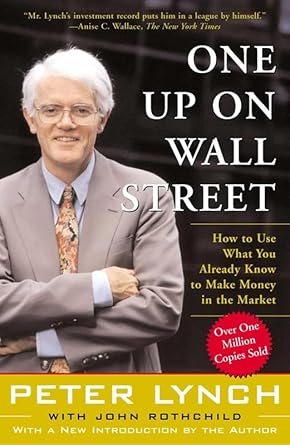

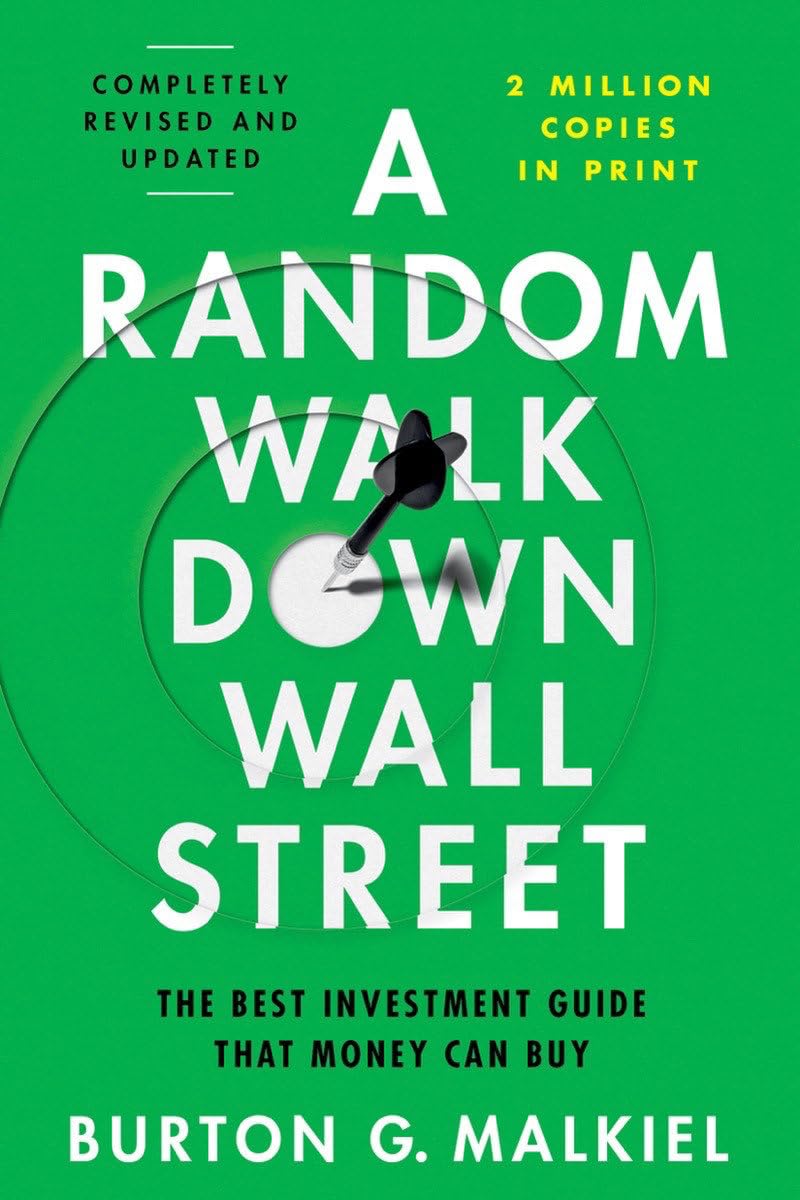




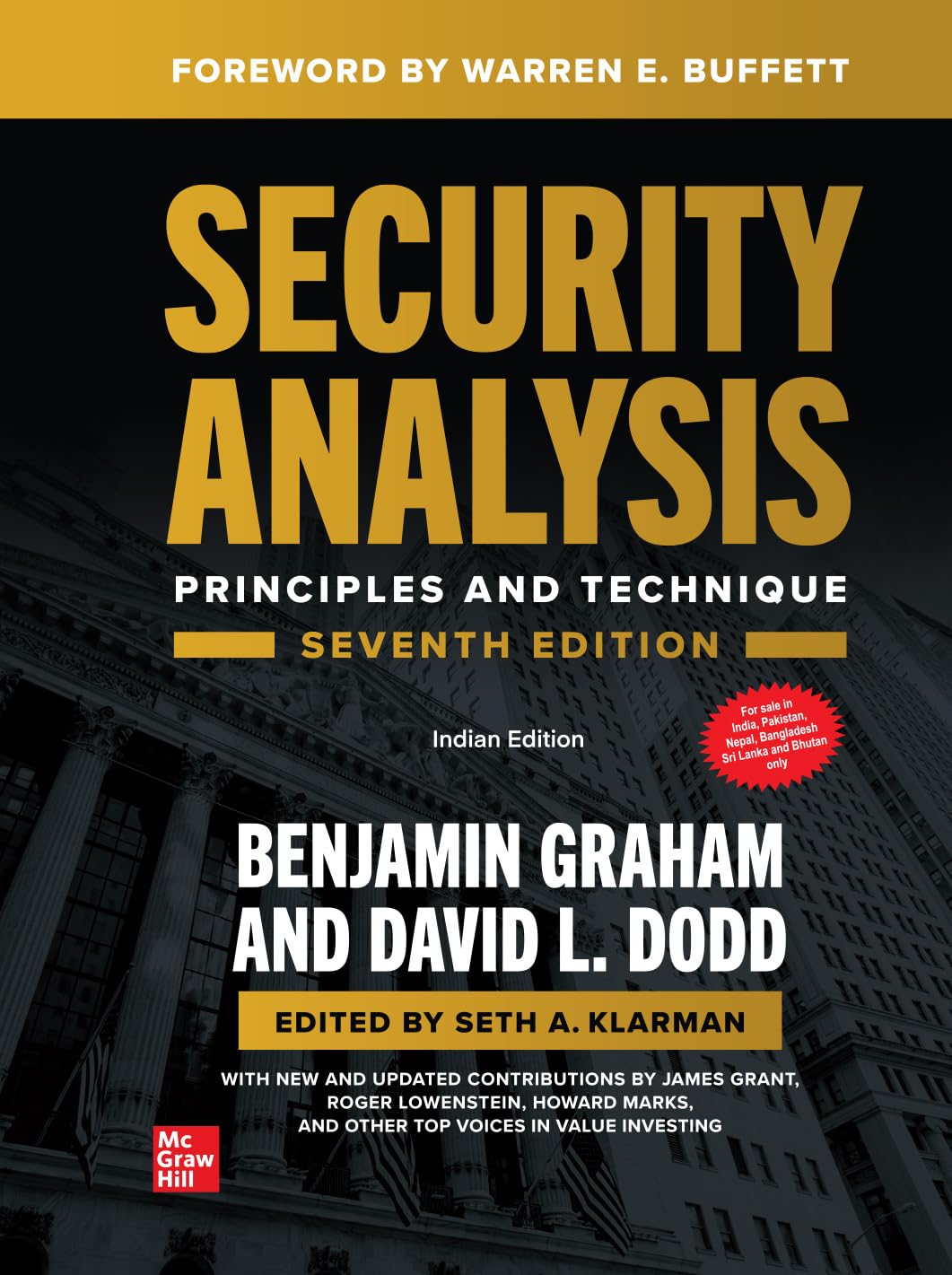
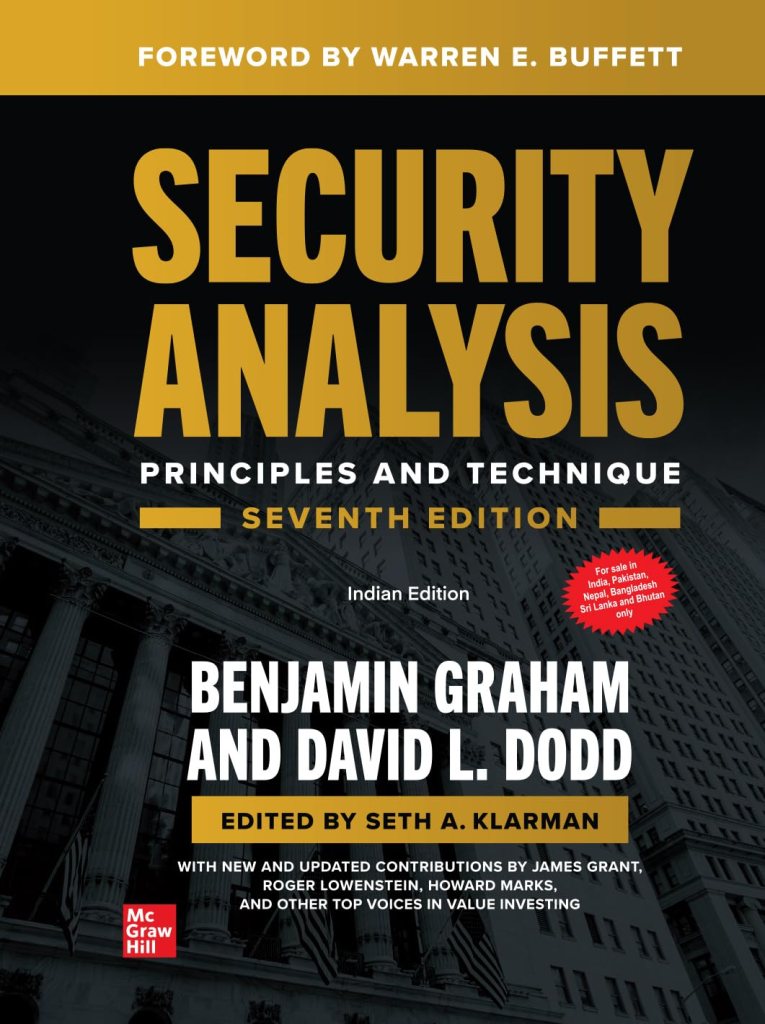























 Best Books to Read and Listen


