Vertical AI Agency Playbook: Unlocking Growth in Logistics, Healthcare, and Legal Industries – Prabhat Shrivastava

Introduction

Launching an AI agency in 2025 requires both focus and discipline. The smartest path isn’t to be everything to everyone—it’s to specialize. By choosing the right vertical industries, you can build authority, deliver measurable ROI, and grow sustainably. Based on my background in the Indian Navy, shipbuilding,  AI tools and investing, I evaluated potential verticals through a structured framework of six weighted criteria: market pain, growth, financial viability, accessibility, competition, and alignment.

Here’s what the analysis reveals: three powerful verticals for AI-driven solutions—Supply Chain & Logistics, Healthcare, and Legal Services—with India and Canada as priority markets.


Why Vertical AI?

The global AI market is projected to grow at 40–50% CAGR between 2025 and 2034. Yet generic AI consultancies face brutal competition. Vertical AI—specialized offerings for specific industries—provides clarity, focus, and higher perceived value. By targeting industries with urgent problems, budgets, and openness to innovation, you can stand out.


Vertical 1: Supply Chain & Logistics

Why it matters

The logistics sector faces inefficiencies in demand forecasting, inventory, and route planning. AI can directly cut costs and improve reliability.

Ratings

  • Pain Points & Relevance: 5/5 – Huge inefficiencies, solvable with AI.
  • Market Growth: 4/5 – Logistics AI adoption rising globally.
  • Financial Viability: 4/5 – Project budgets $25K–100K.
  • Decision-Maker Accessibility: 3/5 – Reachable via LinkedIn, trade associations.
  • Competition: 3/5 – Large firms dominate, but niche opportunities exist.
  • Expertise Alignment: 3/5 – Navy/shipbuilding background offers credibility.

Weighted Score: ~4.1/5

High-impact AI solutions

  1. Predictive demand forecasting.
  2. Route & fleet optimization.
  3. Inventory automation.
  4. Supplier communication bots.
  5. Intelligent document processing.

Value Proposition: “From chaos to clarity: reduce delay costs by 30%, inventory waste by 20% within 90 days.”

Go-to-Market

  • Target: mid-size logistics SMEs.
  • Lead gen: LinkedIn, supply chain events, webinars.
  • Credibility: publish pilot case studies and naval logistics analogies.

Success Metrics

  • 3 months: research & 10 prospects.
  • 6 months: 1–2 pilots, $10K revenue.
  • 12 months: 5+ clients, $50K+ revenue.

Vertical 2: Healthcare (Documentation & Workflow)

Why it matters

Healthcare professionals are drowning in documentation and compliance. AI can save hours daily and reduce errors.

Ratings

  • Pain Points & Relevance: 5/5 – Huge admin burden.
  • Market Growth: 5/5 – Healthcare AI growing 17–20% CAGR.
  • Financial Viability: 4/5 – Budgets $25K–100K.
  • Decision-Maker Accessibility: 3/5 – Gatekeepers exist.
  • Competition: 3/5 – Crowded but underserved SMEs.
  • Expertise Alignment: 2/5 – Some learning curve.

Weighted Score: ~4.0/5

High-impact AI solutions

  1. Clinical documentation assistants.
  2. Workflow automation.
  3. Patient intake chatbots.
  4. Compliance monitoring.
  5. Medical billing support.

Value Proposition: “Reduce documentation time by 50% in 90 days.”

Go-to-Market

  • Target: small/medium clinics, private hospitals.
  • Lead gen: healthcare forums, LinkedIn.
  • Credibility: pilot programs with measurable time savings.

Success Metrics

  • 3 months: 1 clinic pilot.
  • 6 months: 2–3 paying clients.
  • 12 months: 5+ clients, case studies published.

Vertical 3: Legal Services (India & Canada)

Why it matters

Lawyers face contract overload, research bottlenecks, and rising client demands. AI can deliver immediate efficiency without replacing professional judgment.

Ratings – India

  • Pain Points & Relevance: 5/5 – Document-heavy workflows.
  • Market Growth: 4.5/5 – Indian legaltech market ~$465M, growing fast.
  • Financial Viability: 4/5 – Projects $10K–100K.
  • Decision-Maker Accessibility: 4/5 – Small firms decide quickly.
  • Competition: 3/5 – Startups exist, but room remains.
  • Expertise Alignment: 4/5 – Legal background + network.

Weighted Score: ~4.1/5

Ratings – Canada

  • Pain Points & Relevance: 4.5/5 – Same pains, higher labor costs.
  • Market Growth: 4/5 – Legaltech ~$715M, CAGR 8%.
  • Financial Viability: 4.5/5 – Larger budgets $50K–200K.
  • Decision-Maker Accessibility: 3/5 – Procurement slows deals.
  • Competition: 3/5 – Strong incumbents.
  • Expertise Alignment: 3.5/5 – Transferable legal knowledge.

Weighted Score: ~3.9/5

High-impact AI solutions

  1. Contract review & clause extraction.
  2. Automated drafting & document assembly.
  3. Intake chatbots for client triage.
  4. E-discovery preprocessing.
  5. Compliance monitoring.

Value Proposition: “Cut contract review time by 60% in 90 days; payback in under six months.”

Go-to-Market

  • India: boutique firms, LPOs, in-house legal at SMEs.
  • Canada: mid-sized firms, corporate legal ops.
  • Lead gen: LinkedIn, bar associations, webinars.
  • Credibility: publish ROI calculators, whitepapers, small pilots.

Success Metrics

  • 3 months: 10 leads, 1 pilot.
  • 6 months: 2–3 paying clients.
  • 12 months: 5+ clients, $50K+ recurring revenue.

Risks & Mitigation

  • Market Risks: regulatory shifts, data privacy.
    • Mitigation: human-in-loop models, on-premises options.
  • Competitive Threats: global vendors.
    • Mitigation: niche specialization, local language/customization.
  • Operational Challenges: bandwidth.
    • Mitigation: focus on 90-day pilots, use no-code tools for speed.

Final Recommendations

  • Primary focus: Supply Chain & Logistics (best alignment + ROI potential).
  • Secondary focus: Healthcare (workflow/documentation automation).
  • Strategic expansion: Legal services (India first, Canada next).

By starting with quick, measurable wins and building authority in one or two verticals, you can scale into larger contracts while keeping risk low. The key is discipline, measurable ROI, and a repeatable framework.


Call to Action

If you’re a business leader in logistics, healthcare, or law, the message is clear: AI can solve your most painful bottlenecks within 90 days. The future belongs to those who act first—before competitors catch up.

How to Use Make.com (Integromat) : A Simple Step by Step Guide

Modern workspace with a desktop displaying a workflow diagram and a laptop on a white desk in a cozy office setting. Are you tired of manually moving data between integromat and your favorite apps? We certainly were.

Imagine connecting over 2,000 applications—including Google Sheets, Slack, and Shopify—to create seamless workflows that run on autopilot . That’s exactly what Make.com (formerly known as Integromat) delivers, even for beginners like us who once struggled with automation.

When comparing integromat vs zapier, many users find Make’s drag-and-drop interface and extensive template library particularly appealing. In fact, Make.com provides free automation templates to help you quickly implement workflows for customer support, marketing, and task management . Additionally, the integromat pricing model offers flexibility that scales with your business needs.

If you’re wondering how to use integromat effectively, you’ve come to the right place. This comprehensive integromat overview will walk you through everything from creating your first account to building complex scenarios with advanced features like data stores and error handling .

In this step-by-step guide, we’ll show you exactly how to harness Make.com’s power to save time, reduce errors, and scale your operations—whether you’re a solo entrepreneur or part of a growing team.

What is Make.com (Integromat) and Why It Matters

Make.com began its journey as Integromat in 2016, evolving into a powerful visual automation platform that goes beyond simple integration. Originally designed as a no-code integration tool, the platform transformed as users began deploying it for everything from building e-commerce applications to automating entire business processes [1]. The rebranding to Make in 2022 reflected this expanded vision—creating a world where everyone has the power to innovate without limits [1]. Nowadays, the platform serves over 350,000 organizations across 200+ countries [2].

Overview of Make.com and its evolution from Integromat

The transition from Integromat to Make wasn’t merely cosmetic. Make was chosen as the new name because it captures what users actually do on the platform—they make things [1]. The company realized their users weren’t just users; they were Makers creating without boundaries [1]. The visual canvas and domino-inspired logo symbolize how a simple action can launch a sequence of endless possibilities [1], representing Make’s approach to workflow automation.

How it compares to traditional automation tools

Unlike traditional automation tools, Make offers a visual-first approach that makes complex workflows accessible. While classic automation is deterministic and rule-based, Make also provides agentic automation that’s goal-based—you describe what you need in natural language, and it figures out how to accomplish the task [3]. Notably, its operation-based pricing model is significantly more economical than competitors like Zapier, costing about $0.00 per operation [3].

Furthermore, Make stands out with its robust data transformation capabilities and advanced error handling [3]. The platform positions itself strategically between Zapier’s simplicity and more technical power tools [3], providing an excellent balance for teams with mixed technical abilities.

Key benefits for small businesses and teams

Small businesses gain tremendous value from Make, fundamentally changing how they operate. The platform enables:

  • Operation without extensive technical skills—curious minds can build and implement automated workflows [3]
  • Significant cost savings—a German consulting firm observed a 17% efficiency increase by connecting just 3 apps [3]
  • Competitive advantage—small teams can turn their ambitions into reality regardless of budget or traditional barriers [3]

Make essentially provides small businesses with “an extra employee (or 10) for a fraction of the cost” [4]. Consequently, companies like finn.auto have successfully competed with industry giants like Cadillac and Porsche through early automation implementation [3].

Getting Started: Setting Up Your First Automation

Ready to automate your workflows with integromat? Let’s start building your first scenario—the foundation of automation in Make.com.

1. Create your Make.com account

Getting started with Make requires creating an account. Head to make.com and click the “Get started free” button. You’ll need to provide basic information including your name, email, and a secure password (minimum 9 characters with uppercase, lowercase, numbers, and special characters). Alternatively, sign up using your Google account for faster access.

2. Explore the dashboard and key sections

Upon logging in, familiarize yourself with the Make dashboard. On the left sidebar, you’ll find important sections:

  • Scenarios: Where you build and manage automated workflows
  • Templates: Pre-built workflows you can adapt
  • Connections: Your linked apps and services
  • Apps: Browse integrations available on the platform

The central workspace is where you’ll design your scenarios visually.

3. Connect your first app (e.g., Google Sheets)

Prior to building automations, establish connections to your apps:

  1. Within your scenario, click the “+” icon to add a module
  2. Search for “Google Sheets” and select it
  3. Click “Create a connection” in the module settings
  4. Name your connection (optional) for easier identification
  5. Click “Sign in with Google” and grant necessary permissions

4. Build your first scenario with a trigger and action

Every scenario starts with a trigger—the event initiating your workflow:

  1. Select “Watch New Rows” as your trigger module for Google Sheets
  2. Choose your spreadsheet and worksheet
  3. Configure settings like “Table contains headers” (Yes)
  4. Add a second module (action) by clicking “+” after your trigger
  5. Map data between modules by selecting fields from the trigger

5. Test and activate your scenario

Before deployment, test your workflow:

  1. Click “Run once” to execute the scenario manually
  2. Review results to ensure data flows correctly
  3. If successful, toggle the scenario ON to activate it
  4. Set scheduling options based on your needs

Henceforth, your scenario will run automatically according to your schedule, moving data between apps without manual intervention.

Using Templates and Exploring Integrations

Templates save tremendous time when using integromat. Instead of starting from scratch, I can leverage pre-built workflows created by Make experts or other users.

How to access and use Make.com templates

To find templates, I click “Templates” on the left sidebar of my Make dashboard [5]. Two types exist: public templates (available to everyone) and team templates (created by my team) [6]. To implement a template:

  1. Browse the template gallery or use the search bar to find templates by app name
  2. Click “Start guided setup” for step-by-step configuration or “Create new scenario from template” for manual setup
  3. Connect necessary apps and customize settings
  4. Run the template to verify functionality

Popular templates for marketing, sales, and operations

Marketing templates allow me to capture Facebook leads in Google Sheets, send automated welcome emails, and cross-post Instagram content to other platforms [7]. For sales, I find templates that log deals into CRMs and calculate commissions [3]. Operations templates help automate tasks between project management tools and calendars [7].

Integrating with Google Forms, Slack, Trello, and more

Make offers extensive integration options. I can connect Google Forms to automate data entry [8], send Slack notifications based on triggers [9], and create Trello cards from emails [10]. Each integration requires connecting the respective app through Make’s intuitive interface.

Customizing templates to fit your workflow

Throughout the template setup, I can modify fields by checking “Use in Wizard” to include them in guided setup and adding help text to guide users [11]. Moreover, I can set default values for fields while still allowing flexibility for changes later [11].

Tips, Pitfalls, and Advanced Features

Mastering Make.com requires understanding its advanced features. Let’s dive into essential tips and common pitfalls.

Tips for beginners using Make (Integromat)

Start with simple scenarios and gradually build complexity. Turn off inactive scenarios to save operations. Understand that scheduling too frequently depletes operations quickly – on the free plan, you have only 1,000 operations per month [12]. Organize your scenarios early before they become unmanageable.

Common mistakes to avoid when building scenarios

Overestimating operation needs leads to premature depletion. Not testing components separately makes troubleshooting difficult. Running all scenarios 24/7 wastes resources when many can run on schedules.

Using filters, routers, and error handling

Routers branch scenario flows into multiple chains, processing data differently based on conditions [13]. Each route can have filters determining which data continues through that path. Make processes routes sequentially, not in parallel [13]. For error handling, Make offers five error handlers: Ignore, Resume, Commit, Rollback, and Break [2].

Exploring Make Grid and AI-powered features

Make’s AI tools enable analyzing text, generating content, extracting insights, and automating decisions without external integrations [14].

Integromat vs Zapier: Which one should you choose?

Make offers more flexibility with visual workflows and advanced logic. While Zapier has more integrations (7,000+ vs 2,000+) [15], Make provides better pricing value at approximately $0.00 per operation compared to Zapier’s $0.03 per task [16].

Understanding Integromat pricing and plans

Plans range from Free (1,000 operations/month) to Teams ($29.00/month with 40,000 operations) [17]. Higher tiers reduce minimum intervals between scenario runs and add features like team roles [18].

Conclusion

Make.com stands as a powerful solution for anyone looking to automate workflows across multiple applications. Throughout this guide, we’ve explored how this platform evolved from Integromat into a comprehensive tool that connects over 2,000 applications with remarkable flexibility.

After all, the true value of Make.com lies not just in connecting apps but in transforming how businesses operate. The visual interface makes complex automation accessible even for beginners, while advanced features like routers, filters, and AI capabilities offer depth for experienced users.

Most importantly, getting started doesn’t require extensive technical skills. We can create our first scenario with just a few clicks, connecting apps like Google Sheets, Slack, or Trello through an intuitive visual interface. Additionally, the template library provides ready-made solutions that save countless hours of development time.

Compared to competitors like Zapier, Make.com clearly offers more value through its operation-based pricing model and advanced data transformation capabilities. Whether you’re a solo entrepreneur or part of a growing team, the platform scales alongside your needs.

Therefore, if you’ve been manually moving data between applications or struggling with inefficient workflows, now is the perfect time to start your automation journey. Begin with simple scenarios, gradually explore advanced features, and watch as your productivity soars. The time and resources you’ll save will undoubtedly justify the minimal learning curve required to master this powerful tool.

References

[1] – https://www.make.com/en/integromat-evolves-to-make
[2] – https://help.make.com/overview-of-error-handling
[3] – https://www.make.com/en/how-to-guides/best-excel-automation
[4] – https://www.make.com/en/product
[5] – https://www.make.com/en/templates
[6] – https://help.make.com/scenario-templates
[7] – https://mcstarters.com/blog/top-make-com-templates/
[8] – https://www.youtube.com/watch?v=mTqs9RKcgRY
[9] – https://www.make.com/en/integrations/gateway/slack
[10] – https://make.com/en/templates/12938-trigger-new-emails-and-create-trello-cards-for-better-task-management
[11] – https://help.make.com/create-and-manage-scenario-templates
[12] – https://www.make.com/en/blog/automation-for-beginners
[13] – https://help.make.com/router
[14] – https://techflow.ai/blog/exploring-free-native-ai-modules-in-make-com
[15] – https://zapier.com/l/make-vs-zapier
[16] – https://www.make.com/en/blog/make-vs-zapier
[17] – https://thedigitalprojectmanager.com/tools/make-pricing/
[18] – https://www.relay.app/blog/make-pricing

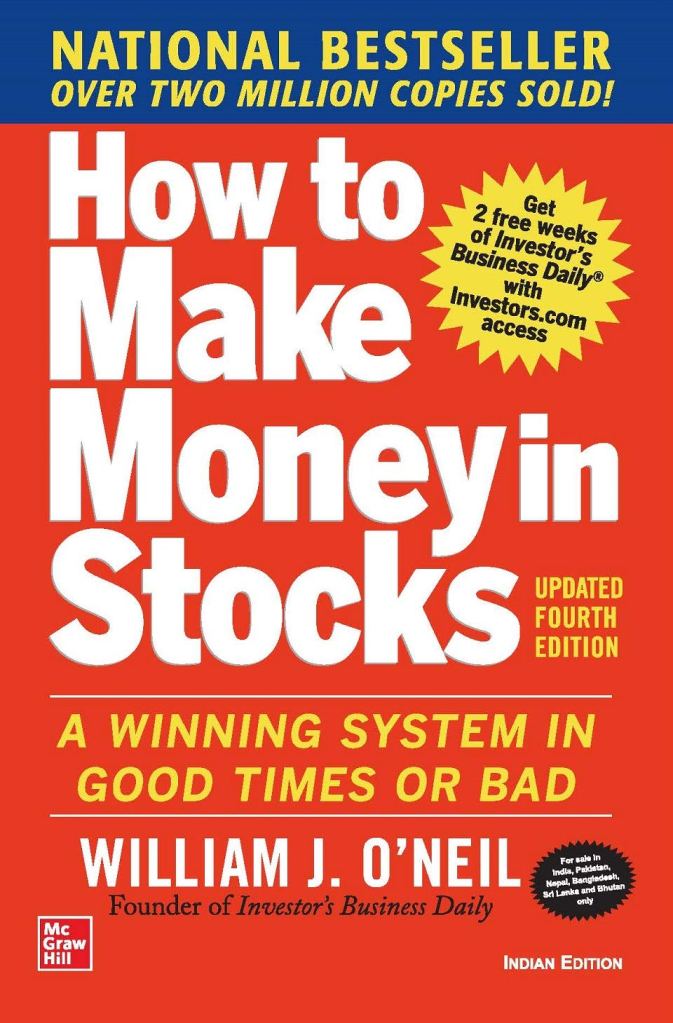
HOW TO MAKE MONEY IN STOCKS – WILLIAM J O’NEIL

Mastering the Market: William J. O’Neil’s Path to Investment Success

The world of stock market investing can seem daunting, especially after periods of significant volatility like the market debacles of 2000 and 2008. Many investors feel lost, unsure who to trust or what strategies to adopt to achieve superior performance. William J. O’Neil, author of “How to Make Money in Stocks,” offers a clear, historically proven system designed to navigate both good times and bad. This isn’t about relying on gurus or fleeting fads; it’s about understanding the market’s underlying mechanics and acting intelligently based on factual data.

O’Neil emphasizes that successful investing isn’t about being right all the time, but rather about learning from experience and developing sound principles. He learned from his own mistakes, identifying counter-intuitive truths about the market. For instance, you should buy stocks when they’re rising in price and nearer their annual highs, not when they seem “cheap” because they’ve fallen. Furthermore, relying on fundamental metrics like book value, dividends, or P/E ratios has had little predictive value for spotting America’s most successful companies over the last century. Instead, focus on profit growth, price and volume action, and whether a company is a leader in its field with a superior product.

The core of O’Neil’s strategy is encapsulated in his CAN SLIM system, a simple, easy-to-remember formula derived from an intensive study of over 1,000 of the biggest winning companies in market history, dating back to the 1880s. Each letter represents a crucial characteristic common to these super-performing stocks just before their explosive price advances.


The CAN SLIM Winning System

Here’s a breakdown of the CAN SLIM methodology:

  • C = Current Big or Accelerating Quarterly Earnings and Sales Per Share This is considered the single most important element in stock selection. Winning stocks typically show a major percentage increase in current quarterly earnings per share (EPS) compared to the same quarter a year earlier. O’Neil’s research found that three out of four top-performing stocks from 1952 to 2001 showed earnings increases averaging over 70% in the latest reported quarter before their major advances. From 1910 to 1950, top performers saw 40% to 400% earnings gains. It’s not just about the size of the increase, but also earnings acceleration. If a company’s earnings have been growing at 15% and suddenly jump to 40-50% or more, that’s a strong signal. This growth should also be supported by sales growth of at least 25% for the latest quarter, or an acceleration in the sales percentage improvement over the last three quarters. Beware of companies inflating earnings by cutting costs without corresponding sales growth, as seen with Waste Management. Profit margins should also be at or near a new high and among the best in the industry. Always compare current quarterly EPS to the same quarter a year earlier to avoid seasonal distortions. Be wary of misleading earnings reports that focus on total net income or one-time extraordinary gains rather than EPS. Insist on a minimum of 18-20% EPS growth, but preferably 40-500% or more in bull markets.
  • A = Annual Earnings Increases Beyond strong current quarterly earnings, a high-quality company must demonstrate a record of solid annual earnings growth. Look for annual EPS that have increased in each of the last three years, ideally at a rate of 25%, 50%, or even 100% or more. The median annual growth rate for outstanding stocks in O’Neil’s study between 1980 and 2000 was 36%. Additionally, Return on Equity (ROE) is a crucial measure of efficiency. Nearly all great growth stocks of the past 50 years had ROEs of at least 17%, with superior situations showing 25% to 50% ROEs. Consistency and stability in annual earnings growth over the past three years are also important, often indicated by a low “stability figure” (below 20-25). This ensures you’re investing in proven growth rather than erratic or cyclical recoveries.
  • N = Newer Companies, New Products, New Management, New Highs Significant price moves in stocks are driven by something new – a revolutionary product or service, new management invigorating a company, or major shifts in industry conditions. Over 95% of successful stocks with stunning growth in American history fit into at least one of these categories. Examples include the transcontinental railroad, the automobile, radio, TV, computers, and the internet. Crucially, O’Neil introduces the “Great Paradox”: What seems too high in price and risky to the majority usually goes higher, and what seems low and cheap usually goes lower. This means you should buy stocks as they emerge from sound, properly formed chart bases and begin to make new highs in price on increased volume. This “new high” is not a sign of being overvalued but often the beginning of a significant price advance. The perfect time to buy is in a bull market as a stock breaks out of its price base.
  • S = Supply and Demand The basic principle of supply and demand dictates stock prices. It’s harder to move the price of a stock with billions of shares outstanding (large supply) than one with fewer shares (smaller supply). While smaller-cap stocks can be more volatile, they offer greater opportunity. Look for companies where top management owns a significant percentage of stock, aligning their interests with shareholders. The best way to measure supply and demand is by watching daily trading volume. When a stock pulls back, volume should dry up, indicating selling pressure has exhausted. When it rallies, volume should rise, signifying institutional buying. During breakouts from price consolidation areas, trading volume should be at least 40-50% above normal, often increasing 100% or more, signaling strong buying interest and potential for further price increases.
  • L = Leader or Laggard Always buy market leaders and avoid laggards. A leader is not necessarily the largest company but the one with the best quarterly and annual earnings growth, highest return on equity, widest profit margins, strongest sales growth, and most dynamic stock-price action. It will also have a unique and superior product or service and be gaining market share. Avoid “sympathy plays” – stocks in the same industry that are cheaper but lack the real leader’s fundamental strength. The Relative Price Strength (RS) Rating is a proprietary measure from Investor’s Business Daily (IBD) that compares a stock’s price performance against all other stocks over the past 52 weeks, rated from 1 to 99 (99 being best). The average RS Rating for the best-performing stocks before their major run-ups was 87. O’Neil recommends restricting purchases to stocks with RS Ratings of 80 or higher, with the really big moneymakers typically having RS Ratings of 90 or higher just before breaking out.
  • I = Institutional Sponsorship Institutional investors (mutual funds, pension funds, etc.) are the largest source of demand for stocks, accounting for the lion’s share of market activity. A winning stock doesn’t need a huge number of institutional owners but should have several at a minimum, ideally increasing in number in recent quarters. Look for quality sponsorship – stocks held by at least one or two savvy portfolio managers with the best performance records (e.g., A+ or B+ rated mutual funds). Significant new positions taken by institutions are particularly relevant. However, beware of “overowned” stocks, where institutional ownership becomes excessive, creating large potential selling pressure if conditions turn negative.
  • M = Market Direction This is paramount: you can be right about every other CAN SLIM factor, but if you’re wrong about the general market direction, you will lose money. O’Neil asserts that timing the market is possible and essential, contrary to popular myth. The best way to determine market direction is by observing and interpreting the daily charts of major general market averages like the S&P 500 and Nasdaq Composite. A critical signal for market tops is a “distribution day”: when a major index closes lower on higher volume, or shows stalling action (small price increase) on heavy volume. Four or five such days over a four-to-five-week period usually signal an impending market downturn. For market bottoms, look for a “follow-through day” on the fourth to seventh day of an attempted rally, characterized by a booming gain on heavier volume than the previous day. No new bull market has ever started without a strong price and volume follow-through confirmation. O’Neil advises individual investors to raise cash and get off margin in the early stages of a bear market, preserving capital for future opportunities.

Critical Risk Management: The Art of Selling

Many investors focus intensely on buying but neglect the equally, if not more, important aspect of selling. O’Neil contends that a strong defense is key to winning big in investing.

  • Cut Every Loss Short: The 7% or 8% Rule Always limit your loss on initial capital in each stock to an absolute maximum of 7% or 8%. This rule has no exceptions, regardless of company news or perceived value. If a stock drops by this amount from your purchase price, it indicates you’ve either made a mistake in selection or the general market is turning. This is like an insurance policy; you’re limiting your risk to a comfortable level. While a stock you sell might turn around, adhering to this rule prevents catastrophic losses. A 33% loss requires a 50% gain just to break even; a 50% loss requires a 100% gain. You simply cannot afford to sit with a stock where the loss keeps getting worse. The “Turkey Story” illustrates the common investor mistake of hoping a losing stock will recover rather than cutting losses. Investors often suffer from a “price-paid bias,” holding onto losers while selling winners simply because they’re up. Instead, evaluate your portfolio based on current relative price performance, selling the weakest and adding to the strongest.
  • Avoid Averaging Down Averaging down, or buying more shares of a stock that is already showing a loss, is a common and dangerous mistake. The market does not care about your hopes; it only obeys supply and demand.
  • Be a Speculator, Not an Investor (by O’Neil’s definition) Drawing on Bernard Baruch and Jesse Livermore, O’Neil defines a “speculator” as someone who observes and acts before the future occurs, constantly watching the market and individual stocks to determine current action and then acting decisively. An “investor” by Livermore’s definition, who makes a bet and stays with it even if it goes wrong, risks losing everything. There is no such thing as a “long-term investment” once a stock drops into the loss column.

Final Thoughts on Education and Egos

O’Neil stresses that success in the market has little to do with education, IQ, or external advice. In fact, intelligence and ego can be detrimental, leading people to believe they know better than the market itself. The market is almost always right; fighting it is an expensive mistake.

The CAN SLIM system is not “momentum investing” in the superficial sense of just buying stocks that have gone up the most. Instead, it’s about identifying companies with strong fundamentals (sales and earnings growth from new products) and buying them at precise times as they emerge from proper price consolidation periods, before dramatic run-ups. It also heavily emphasizes knowing when to sell to protect gains during bear markets.

Ultimately, O’Neil empowers individual investors to take control of their financial future. By diligently studying market facts, learning to read charts, and strictly applying proven buy and sell rules, anyone can learn to invest wisely and capitalize on the relentless growth opportunities America offers. It requires effort, discipline, and humility, but the rewards are substantial.

Click here to read the book.

Version 1.0.0

Link to the video on the subject

HOW I MADE $2000000 IN THE STOCK MARKET BY NICOLAS DARWAS

For a book enthusiast seeking to delve into the fascinating world of stock market investing, Nicolas Darvas’s “How I Made $2,000,000 In The Stock Market” offers a unique and compelling narrative. This isn’t your typical finance textbook; it’s a personal journey, written by a professional dancer who, despite being a complete non-professional in finance, managed to amass a fortune through his self-developed investment methods.

Published in 1960 by the American Research Council, this book chronicles Darvas’s 18-month period of successfully applying his perfected theory to gain over $2,000,000 in the stock market. What makes his story particularly striking is his unconventional approach: he famously disregarded traditional investment practices, ignoring tips, financial stories, and brokers’ letters – elements that often guide conventional Wall Streeters.

His methods, culminating in what he termed the “Techno-Fundamentalist Theory,” and his sharp market maxims like “I just jog along with the trend trailing my stop-loss insurance behind me,” have earned a place in Wall Street history. Darvas’s transparency in detailing his financial dealings is unprecedented, offering readers a truly exposed view of his journey.

Let’s dive into the extraordinary evolution of Nicolas Darvas, from an uninitiated gambler to a multi-millionaire investor.


The Unlikely Investor: Nicolas Darvas

Nicolas Darvas was far from a typical Wall Street figure. He was a spectacular international dancer, accustomed to the spotlight, having starred in 34 countries with his partner, Julia. This background likely contributed to his openness in revealing his stock transactions. Beyond his dance career, Darvas possessed a sharp intellect, holding a solid background in economics and sociology from the University of Budapest, and prior experience as a sportswriter, journalist, and crossword-puzzle editor. This diverse skill set prepared him, perhaps unexpectedly, to write a book detailing his investment techniques.

The American Research Council, impressed by a Time Magazine article (May 25, 1959) detailing his story, sought him out in Paris to write this book. The book’s significance lies not just in his immense profits, but in the fact that they were achieved by a non-professional “outsider” seeking a “second income,” and were the result of hard-won experience and learning from years of mistakes, rather than lucky tips.


The Gambler: Darvas’s Canadian Period

Darvas’s foray into the stock market began in November 1952 during a dancing engagement in New York. He received an unusual offer in Toronto: instead of money, he and his partner were offered 6,000 shares of BRILUND, a Canadian mining firm, at 50 cents a share, with a six-month guarantee against price drops. Though he couldn’t keep the Toronto date, he bought the stock as a gesture, sending a $3,000 check.

  • Beginner’s Luck: Two months later, he idly checked the stock’s price, finding it quoted at $1.90. He sold immediately, making a profit of nearly $8,000. This felt like “magic” and convinced him he had been “missing a good thing all his life,” leading him to decide to go into the stock market.

At this point, Darvas knew “absolutely nothing” about the stock market, not even that one existed in New York. His initial strategy was simple: ask everyone for tips.

  • Following Amateur Tips (Failure): Working in nightclubs, he encountered wealthy individuals whom he believed “must know” about good stocks. He “religiously followed their tips,” buying whatever he was told. It took him “a long time to discover that this is one method that never works”. He describes himself as “the perfect pattern of the optimistic, clueless small operator who plunges repeatedly in and out of the market,” buying stocks of companies he couldn’t pronounce or had no idea what they did.
  • Canadian Broker Experience: In Toronto, seeking a “hot tip,” he found a broker whose dingy office and reliance on statistics did not inspire confidence. The broker, touting his father’s success with KERR-ADDISON, recommended EASTERN MALARTIC based on production figures and estimates. Darvas bought 1,000 shares at 290 cents, but it quickly dropped to 241 cents, leading him to sell at a loss. He concluded this “painstaking, statistically minded broker did not have the answer”.
  • Ignorance of Costs: He learned about broker’s commission and transfer taxes the hard way. He bought 10,000 shares of KAYRAND MINES at 10 cents, sold at 11 cents, thinking he made $100. His broker informed him that commissions for buying and selling, plus transfer taxes, resulted in a loss. He often owned 25-30 Canadian mining stocks at a time, making money on none of them.
  • The “Pet Stocks” Pitfall: He developed a liking for certain stocks, treating them like “members of my family,” praising their virtues despite no one else seeing their special qualities. He later realized these “pet stocks” caused his “heaviest losses”.
  • Overlooking Losses: He felt he was “doing all right” and appeared to be ahead, but admits he was “buoyed up and excited by small gains, and overlooked my losses.” He ignored holding stocks “well below the price I had paid for it”. This was a period of “wild, foolish gambling with no effort to find the reasons”.
  • First Dilemma & Loss: After seven months, a review of his books revealed a loss of almost $3,000. This forced him to question his “moneymaking scheme” and realize he had “no idea what I was doing”. While still technically ahead due to his initial BRILUND profit, he knew his current path was unsustainable.
  • Misleading Advisory Services: Deciding he needed “professional help,” he subscribed to Canadian financial advisory services. These services, which he later realized were “strictly for the sucker trade,” used aggressive headlines like “Buy this stock now before it is too late!” and “This stock will give you a profit of 100% or more!”. They often implied insider information and appealed to the “little fellow”.
  • The Small Operator’s Pitfall: He would rush to buy recommended stocks, which “invariably went down”. He later understood this phenomenon: when tipsters advise small operators to buy, professionals who bought earlier on inside information are selling. The “small sucker money is coming in” when it’s “far too late”.
  • Blind Luck: His $900 profit on CALDER BOUSQUET was “just blind luck”. He bought it because he liked the name, then went on a dancing engagement, unable to monitor its price. Had he been able to, he would have sold too soon. This accidental ignorance saved him from premature selling.
  • End of the Canadian Period: By the end of 1953, his initial $11,000 had dwindled to $5,800. He realized that businessmen’s tips and advisory services were unreliable. He began reading financial columns in major New York papers, becoming fascinated by the New York market. He sold all his Canadian stocks, except for one he stubbornly held onto due to a “fantastic developments” rumor (OLD SMOKY GAS & OILS), which also resulted in a loss.

Entering Wall Street: The Fundamentalist Period

With a new resolve, Darvas approached Wall Street, viewing his Canadian experience as “pure crazy gambling”. He raised his capital to $10,000 by adding savings from his show business activities.

  • Initial Wall Street Experience: His new broker, Lou Keller, suggested “safe stocks” based on “fundamental reasons” like dividend increases, stock-splits, and improved earnings. Darvas, feeling this was “highest professional advice,” bought into Columbia Pictures, North American Aviation, and Kimberly-Clark, netting over $1,300 in a few weeks. He later realized this success was partly due to being in the “biggest bull market the world had ever seen”.
  • Old Habits, New Terms: Despite feeling he was losing his “Canadian amateur status,” he was still trading constantly, sometimes making 20 calls a day to his broker, impulsively buying new stocks. His net profit on some intense transactions was a mere $1.89, while his broker earned $236.65 in commissions. He started to use more “pompous words” like “information” instead of “tips”.
  • Self-Education: To understand his broker, Darvas began reading books about the stock market, learning terms like “earnings,” “dividends,” and “capitalization”. He studied works like “ABC of Investing” and “The Stock Market”.
  • Professional Services – Still Confusing: He subscribed to major stock market services like Moody’s, Fitch, and Standard & Poor’s, but found their “magnificent information” incomprehensible, filled with jargon that didn’t tell him “which stock was going up like BRILUND”. He also found trial subscriptions often contradictory, with non-committal recommendations.
  • More Losses: He bought EMERSON RADIO based on a glossy report that analytically proved it should be worth 35, but it drifted downwards, costing him money.
  • Refutation of Market Sayings:
    • “You cannot go broke taking a profit”: He experienced this adage’s falsity firsthand. He made $1,074.45 on KAISER ALUMINUM, then jumped into BOEING and MAGMA COPPER, incurring losses, then jumped back into KAISER, losing more. His net loss for the circular transaction was $461.21. Had he simply held KAISER, he would have profited $1,748.75. Similar experiences with RAYONIER and MANATI SUGAR confirmed this.
    • “Buy Cheap, Sell Dear”: This led him to the over-the-counter market of unlisted securities, believing he could find bargains. He bought many obscure stocks, only to discover there was no “rigid price discipline” or “specialists” to assure an orderly market, making them very difficult to sell, often at a significant discount from the “Ask” price. He quickly realized it was a “specialized field” for experts and returned his attention to listed securities.
  • The Danger of Rumors: He believed Wall Street rumors were “solid information”. He bought BALDWIN-LIMA-HAMILTON at its peak on a rumor of an “atomic train” order, losing over $1,100. Another broker’s “first-hand information” about STERLING PRECISION rocketing to 40 led to a plunge of $1,000 on 1,000 shares, as the stock slid downwards.
  • Insider Trading Observations: He tried following insider transactions reported to the SEC, but found he was “always too late” and that “insiders were human too,” often buying too late or selling too soon. They knew about their company, but not the market’s attitude.

Emerging Conclusions and Rules (First Set): Through these experiences, Darvas began to formulate his own rules:

  1. I should not follow advisory services. They are not infallible.
  2. I should be cautious with brokers’ advice. They can be wrong.
  3. I should ignore Wall Street sayings, no matter how revered.
  4. I should not trade “over the counter” – only in listed stocks where a buyer is always available.
  5. I should not listen to rumors, no matter how well-founded.
  6. The fundamental approach worked better for me than gambling. I should study it.
  • The Accidental Discovery (Virginian Railway): Reviewing his statements, he found a stock, VIRGINIAN RAILWAY, which he had bought 11 months earlier and forgotten about. It had “never given me a moment’s anxiety” and had “slowly rising.” He sold it for a $1,303.68 profit with “no effort on my part”. This led to his seventh rule:
    • Rule 7: I should rather hold on to one rising stock for a longer period than juggle with a dozen stocks for a short period at a time.
  • The Search for the Ideal Stock (Refining Fundamentals): Convinced of the “rightness of my fundamental approach,” he tried to find “the ideal stock” by studying company reports, balance sheets, income accounts, assets, liabilities, profit margins, and price-earnings ratios. He used lists like “Stocks with top quality rating” and “Stocks with strong cash position”. However, he repeatedly faced the problem that when things looked “perfect on paper,” the market “never acted accordingly”. For example, his fundamental analysis pointed to AMERICAN VISCOSE and STEVENS in textiles, but TEXTRON advanced while his picks did not.
  • Reliance on Ratings: He turned to a “serious, very reliable monthly service” that rated stocks (AAA, AA, A for high grade; BBB, BB, B for investment merit; CCC, CC, C for lesser grade; DDD, DD, D for lowest grade). He carefully studied these, believing he “had only to compare” ratings to succeed.
  • Industry Group Analysis: He applied fundamental analysis to find the “strongest industry group” and the “strongest company within that industry group,” believing such an “ideal stock must rise”. He compiled earnings of whole industry groups like oils, motors, aircraft, and steel. He eventually settled on the steel industry as his vehicle to riches.
  • The JONES & LAUGHLIN Disaster (First Crisis): He meticulously compared steel stocks, focusing on “B” rated, high-dividend payers. His analysis pointed “clearly” to JONES & LAUGHLIN, which seemed “perfect” based on its strong industry group, B rating, nearly 6% dividend, and superior price-earnings ratio. Overconfident and certain of his “gilt-edge scientific certainty,” he raised money by mortgaging property, taking a loan on an insurance policy, and getting an advance on a contract to buy a large amount. On September 23, 1955, he bought 1,000 shares of JONES & LAUGHLIN at 52¼ on 70% margin, investing over $36,856 in cash.
    • The Fall: Three days later, the stock began to drop. Darvas was “paralyzed,” refusing to believe it, calling it a “temporary setback”. His pride and conviction that his “exhaustive studies” were infallible prevented him from selling. He “held on and I held on”.
    • Panic and Loss: As it continued to fall, he became “afraid to look at the quotations”. On October 10th, when it hit 44, “blind panic set in.” He sold, incurring a net loss of $9,069.18.
    • Crushed and Desperate: This experience “crushed, finished, destroyed” his “smug ideas”. He realized his various methods—gambling, tips, information, research, investigation—had all failed. The “horror of bankruptcy stared me in the face”.
  • The Accidental Salvation (TEXAS GULF PRODUCING): In despair, he noticed a stock he’d never heard of, TEXAS GULF PRODUCING, which was “rising steadily, day after day”. Knowing “nothing about its fundamentals and had heard no rumors,” he bought 1,000 shares. For the first time, he “refused to take a quick profit” due to his $9,000 loss. He watched it intensely for five weeks, selling at 43¼, recovering over half his loss. This led to a crucial question: What was the value of fundamental analysis if the stock that saved him was chosen only because “it seemed to be rising”? This marked the “glimmering of my theory”.

The Technician: Developing the Box Theory

The JONES & LAUGHLIN disaster and the accidental success of TEXAS GULF PRODUCING forced Darvas to reassess. He realized he couldn’t rely on luck and needed “knowledge” to operate in the market.

  • Shift to Technical Approach: He focused on repeating the successful approach used with TEXAS GULF PRODUCING, which was “purely on the basis of its action in the market”.
  • M & M WOOD WORKING Success: He noticed M & M WOOD WORKING due to its action, rising from 15 to 23⅝ with increased volume. He bought 500 shares at 26⅝, held as it rose, and sold at 33, making a profit of $2,866.62. He learned later that this rise was due to a secret merger. This convinced him that a “purely technical approach… was sound,” meaning studying price action and volume could yield results, discarding other factors.
  • The “Unusual Behavior” Principle: He decided that if a “usually inactive stock suddenly became active” and “advanced in price,” he would buy it, assuming “some good information” was behind the movement. He would become their “silent partner”.
  • PITTSBURGH METALLURGICAL Failure (Wrong Timing): He bought PITTSBURGH METALLURGICAL at 67, expecting it to continue a rapid rise due to increased activity. However, it weakened, and he stubbornly held on, believing it was a “small reaction.” It dropped to 57¾, resulting in a loss of $2,023.32. He realized he had bought the “right stock at the wrong time”.
  • Discovery of the “Box Theory”: To overcome timing issues, he studied “individual stock movements,” looking for patterns. He observed that stocks had “a defined upward or downward trend” and moved in “a series of frames, or what I began to call ‘boxes’.”.
    • Box Theory Application:
      • Stocks oscillate “fairly consistently between a low and a high point” within a box.
      • He watched stocks in their “highest box”.
      • If a stock fell below the lower frame of its box, he eliminated it, as he only wanted it to move into a higher box.
      • He observed for “an upward thrust toward the next box”.
      • A “reaction” within the box (like 55 dropping to 50 in a 50/55 box) was considered normal, like a dancer crouching before a spring. Such reactions “shakes out the weak and frightened stockholders”.
  • The “On-Stop” Buy Order: His experience with LOUISIANA LAND & EXPLORATION, where he missed buying at 61 because he couldn’t be reached, led him to use automatic “on-stop” buy orders. This meant the stock would be bought automatically once it reached a named figure.
  • Initial Box Theory Successes: He successfully used the theory with ALLEGHENY LUDLUM STEEL, DRESSER INDUSTRIES, and COOPER-BESSEMER, making a profit of $2,442.36.
  • The NORTH AMERICAN AVIATION Slap (Turning Point): He bought NORTH AMERICAN AVIATION at 94⅜, confident it would enter a new box over 100. It didn’t; it immediately fell back. His pride and ego prevented him from selling immediately, leading to the loss of all profits from his previous three operations. This was a “rude awakening”.

Crucial Turning Point and Revised Rules/Realizations: This experience led to fundamental changes in his mindset and system:

  1. There is no sure thing in the market. He was “bound to be wrong half of the time”.
  2. He “must accept this fact and readjust” himself; his pride and ego “would have to be subdued”.
  3. He “must become an impartial diagnostician,” not identifying with any theory or stock.
  4. He “cannot merely take chances” but “have to reduce my risks as far as humanly possible”.
  • The “Quick-Loss Weapon” (Automatic Stop-Loss Orders): He decided to “sell immediately at a small loss”. If he bought a stock at 25, he would simultaneously place an order to sell if it dropped below 24. This meant he would “never sleep with a loss”. He acknowledged being “stopped out” for small losses but realized this was crucial for “stopping the big losses”.
  • The Commission Problem: He realized being right half the time wasn’t enough, as commissions could “completely erode” capital. For a $10,000 investment in a $20 stock, 40 transactions would cost $10,000 in commissions.
    • Solution: Profits Must Be Bigger Than Losses. His biggest challenge was not selling a rising stock too quickly due to fear. He decided to hold onto a rising stock while “raising my stop-loss order parallel with its rise,” keeping it far enough to avoid “meaningless swings” but close enough to sell automatically if the stock genuinely turned around.
  • When to Take Profits: He accepted he couldn’t sell at the top. The solution: sell “when the boxes started to go into reverse! When the pyramids started to tumble downwards”. His trailing stop-loss would handle this automatically.

Redefined Objectives and Weapons:

  • Objectives:
    1. Right stocks
    2. Right timing
    3. Small losses
    4. Big profits
  • Weapons:
    1. Price and volume
    2. Box theory
    3. Automatic buy-order
    4. Stop-loss sell-order
  • Basic Strategy: “I would just jog along with an upward trend, trailing my stop-loss insurance behind me. As the trend continued, I would buy more. When the trend reversed? I would run like a thief.”
  • Emotional Control: He knew he had to adopt a “cold, unemotional attitude,” not falling in love with rising stocks or getting angry at falling ones. He recognized “there are no such animals as good or bad stocks. There are only rising and falling stocks—and I should hold the rising ones and sell those that fall”. This required “complete control” over fear, hope, and greed.

Cables Round the World: The Remote Investor

A two-year world dancing tour posed a significant challenge. Darvas and his broker decided to communicate exclusively via cables.

  • Information Flow: He received Barron’s weekly (airmailed) for identifying potential movers and daily telegrams with closing, high, and low prices of his owned stocks. He did not ask for volume quotes to save cable space.
  • Cable Challenges:
    • His special code (initial letters + numbers) caused constant suspicion and confusion among post office employees, especially in Japan, who thought he was a “secret agent”.
    • He faced difficulties in remote places like Vientiane (no phone, limited post office hours) and Kathmandu (no telegraph service outside Indian Embassy, handwritten illegible messages).
    • To avoid missing cables while traveling, messages were duplicated or triplicated to various airports and hotels.
  • Remote Trading Process:
    1. Identified potential stocks in Barron’s (4 days behind Wall Street).
    2. Cabled broker for “this week’s range and close” on a stock of interest.
    3. If still in the desired “box,” he’d watch it daily.
    4. If satisfied with the upward thrust, he’d send a “good-till-cancelled” on-stop buy order, coupled with an automatic stop-loss order.
    5. If the stock had moved out of the desirable box, he’d forget it.
  • The Unforeseen Advantage of Distance: He initially missed the false feeling of security from telephone communication, but gradually saw the advantages of cable-only trading.
    • Detachment: “No phone calls, no confusion, no contradictory rumors”.
    • Focus: He handled only 5-8 stocks, separating them from the “confusing, jungle-like movement”.
    • Observation, Not Noise: “I could not hear what people said, but I could see what they did” – like a poker game where he saw the cards but not the betting. This helped him become an “insider without actually being one”.
  • Paper Trading vs. Real Money: He found paper trading unrealistic because “as soon as I put dollars into a stock my emotions came floating quickly up to the surface”.
  • Discovery of General Market Influence: He made a “momentous discovery”: inexplicable moves in his stocks often coincided with “some violent move in the general market”. He realized he was “disregarding the possible influence of the general market”.
    • Solution: Dow-Jones Industrial Average: He asked his broker to add the Dow-Jones Industrial Average closing price to his cables.
    • Refined Use of Dow-Jones: He initially mistakenly thought his stocks would mechanically follow the Dow-Jones, but learned it was a mistake to fit the market into a “rigid pattern”. He realized judging the relationship was an “art,” and he would use the Dow-Jones only to determine if he was in a “strong or a weak market,” as general market cycles “influence almost every stock”.
  • The “X-Ray” View: His telegrams became like “X-rays”. He learned to absorb the data at a glance, comparing his stocks to each other and the Dow-Jones, and evaluating whether to buy, sell, or hold, without deeper analysis.
  • Training Emotions & Learning from Errors: He wrote down reasons for buying/selling and for every loss, learning from his mistakes. He observed that “stocks have characters just like people,” some predictable, others not. He learned to stop trading stocks that “slapped me twice”. This “cause-of-error tables” became his most important qualification.
  • Diagnostician, Not Prophet: He accepted he could not be a prophet; he could only assess a stock’s health “now, today, at this hour”. He learned that the “value of a stock is its quoted price,” dependent on supply and demand.
  • Ignoring Tax Implications: He decided not to be influenced by tax problems (e.g., holding for long-term capital gain), prioritizing “doing the right thing first—follow what a stock’s behavior commands and care about taxes later”.
  • Successful Operations & The Summer 1957 Crisis: He had success with COOPER-BESSEMER, DRESSER INDUSTRIES, and REYNOLDS METALS. However, in Summer 1957, a “staggering series of events” occurred in Singapore. His automatic stop-losses sold him out of BALTIMORE & OHIO, DOBECKMUN, DAYSTROM, FOSTER WHEELER, and AEROQUIP, one by one, as they sagged through the bottom of their boxes.
    • The Power of Stop-Losses: He found himself “without a single stock”. While prices continued to drop in what was later declared a bear market (though opinions differ on whether it was merely an “intermediate reaction”), Darvas made a “joyful discovery”: his system of “ducking out quickly with my stop-losses made such an assessment unnecessary”. His method “automatically released me well before the bad times came”. He realized he had “absolutely no hint whatsoever that the market would slide” because he listened to no predictions, studied no fundamentals, and heard no rumors, but “simply gotten out on the basis of the behavior of my stocks”.
    • Avoiding Catastrophic Losses: He compared his situation to those who held stocks like NEW YORK CENTRAL in 1929 and lost 50% or more. He called “conservative investors” who “put them away” despite falling prices “pure gamblers”. His stop-losses prevented him from losing about 50%.
  • Net Result of Early Years: In September 1957, after 6 years of trading, he had made up for his JONES & LAUGHLIN loss, and his original capital of $37,000 was “almost intact.” He had gained “a lot of experience, a great amount of knowledge, much more confidence—and a net loss of $889”.

The Techno-Fundamentalist: During the Baby-Bear Market

After being entirely out of the market, Darvas adopted a “closer clinical look”. He viewed the bull market as a “sunny summer camp” and the bear market as a “hospital”. He accepted the market for “what it was—not what I wanted it to be” and “firmly refused to trade” during the steady downtrend. He jokingly called it a “market for the birds”.

  • Seeking Resistance: During this period, he “limbered up for the race,” watching Barron’s to “detect those stocks that resisted the decline”. He reasoned these would advance fastest when the trend changed.
  • The Techno-Fundamentalist Breakthrough: He observed that many stocks resisting the decline were companies with “earning trends pointed sharply upward.” This was a pivotal insight: “capital was flowing into these stocks, even in a bad market”. He concluded that “stocks are the slaves of earning power”.
    • The Theory: He decided to marry his technical approach to the fundamental one: “I would select stocks on their technical action in the market, but I would only buy them when I could give improving earning power as my fundamental reason for doing so”. This became his techno-fundamentalist theory.
  • Focus on “Stocks of the Future”: He adopted a “20-year view,” not to hold for 20 years, but to look for stocks tied to “the future” with “revolutionary new products” expected to “sharply improve the company’s earnings”. Examples included electronics, missiles, rocket fuels.
    • “Fashions” in Stocks: He understood that there were “definite fashions” in stocks, similar to women’s clothes. Successful investors “get in and stay in” while the fashion persists, then move out when it fades, seeking new “fashionable stocks”. He aimed to find stocks “that would be hoisted up because they stirred people’s imagination for the future”.
  • Ignoring Company Reports for Future Outlook: He consciously went against conservative advice to study company reports and balance sheets, recognizing they “can tell you is the past and the present. They cannot tell the future,” which was his focus. He sought “capital gain,” distinguishing his approach from a “widow looking for dividend income”.
  • “Buy High and Sell Higher”: He looked for stocks making new highs, focusing his attention on them when they were “preparing to rocket up.” These would be “more expensive than ever before” but “could become dearer”.
  • Higher-Priced Stocks for Lower Commissions: He discovered that investing $10,000 in a $100 stock was significantly cheaper in terms of commissions ($90 roundtrip) than in a $10 stock ($300 roundtrip). This reduced the cost of his inevitable mistakes when stop-losses were hit.
  • Waiting for the Market Turn: He knew the market couldn’t sink forever and would eventually turn. His goal was to “watch for the first signs, be sure they were real, and buy in before everyone else noticed”. He likened this to Rothschild’s agent at Waterloo, getting news of victory before others.
  • Synthesized Learning: He felt he had pieced together his learnings:
    • Canadian period: “not to gamble”.
    • Fundamentalist period: “industry groups and their earning trends”.
    • Technical period: “interpret price-action and the technical position of stocks”.
  • Identifying New Leaders: As the market began to show “primrose buds,” stocks “peeping up” while the averages declined, he sensed the end of the baby-bear market. He suspected that the “leaders in the previous market would probably not lead again,” and he needed to find new ones. He identified potential future leaders: UNIVERSAL PRODUCTS, THIOKOL CHEMICAL, TEXAS INSTRUMENTS, ZENITH RADIO, FAIRCHILD CAMERA. These “were only sleeping the promising sleep of the unborn”.

The Theory Starts to Work: Major Successes

While most Wall Street stocks drifted or dropped, Darvas continued his dancing tour.

  • LORILLARD (The Beacon):
    • In November 1957, in Saigon, he noticed LORILLARD emerging “from the swamp of sinking stocks like a beacon”. Its price rose from 17 to a 24/27 box with sharply increased volume, indicating “tremendous interest”.
    • Fundamentals: He found out about the wide acceptance of their “Kent” and “Old Gold” filter-tip cigarettes, which were about to sweep America.
    • First Buy: He decided to buy if it went above 27. In mid-November, as it pushed toward a 27/32 box, showing “isolated strength,” he bought 200 LORILLARD at 27½ with a 26 stop-loss.
    • Initial Stop-Out & Re-Entry: A few days later, it dropped to 26, hitting his stop-loss. But it immediately rose, convincing him his assessment was correct, so he bought back at 28¾, again with a 26 stop-loss.
    • Pyramiding Boxes: LORILLARD behaved “perfectly,” rising to a new 31/35 box in December 1957, indicating accumulation. He bought another 400 shares at 35 and 36½.
    • Resilience & Further Purchase: In February 1958, a sudden drop to 36¾ due to a rumor about filter-tips and cancer scared him, but his stop-loss at 36 was not touched. This confirmed the stock’s power, and he bought an additional 400 shares at 38⅝.
    • Ignoring Advisory Services: He noted that a well-known advisory service was urging subscribers to sell LORILLARD short. He ignored them, having become “disillusioned”.
    • Ancedote (Shipping Company President): He advised a shipping company president, who held $500,000 in LORILLARD and $2,500,000 in Standard Oil (New Jersey), to sell all Standard Oil and switch to LORILLARD. A year later, LORILLARD was above 80, and the president regretted not following his advice.
    • Continued Rise & Profit Taking: In March 1958, LORILLARD entered a 50/54 box. He raised his stop-loss to 49, resisting the temptation to take quick profits, adhering to his principle: “There is no reason to sell a rising stock”. He eventually sold his 1,000 shares in May at an average of 57⅜ to free up capital for E. L. BRUCE, making a substantial profit of $21,052.95.
  • DINERS’ CLUB (Technical Confirmation):
    • Interested in January 1958 after a 2-for-1 split and unusually high weekly volume.
    • Fundamentals: Confirmed it was a “near-monopoly in an expanding field” with an “upward trend in earning power”.
    • Purchases: Bought 500 shares at 24½ (stop-loss 21⅝), then another 500 at 26⅛. He took advantage of new 50% margin requirements.
    • Box Pattern & Trailing Stop-Loss: It evolved perfectly with pyramiding boxes (28/30, 32/36) and rising volume. He raised his stop-loss to 27, then 31.
    • Sudden Weakness & Sale: In the fourth week of March, it established in a 36½/40 box. However, it “lost its will to rise”. To avoid collapse, he raised his stop-loss to a narrow 36⅜. In the fourth week of April, he was stopped out, making an overall profit of $10,328.05.
    • Retrospective Confirmation: Six weeks later, American Express announced a rival credit card, which was the reason for the stock’s hesitation. Darvas, “without knowing about it,” had been warned by his system’s “technical side” to get out. This “fully confirmed for him the correctness of the technical side of his approach”.
  • E. L. BRUCE (The “Big Killing”):
    • He noticed “great interest” in E. L. BRUCE, a small Memphis firm, despite its product (hardwood flooring) not fitting his fundamental requirements. However, its “technical pattern was so compelling that I could not take my eyes off it”.
    • Phenomenal Action: Its volume surged from below 5,000 shares/week to over 76,500 shares/week, with the price jumping 5-8 points weekly, going from 18 in February to 50 by early May. A reaction to 43¾ was seen as a “temporary halt, a refueling”.
    • Commitment: Despite lacking a fundamental reason, he felt the “rhythm of the advance was there” and decided to buy “a lot of it” if it went over 50. He sold all his LORILLARD to free up capital for BRUCE.
    • Purchases: In the third week of May 1958, he bought 2,500 shares at an average price of 52, with stop-losses between 47 and 48.
    • Spectacular Rise & Short Squeeze: BRUCE “began to climb as if drawn upwards by a magnet”. It soared over 60, then to 77 by June 13th. He resisted calling New York to find out what was happening, sticking to his rule of ignoring rumors.
    • Trading Suspension: A call from his broker informed him that trading in BRUCE was suspended on the American Stock Exchange. He learned that this was due to a short squeeze: traders had shorted the stock based on fundamental “book value” (around $30), but a manufacturer, Edward Gilbert, was trying to gain control, buying up shares and rocketing the price. The short-sellers were “caught with their pants down” and desperately buying over-the-counter.
    • Refusal to Sell at 100: He was offered $100 per share over-the-counter. Faced with a “big, tempting profit,” he made “one of the most momentous decisions of my life”: “No, I will not sell at 100. I have no reason to sell an advancing stock. I will hold onto it.”.
    • Ultimate Profit: He gradually sold out the stock over-the-counter in blocks at an average price of 171, making a profit of $295,305.45. He tried to explain to friends it wasn’t a tip, but “Nobody believed me”.

My First Half-Million: Expanding Horizons

The overwhelming success with E. L. BRUCE made Darvas more cautious, not less. He withdrew half of his profits from the market to protect them.

  • Minor Setbacks & Sentimental Attachment: He had some small losses with MOLYBDENUM and HAVEG INDUSTRIES. He also revisited LORILLARD, which had become a “weary, slow-moving elderly gentleman”. Despite it no longer fitting his criteria, he had a “sentimental attachment,” leading to three losing buys and sells before he finally broke free.
  • Overall Profit to Date: His total profit stood at $318,927.44.
  • UNIVERSAL PRODUCTS (later Universal Controls):
    • He noticed UNIVERSAL PRODUCTS in July 1958 due to a “sudden enormous spurt in volume” and price rise into a 32-36 range. As an electronics company, it fit his techno-fundamentalist theory.
    • Pilot Buy & Further Purchases: He made a pilot buy of 300 shares at 35¼ (stop-loss 32½). As it firmed up, he bought 1,200 more at 36½, and then 1,500 at 40.
    • Stock Split: The company changed its name to UNIVERSAL CONTROLS and split 2-for-1, giving him 6,000 shares.
    • Missed Opportunity for Secretary: He recommended it to his secretary, who didn’t buy because his “old-fashioned, pure fundamentalist” father wanted to examine the company’s books. While the father deliberated, the stock rose to 50.
  • THIOKOL CHEMICAL (Leveraging Rights):
    • He noticed THIOKOL CHEMICAL in February 1958 after a 2-for-1 split and heavy trading, followed by a quiet period. He sensed a “calm that precedes the storm”.
    • Pilot Buy & Accumulation: After it started “flexing its muscles for an upward jump” over 45, he made a pilot buy of 200 shares at 47¼. He then bought 1,300 more at 49⅞.
    • Stock Rights Opportunity: THIOKOL issued stock rights, allowing shareholders to buy new shares at a special price ($42 when quoted over $50). Crucially, a “special subscription account” allowed him to borrow up to 75% of the current market value, with no commission.
    • Leveraged Purchases: He “jumped on this eagerly”. With $62,000 in free cash (from his $355,000 total capital minus $160,000 withdrawn and $115,300 in Universal Products), he bought 36,000 rights for $49,410. These allowed him to buy 3,000 THIOKOL shares for $126,000, but he only paid $6,000 cash, borrowing the rest.
    • He then sold his original 1,500 THIOKOL shares at 53½ to generate $57,000, which he used to buy another 36,000 rights, converting them into a second block of 3,000 THIOKOL shares. His total cost for 6,000 shares was $350,820.
    • Approaching Half-Million Profit: In December, THIOKOL shifted to the New York Stock Exchange, jumping 8 points and approaching 100. His broker wired him: “YOUR THIOKOL PROFITS NOW $250,000”. This, combined with his BRUCE profits, meant he had over half-a-million dollars in profit.
    • The Ultimate Test (Paris): He faced an “terrible dilemma”: “Sell, Sell,” but recalled his “Remember BRUCE!” card. He decided not to sell, a “difficult” decision but ultimately the “best example of my new market technique”. THIOKOL continued to rise.
    • Return to New York: In January 1959, he returned to New York holding 6,000 THIOKOL (at 100) and 6,000 UNIVERSAL CONTROLS (at 45), with over half a million dollars in profit.

My Second Crisis: The Perils of Over-Confidence

Despite his success, Darvas admitted he was “preparing to make a complete fool of myself”. His “pocket had strengthened, my head had weakened”. He became “over-confident, and that is the most dangerous state of mind”.

  • Losing Detachment: He decided to establish “closer contact with the market” and chose his broker’s uptown office as his “scene of future triumphs”. The “taut, electric atmosphere” of the boardroom, filled with nervous people and constant noise, gradually eroded his detachment.
  • Abandoning His System: He “threw overboard everything I had learned over the past six years”. He talked to brokers, listened to rumors, and was “never off the ticker”. He lost his “sixth sense” and his “independence,” adopting the “attitude of the others,” following the crowd, letting “emotion took over completely”.
  • The Vicious Cycle of Losses: He bought at the top, became frightened, sold at the bottom, then became greedy and bought at the top again. He lost $100,000 in a few weeks. He blamed “They” instead of his own “stupidity”. He realized it was his “own unreasoning instincts and uncontrolled emotions” that beat him, not the market.
    • His detailed losses during this period are a “lunatic’s chronicle”.
  • The Revelation: “My Ears Were My Enemy”: He couldn’t understand why he had success abroad but lost his touch near Wall Street. He realized that when abroad, he visited no boardrooms, talked to no one, received no calls, watched no ticker. His “ears were my enemy”.
    • Remote trading allowed him to assess the market “calmly, neutrally, without interruption or rumor, completely without emotion and ego”. In New York, “interruptions, rumors, panics, contradictory information” caused his emotions to become involved.
  • The Escape and New Permanent Rules: To save himself from “complete ruin,” he got rid of every stock except for UNIVERSAL CONTROLS and THIOKOL (which he fortunately left alone because he was too busy losing money on other stocks). He flew to Paris and made a crucial decision: his brokers “must never telephone me or give me any information of any sort on any pretext whatsoever.” The only communication would be his “usual daily telegram”.
    • New York Rules: Even back in New York, his instructions would be “unyielding”: Wall Street must be “thousands of miles away from me”. Brokers would send telegrams as if he were abroad, and “must never quote any stock to me, except the ones I asked for.” He would pick new stocks himself from his weekly financial paper.

Two Million Dollars: The Final Triumph

Returning to New York in February 1959, Darvas had “completely recovered” and was ready to invest again, now rigidly adhering to his system.

  • Erecting an “Iron Fence”:
    • He spread his deals among six brokers to prevent his operations from being followed and to guard against interference.
    • Brokers were instructed to send telegrams after Wall Street closing time (6 P.M.), ensuring he received news when the market was closed and he was undisturbed.
    • He would buy an afternoon paper, tear out the stock quotations, and discard the rest of the financial section to avoid “financial stories or commentaries” that “might lead me astray”.
    • He worked every evening, studying his telegrams and newspaper page “while Wall Street sleeps”.
  • Stocks Continuing to Rise: UNIVERSAL CONTROLS continued to advance to around 60 (over 40% rise), and THIOKOL pushed over 110. He had “no reason whatever to touch them”.
  • Successful Operations: Armed with experience and his “new strong fence,” he had many successful operations, including:
    • GENERAL TIRE & RUBBER: $12,705.01 profit
    • CENCO INSTRUMENTS: $3,472.63 profit
    • AMERICAN PHOTOCOPY: $3,590.17 profit
    • UNION OIL OF CALIF: $3,249.00 profit
    • POLAROID: $2,543.58 profit
    • BRUNSWICK-BALKE-COLLENDER: $2,466.43 profit
    • BELL & HOWELL: $2,695.3 profit
  • Confirming His Method (Profits vs. Losses): Even with losses on stocks like CENCO INSTRUMENTS, REICHHOLD CHEMICALS, FANSTEEL, and PHILADELPHIA & READING, he consistently took “larger profits than losses in proportion to the amounts invested”. All these operations were done purely by telegram, confirming the efficacy of his remote, detached approach.
  • Selling UNIVERSAL CONTROLS: Signs of trouble appeared in UNIVERSAL CONTROLS; its “activity and price advance became wild—too wild”. It rocketed from 66 to 102 but then “switched its momentum” and fell. He brought his stop-loss within two points of the closing price and was sold out at 86¾-89⅞, more than 12 points from the high. He was “well content” with a profit of $409,356.48.
  • Selling THIOKOL CHEMICAL: THIOKOL, a long-standing partner, had a severe reaction after a 3-for-1 split but his wide stop-loss (due to special subscription account advantages) saved him. A “hectic public response” to the newly split stock pushed it to 72, with incredible trading volume.
    • NYSE Action: The NYSE governors “suspended all stop orders” for THIOKOL, meaning Darvas’s “most powerful tool” was taken away. He “could not work without it” and sold his 18,000 split shares at an average of 68, resulting in a profit of $862,031.52. The decision in Paris to hold Thiokol had “paid off”.
  • Reinvesting Over $1 Million: With over a million dollars to invest, he faced the problem that his own buying might “unduly influence the market,” and stop-losses would be impractical for such large quantities. He divided his funds into two parts.
    • Selection Process: He narrowed his choice to four techno-fundamentalist suitable stocks (ZENITH RADIO, LITTON INDUSTRIES, FAIRCHILD CAMERA, BECKMAN INSTRUMENTS). He made pilot buys in all four with an arbitrary 10% stop-loss to eliminate the weakest.
    • Final Selections: He was stopped out of BECKMAN INSTRUMENTS and sold LITTON INDUSTRIES, leaving ZENITH RADIO and FAIRCHILD CAMERA as the two stronger choices.
    • Massive Purchases: He switched over $1,000,000 into these two, making significant purchases.
  • Climbing Higher: His holdings, including TEXAS INSTRUMENTS (bought earlier with Universal Controls capital), ZENITH RADIO, and FAIRCHILD CAMERA, continued to climb steadily. Telegrams showed that his holdings had appreciated $100,000 in a single day!.
  • Achieving His Goal: He found himself “on the sidelines just keeping vigil while my stocks continued to climb steadily like well-made missiles”. When an offer came to perform in Monte Carlo, he reviewed his accounts, finding that he could sell his stocks for over $2,250,000.
  • Final Decision (No Reason to Sell a Rising Stock): He felt “happy, but not excited”. His answer to the dilemma of whether to sell was simple and consistent: “I did not have any reason to sell a rising stock.” He would “just continue to jog along with the trend, trailing my stop-loss behind me”. He set new stop-losses to protect his two million dollars.
  • Working While Wall Street Sleeps: His journey culminated in the satisfaction of “working while Wall Street slept,” reflecting his achieved detachment and mastery.

The Time Magazine Interview: Public Recognition

In May 1959, Darvas’s stock market success had “leaked out” and reached Time Magazine.

  • Skepticism: Time’s Business Section called, and Darvas openly shared all facts, accounts, statements, and cables. However, the magazine’s “business experts on the staff were highly skeptical,” saying the story “could not be true”.
  • Intense Scrutiny: Despite repeated explanations and checks, Time’s Managing Editor demanded that three staff members collectively vouch for the facts, and even insisted on seeing Darvas’s dancing act.
  • Conviction: The Wall Street expert from Time, initially incredulous, rigorously cross-examined Darvas for hours, refusing drinks to stay sharp. He finally became convinced, toasting Darvas’s success.
  • Advice & Irony: Darvas even gave the expert advice: buy a certain stock at 39¼ with a 38¾ stop-loss. The stock never reached the buy price and fell to 22, proving that even experts can be wrong.
  • Public Acceptance and Personal Cost: The article appeared, leading to Darvas’s acceptance as a “highly successful, if unorthodox, stock-market investor,” and the publication of his book. During the intense cross-examination, he had also torn a right arm muscle during his act, with doctors doubting his ability to perform again. He did, however, recover, concluding that “medical experts can sometimes be as wrong as the experts on Wall Street”.

Key Takeaways from Darvas’s Journey for Investors

Nicolas Darvas’s story is a profound lesson in self-discovery, discipline, and unconventional thinking in the stock market.

  • Avoid Tips and Rumors: Darvas learned the hard way that tips from amateurs, brokers, or even seemingly “inside” information are unreliable and dangerous. Your own research and observation are paramount.
  • The Peril of Over-Confidence: Success can breed over-confidence, which Darvas identifies as “the most dangerous state of mind” in the market. Emotional control is vital.
  • Embrace Small Losses: His “quick-loss weapon” (stop-loss orders) was revolutionary for him. Accepting small, automatic losses prevents catastrophic ones and preserves capital and confidence.
  • Let Profits Run (with a Trailing Stop-Loss): Don’t sell a rising stock too quickly out of fear. His strategy of “jogging along with the trend, trailing my stop-loss insurance behind me,” ensured he captured significant gains while being protected from major reversals.
  • Detachment is Key: His remote trading via cables, free from the noise, rumors, and emotional pull of the trading floor, was crucial to his success. Emotional detachment allows for objective decision-making based purely on price action.
  • Focus on Price and Volume (Technical Analysis): Initially, he found fundamental analysis (balance sheets, company reports) failed to predict future price movements. He learned to trust the “action in the market”—price and volume—as these reflect collective knowledge and future expectations.
  • The “Box Theory”: This visual method of identifying a stock’s trading range and acting when it breaks into a new, higher “box” was central to his timing.
  • Marrying Technicals and Fundamentals (Techno-Fundamentalism): His most evolved theory combined the best of both worlds. He selected stocks based on strong technical action (price and volume behavior) but only if they also had a fundamental story of “improving earning power or anticipation of it,” especially in “future-oriented” industries.
  • Watch the General Market (but Don’t Follow it Blindly): While individual stocks don’t mechanically follow averages like the Dow-Jones, understanding the overall market cycle (bull or bear) provides context for stock behavior.
  • Learning from Mistakes: Writing down the causes of his errors was a powerful tool for self-correction and developing his “feeling” for stocks’ “characters”.
  • Discipline and Consistency: Darvas’s journey underscores that lasting success comes not from luck or infallible predictions, but from rigid adherence to a well-tested system and unwavering self-discipline to control emotions.

Darvas’s story is a timeless testament to the power of independent thought and disciplined action in the pursuit of financial success. It encourages readers to develop their own understanding of the market, learn from their mistakes, and cultivate the emotional fortitude required to navigate its unpredictable waters.

Click here to read the book

CAPITAL RETURNS : INVESTING THROUGH THE CAPITAL CYCLE : A MONEY MANAGERS REPORT BY MARATHON ASSET MANAGEMENT LTD AND EDWARD CHANCELLOR


Unlocking Market Secrets: Why “Capital Returns” is a Must-Read for Every Investor

Have you ever wondered why certain industries experience spectacular booms only to crash and burn, leaving investors with significant losses? Or why some “value” stocks remain cheap for years, while “growth” stocks continue to defy high valuations? The answers, as brilliantly explored in Edward Chancellor’s edited collection “Capital Returns: Investing Through the Capital Cycle: A Money Manager’s Reports 2002–15”, lie in understanding the capital cycle. This isn’t just another investment book; it’s a profound deep dive into the very mechanics of capitalism and a vital guide for anyone seeking to navigate the unpredictable tides of the market.

Marathon Asset Management, whose investment reports from 2002–15 form the core of this book, has refined an investment philosophy centered on two simple yet powerful ideas: the ebb and flow of capital in response to returns, and the crucial role of management skill in allocating that capital. Far from being a dry academic text, “Capital Returns” vividly illustrates these concepts through real-world examples, offering explanations, details, and insights that go far beyond mere summary, making it an indispensable read.

The Core Philosophy: Understanding the Capital Cycle

At its heart, the capital cycle describes how changes in the amount of capital employed within an industry directly impact future returns. It’s a dynamic, cyclical process driven by Schumpeter’s notion of “creative destruction”. Here’s how it generally unfolds:

  1. High Returns Attract Capital: When a business or industry is highly profitable and generates returns above its cost of capital, it attracts significant investment. This can lead to overconfidence among managers, who may mistake benign industry conditions for their own exceptional skill. Investment bankers, driven by fees, eagerly facilitate new capital raises through secondary share offerings and IPOs.
  2. Increased Capacity and Falling Returns: This inflow of capital leads to new investment and increased capacity in the sector. Over time, this expanded supply begins to put downward pressure on prices and eventually pushes down returns. Demand forecasts, often overly optimistic during booms, are proven wrong.
  3. Capital Exits and Capacity Reduction: As profits collapse, industries face oversupply. Management teams are often changed, capital expenditure is slashed, and consolidation begins. Weaker firms may exit the market through bankruptcy or acquisition.
  4. Profitability Recovers: The reduction in investment and contraction in industry supply eventually paves the way for a recovery of profits. For a discerning investor, this is the moment when a beaten-down stock or industry becomes potentially interesting.

The “cobweb effect” highlights the inherent instability created by the lag between investment decisions and their impact on supply. Supply changes are often lumpy and prone to overshooting, leading to periods of massive excess capacity.

The “Asset-Growth Anomaly” and the Power of Mean Reversion

While Marathon’s approach might seem like “common sense” to many outside the financial industry, academic research has increasingly validated its insights. A key finding, termed the “asset-growth anomaly,” observes an inverse relationship between capital expenditure and investment returns. Firms with the lowest asset growth have historically outperformed those with the highest asset growth. Corporate events associated with asset expansion (M&A, equity issuance, new loans) tend to be followed by low returns, while events associated with asset contraction (spin-offs, buybacks, debt prepayments) are followed by positive excess returns. This negative impact can persist for up to five years.

This phenomenon can be viewed through the lens of mean reversion. As Benjamin Graham and David Dodd observed in “Security Analysis,” businesses with high returns attract competition, which naturally drives down future profitability. Conversely, businesses with abnormally low earnings benefit from a lack of new competition and the withdrawal of old competitors, eventually leading to a recovery in profits. Investment itself drives this mean reversion for both individual companies and entire markets. Periods of high aggregate corporate investment often precede declines in profitability and economic recessions.

Interestingly, the book points out a conundrum in the US stock market post-2010, where stocks looked expensive due to above-average profits, yet corporate investment was lackluster. This lack of a key driver of mean reversion allowed profits to remain elevated for longer than expected. China, by contrast, presented the opposite picture: often cheap stock prices but elevated investment and asset growth, leading to poor corporate profitability.

Behavioral Biases and Skewed Incentives: Why Markets Get It Wrong

If the capital cycle is so fundamental, why do so many investors and managers miss its signals? The sources attribute this market inefficiency to a combination of conventional findings from behavioral finance and agency-related problems.

  • Overconfidence: Both investors and corporate managers are often infatuated with asset growth, mistaking growth for value. They are prone to overconfidence in forecasting, especially future demand, which is notoriously difficult to predict.
  • Competition Neglect & Base-Rate Neglect: Overinvestment is rarely a solitary act; it happens when multiple players in an industry simultaneously increase capacity without fully considering the impact of increasing aggregate supply on future returns. This is linked to “base-rate neglect,” where investors focus on current (and projected) profitability while ignoring crucial changes in the industry’s asset base.
  • The “Inside View”: Decision-makers often adopt an “inside view,” focusing on specific circumstances and their own experiences, rather than considering the problem as an instance in a broader reference class or looking for historical parallels. Industry specialists are particularly prone to this, failing to see the broader industry risks while focusing on granular details. This leads to linear forecasts in a cyclical world.
  • Extrapolation & Recency Bias: Our brains are hard-wired to extrapolate current trends and are overly influenced by immediate experiences (“recency bias”), leading to a propensity for linear thinking even in cyclical environments. This makes investors prone to “excessive extrapolation of multiyear growth rates,” leading to disappointment when growth inevitably mean-reverts faster than expected.
  • Skewed Incentives: Executive compensation schemes, often tied to short-term performance metrics like earnings per share (EPS) growth or market capitalization, incentivize managers to prioritize growth and asset expansion, even at the expense of long-term returns. Investment bankers, compensated by fee generation, are also incentivized to “lubricate the wheels of the capital cycle,” pushing deals to fund expansion during booms.
  • The Prisoner’s Dilemma: Even when collectively rational to prevent expansion, individual firms in a competitive industry may feel compelled to expand to protect market share or gain an advantage, leading to industry-wide overinvestment.
  • Limits to Arbitrage: Despite clear mispricing, rational investors face “limits to arbitrage” due to factors like high volatility (making shorting expensive) and “career risk” (short-term underperformance relative to benchmarks for professional investors). This allows inefficiencies to persist.

Marathon’s Approach: Practical Application of Capital Cycle Analysis

Marathon’s investment strategy is built on actively counteracting these biases and market inefficiencies. Their approach focuses on several key tenets:

  • Focus on Supply, Not Demand: While most investors obsess over forecasting future demand (an inherently difficult task with wide margins of error), Marathon focuses on supply prospects. Changes in aggregate supply are far less uncertain and often well-flagged, with varying lags depending on the industry.
  • Analyze Competitive Conditions within an Industry: Returns are fundamentally driven by changes on the supply side. The aim is to identify deteriorating competitive conditions (industry fragmentation, increasing supply, a rash of IPOs) or, conversely, benign supply conditions where companies can maintain profitability for longer than expected. This helps avoid “value traps,” as seen in the US housing market prior to its bust.
  • Caveat Investment Banker: Marathon maintains a healthy suspicion of investment banks. They are seen as drivers of the capital cycle, providing finance to “hot” sectors and generating fees, often to the detriment of long-term shareholders. The book’s satirical Chapter 7 vividly portrays this, with the fictional banker Stanley Churn embodying the self-serving, short-term focus of Wall Street.
  • Selecting the Right Corporate Managers: Managers’ capital allocation skills are paramount, as they are responsible for deploying a significant portion of a company’s capital over time. Marathon spends considerable time meeting and questioning managers to assess their ability to allocate capital prudently and in a counter-cyclical manner. Ideal managers understand their industry’s capital cycle, are incentivized correctly (often through significant personal equity stakes), and are willing to take a dispassionate approach to buying and selling assets. The insights of Johann Rupert of Richemont, as quoted in the book, perfectly exemplify this contrarian wisdom.
  • Generalists Make Better Capital Cycle Analysts: Unlike specialists who may suffer from the “inside view” and “reference group neglect”, generalists are better able to apply capital cycle dynamics across diverse industries and avoid getting lost in excessive detail.
  • Adopt a Long-Term Approach: Capital cycle analysis, like value investing, demands patience. Cycles can take years to play out (e.g., a new mine can take nearly a decade to produce). Marathon’s long-term investment discipline and low portfolio turnover are well-suited to this patient approach. This long-term focus also allows for the compounding benefits of quality businesses to materialize, overcoming the “hyperbolic discounting” and short-termism prevalent in the market.

Real-World Examples of Capital Cycles in Action

“Capital Returns” is rich with examples that bring the capital cycle to life:

  • The Commodity Supercycle: The period following the 2002 dotcom bust saw a surge in commodity prices, fueled largely by China’s investment-heavy economy. This led to a dramatic increase in profitability for global mining companies, which in turn spurred massive capital expenditure and new entrants. By 2011, the supercycle turned, with prices plummeting as new capacity came online and demand forecasts proved overly optimistic.
  • Global Shipping Industry: A classic boom-bust. Rising daily rates between 2001 and 2007 (driven by China) led to a surge in new ship orders. However, the multi-year lag for delivery meant that new supply continued to hit the market long after the global slowdown, causing a 90% fall in rates and massive losses for investors who bought at the peak.
  • US Homebuilding Industry: Post-2002, rising house prices spurred a capital cycle, with homebuilders rapidly growing assets. The peak in 2006 revealed massive excess stock, blindsiding “value” investors who bought based on low book value alone, ignoring the capital cycle dynamics.
  • The Brewing Industry’s Consolidation: In contrast to overinvestment, the global beer industry experienced a benign capital cycle where consolidation led to improved pricing power. A series of major M&A activities between 2002 and 2008 concentrated market share among four major players, reducing overcapacity and leading to better margins and returns for shareholders.
  • The Semiconductor Cycle and Niche Players: The broader semiconductor industry is prone to violent boom-bust cycles due to frequent bouts of excess capacity and disappointing returns. However, niche players like Analog Devices and Linear Technology have “escaped” this cycle. Their success stems from highly differentiated products, “sticky” intellectual capital (experienced engineers), diverse end markets, and high switching costs for customers, allowing them to sustain high margins and returns.
  • The Financial Crisis through a Capital Cycle Lens (Anglo Irish Bank): The book presents a chilling case study of Anglo Irish Bank, illustrating how meetings with management can reveal “an accident waiting to happen”. Despite a rapidly expanding loan book, high profitability, and management’s “promotional zeal,” Marathon’s notes from 2002-2006 highlight concerns over risky lending against property, dependence on short-term funding (the “pass-the-parcel” securitization model), questionable accounting, and insider selling. This institution, engaging in “speculative finance,” was a prime example of a bank “steering their institutions at high speeds towards the rocks”. Spain’s property fiesta, fueled by EU funds and debt, followed a similar trajectory, creating an unsustainable boom.
  • The “China Syndrome”: China is presented as a crucial example where the capital cycle has been significantly distorted. Despite stellar GDP growth, Chinese equities have delivered dreadful returns for foreign investors. This is largely due to Beijing’s investment-intensive growth model, reliance on cheap capital, and debt forgiveness, which allow low-return state-owned enterprises to survive and engage in massive overinvestment, creating excess capacity across numerous sectors. The book also details numerous instances of “earnings manipulation” and “dubious accounts” around Chinese IPOs, where companies are “dressed up with artificial profits” and carve-outs hide underlying issues, further harming investors.

Challenges and Breakdowns of the Capital Cycle

The normal operation of the capital cycle can be disrupted, leading to prolonged periods of weak returns or even “zombie capitalism”.

  • Political and Legal Interference: Policymakers often protect underperforming industries for social or political reasons (e.g., preserving jobs in European auto or steel industries, or protecting “national champions” in banking). This interference arrests the market-clearing process of “creative destruction,” preventing consolidation and the purging of excess capacity.
  • New Technologies: The Internet, for example, has “destroyed many long-established business models” (e.g., Yellow Pages, newspapers, music industry, video rental), leading to secular declines in demand that even supply-side consolidation cannot offset.
  • State Capitalism: In countries like China, where the state heavily influences capital allocation and corporate behavior, the capital cycle operates differently. The pursuit of national policy objectives often overrides the interests of outside shareholders and efficient capital allocation, leading to persistent overinvestment and low returns.
  • Extraordinary Monetary Policy: A particularly significant breakdown in recent decades has been the impact of ultra-low interest rates and quantitative easing (QE). By lowering funding costs and encouraging banks to extend “forbearance” to avoid crystallizing losses, these policies allow “zombie” firms to limp along, preventing necessary restructuring and capital reallocation. This creates distorted economic outcomes, where aggregate returns on capital decline and a “lost decade of growth” becomes a real threat. The book notes how the Fed’s intention to encourage risk-taking through low rates has led investors to “chase yield” into increasingly risky assets, often with “disregard for safety,” setting the stage for future capital losses.

Conclusion: A Timeless Investment Philosophy

“Capital Returns” effectively argues that while predicting demand is difficult, understanding the supply side of an industry offers a significant advantage. The book’s comprehensive analysis, supported by numerous real-world case studies from Marathon’s own investment experience, underscores the importance of contrarian thinking, patience, and a deep appreciation for how capital flows (or gets trapped) within industries.

For readers of bestbookstoread.co.in, “Capital Returns” is more than just an investment guide; it’s a profound commentary on the nature of markets, human behavior, and the dynamics of capitalism itself. It teaches us to look beyond immediate headlines and short-term trends, to question conventional wisdom, and to recognize that true value is often found where capital is being withdrawn, not where it’s rushing in. By doing so, it equips you with a powerful framework to identify opportunities, avoid value traps, and ultimately, become a more insightful and successful long-term investor.


Click here to read the book

Version 1.0.0

SECRETS OF PROFITING IN BULL AND BEAR MARKETS BY STAN WEINSTEIN

Unlocking Market Secrets: A Guide to Stan Weinstein’s Technical Approach

Many investors are drawn to the stock market by seemingly simple advice like “buy low, sell high”. However, as noted in the sources, such clichés often lead to losses rather than profits. Stan Weinstein, author of Secrets for Profiting in Bull and Bear Markets, offers a different philosophy: buying high and selling higher. His approach, detailed in the sources, champions a technical methodology focused on deciphering the market’s inherent clues rather than relying on financial news, economic reports, or the often-misguided advice of Wall Street “wunderkinds”.

Weinstein stresses that successful investing isn’t about luck, but about understanding and consistently applying the right rules. His system, refined over 25 years, has enabled publications like The Professional Tape Reader to accurately forecast bull and bear markets. This approach is applicable across various markets, including stocks, mutual funds, options, and futures.

The Core: Stan Weinstein’s Philosophy of Investing

At the heart of Weinstein’s method is consistency and discipline. He urges investors to avoid switching between fundamental and technical approaches or constantly changing indicators. Instead, find a robust method, like his technical analysis, and stick with it.

Weinstein’s technical approach relies on the study of price and volume relationships to gain insight into future trends. He argues that the market is a discounting mechanism, meaning current stock prices already incorporate all known news and future expectations, rendering belated news analysis unprofitable. Real market professionals, like exchange specialists, base their decisions on market actions, not news.

He asserts that you don’t need to be right all the time; consistently following his methods will make you right a very high percentage of the time. The key is to “let your profits run and cut your losses quickly”.

Mastering the Four Market Stages

A cornerstone of Weinstein’s methodology is Stage Analysis, which categorizes a stock’s major price cycle into four distinct stages:

  • Stage 1: The Basing Area
    • Description: After a decline, a stock loses downside momentum and begins to trend sideways, indicating a balance between buyers and sellers. Volume typically lessens or dries up, though it may expand late in this stage as determined buyers enter. The 30-week Moving Average (MA) flattens, and the stock intermittently crosses above and below it.
    • Action: This stage is not ideal for buying, as capital can be tied up for extended periods with little movement. Premature investors often sell out of impatience right before the big move.
  • Stage 2: The Advancing Phase
    • Description: This is the ideal time to buy. A stock breaks out above its resistance zone and the 30-week MA on impressive volume. The 30-week MA usually begins to turn up shortly after the breakout, and the stock forms a series of higher peaks and higher lows, staying above the rising MA.
    • Action: Buy on the initial breakout or, for lower risk, on the pullback towards the breakout point (which often occurs on decreased volume). Weinstein advises investors to buy half their position on the initial breakout and the other half on a pullback. Traders may buy the entire position on breakout for faster action. Fundamentals will often appear negative at this perfect buying moment.
  • Stage 3: The Top Area
    • Description: The upward advance loses momentum and the stock starts trending sideways, as buyers and sellers reach equilibrium again. Volume is usually heavy, and moves are sharp and choppy (what is called “churning”). The 30-week MA flattens, and the stock moves above and below it on rallies and declines.
    • Action: Traders should exit with profits. Investors can consider taking profits on half their position, protecting the remainder with a protective sell-stop just below the new support level. It’s crucial to keep emotions in check here, as news tends to be glowing (e.g., good earnings, stock splits). Never buy a stock in Stage 3, as the reward/risk ratio is unfavorable.
  • Stage 4: The Declining Phase
    • Description: The stock breaks below the bottom of its support zone, entering a downtrend with a declining 30-week MA. A volume increase on the breakdown is bearish, but not strictly necessary for validity, as stocks “can literally fall of their own weight”. Upside potential is minimal, and downside risk is considerable.
    • Action: Never buy or hold a stock in Stage 4. This is a time to sell and avoid. Averaging down (buying more at lower prices) in Stage 4 is a “suicidal” tactic.

Refining Your Buying and Selling Decisions

Beyond Stage Analysis, several factors refine the buying process:

  • Resistance: The less overhead resistance, the better. Breakouts into “virgin territory” (new highs beyond years of prior trading) are the most bullish situations, as there are no sellers looking to “get out even”.
  • Volume on Breakout: For buying, volume confirmation is crucial. On a breakout, volume should be at least twice the average of the past month, or show a significant build-up over several weeks. Low-volume breakouts have a higher probability of being false.
  • Relative Strength (RS): This measures a stock’s performance in relation to the overall market. Always check the RS line.
    • Favorable RS: Stock performs better than the market, or the RS line trends higher and moves into positive territory at the breakout.
    • Unfavorable RS: Stock lags the market, or the RS line is in a downtrend, especially if it’s in negative territory. Avoid buying stocks with poor relative strength, even if other factors seem positive.

Weinstein identifies “Triple Confirmation” patterns for uncovering exceptional winners, typically for aggressive investors:

  1. Explosive Volume: Substantially larger volume on the breakout (more than twice the average of the past four weeks), which continues heavily for several weeks.
  2. Relative Strength Shift: The RS line moves decisively from negative or neutral territory into positive territory at the Stage 2 breakout.
  3. Significant Base Action: The stock has already risen 40-50% or more within its Stage 1 base before the breakout, indicating underlying power.

When to Sell: Protecting Your Profits and Minimizing Losses

The sell decision is paramount for success. Weinstein highlights common pitfalls: selling based on tax considerations, dividend yield, or a high/low P/E ratio. Instead, he advocates for an objective, disciplined approach using protective sell-stops.

  • Protective Sell-Stops: Never hold any position without a protective sell-stop. These orders are executed only if a predetermined price level is hit, transforming into a market order to sell. Place them on a good-’til-canceled (GTC) basis. Crucially, do not set stops based on arbitrary percentages (e.g., 10-15% below current price); instead, base them on prior support levels and the 30-week MA. For greater precision, set stops just under psychological “round numbers” (e.g., 17 7/8 instead of 18).
  • Adjusting Stops: As a stock advances in Stage 2, trail the sell-stop higher. For investors, raise the stop below the prior correction low or below the rising 30-week MA. Once the MA flattens (indicating a potential Stage 3 top), become more aggressive and tighten the stop closer to the correction low. Traders use even tighter stops to exit positions earlier and avoid sideways movement.

The Less Traveled Road: Selling Short

Short selling is the practice of profiting from a stock’s decline by selling borrowed shares with the expectation of repurchasing them at a lower price. While often feared, Weinstein argues it’s no riskier than buying, provided protective buy-stops are used. Stocks tend to fall faster than they rise due to fear.

  • When to Sell Short: Look for stocks in Stage 3 (topping area) with a flat or declining MA, or already in Stage 4 (declining phase).
    • Entry Points: Traders should sell short their entire position on the initial breakdown from Stage 3. Conservative investors might sell half on the breakdown and half on a pullback towards the breakdown area.
    • Market & Group Context: The overall market trend should ideally be bearish. The specific industry group should also be showing weakness.
    • Individual Chart: Look for a stock that had a significant run-up before topping, and has minimal support below the breakdown point.
    • Relative Strength: Should be trending lower or moving into negative territory at the breakdown.
    • Volume: Unlike buying breakouts, volume is NOT a necessary ingredient for a valid downside breakdown. Stocks “can truly fall of their own weight”.
  • Protective Buy-Stops: Just like sell-stops for long positions, always use a protective buy-stop for short sales. This limits your maximum loss. Place it just above prior rally peaks or a suitable percentage above the short-sale price (4-6% for traders). Lower the buy-stop methodically as the stock declines.

Long-Term Market Indicators: Spotting Bull and Bear Markets

To position yourself correctly, it’s vital to assess the overall market trend using key long-term indicators:

  • Stage Analysis for Market Averages: Apply Stage Analysis to broad market indices like the Dow Jones Industrial Average (DJIA) using its 30-week MA. A market breaking into Stage 4 (below declining 30-week MA) signals a bear market, while a breakout from Stage 1 (above a flattening/rising 30-week MA) signals a bull market.
  • Advance-Decline Line (A-D Line): This cumulative line tracks the net difference between advancing and declining issues on the NYSE.
    • Negative Divergence: If the DJIA makes new highs but the A-D line fails to confirm with its own new highs, it’s a bearish warning. This often precedes major tops by several months.
    • Positive Divergence: If the DJIA makes new lows, but the A-D line holds above its prior lows or shows an improving trend, it’s a bullish signal that a market bottom is forming.
  • Momentum Index (MI): A 200-day moving average of NYSE advance-decline figures. A cross above the zero line is bullish; a drop below is bearish. It often leads the market at tops and confirms at bottoms.
  • World Market Averages: Monitoring major global stock markets can provide leading signals for the U.S. market, especially when there’s broad agreement across multiple markets.
  • General Motors (GM) Chart: Applying Stage Analysis to GM, a historically significant stock, can offer valuable insights. Divergences between GM’s performance and the overall market averages often foreshadow turns.
  • Price/Dividend (P/D) Ratio: A fundamental long-term indicator calculated as the DJIA price divided by its annual dividend payout. Low readings (e.g., 14-17) suggest cheapness and potential bottoms, while high readings (e.g., above 26, or extremely above 30) suggest expensiveness and potential tops. This is a long-term gauge, not a precise timing tool.
  • Theory of Contrary Opinion: This subjective but powerful tool suggests that the market often does the opposite of what the majority expects, especially when sentiment becomes extreme and is widely echoed in media headlines.

Beyond Stocks: Applying Stage Analysis to Other Instruments

Weinstein emphasizes that the principles of Stage Analysis are universal for anything governed by supply and demand.

  • Mutual Funds: Ideal for investors who want diversification and less time commitment. Use weekly charts with a 30-week MA to switch between aggressive stock funds and money market funds. Sector funds offer narrower, potentially higher-reward opportunities within specific industries.
  • Options (Calls and Puts): High-risk, high-reward vehicles suitable only for aggressive, disciplined players.
    • Key Rules: Buy calls only on Stage 2 stocks, and puts only on Stage 4 stocks. Focus on options with significant potential, reasonable time to expiration (3 months, never less than 45-50 days), and that are slightly “in the money” (meaning the stock price is already favorably past the strike price). Use very tight mental stops on the underlying common stock.
  • Futures Contracts: Applicable for commodities (e.g., orange juice) and stock index futures (e.g., S&P 500). Requires a shorter time frame (e.g., daily charts, 40-day MA) and more constant monitoring due to faster movements and higher leverage.

Putting It All Together: Your Path to Profit

Weinstein’s book culminates by stressing the importance of a comprehensive game plan. The journey begins by:

  1. Checking the overall market trend using long-term indicators.
  2. Identifying the strongest and weakest industry groups.
  3. Culling out the most promising individual stock patterns within favorable groups.

Key “Don’t Commandments” to live by:

  • Never buy a stock in Stage 3 or 4.
  • Never sell a stock in Stage 1 or 2.
  • Never hold a long or short position without a protective stop.
  • Never guess a bottom; buy on breakouts.
  • Never be afraid to sell short in a bear market.
  • Never fight the tape; always be in harmony with price and volume action.

By embracing this disciplined, objective, chart-driven approach, you can avoid common pitfalls, protect your capital, and position yourself for substantial profits. As Weinstein aptly puts it, you will make decisions in a rational manner, leading to peace of mind and dramatically improved market results.

Think of it like being a seasoned sailor. Instead of chasing fleeting weather reports or listening to the gossiping passengers, you learn to read the currents, understand the prevailing winds, and trust your instruments. You know when to hoist the full sails for a swift journey and when to reef them down or even drop anchor during a storm. You won’t always avoid every ripple, but you’ll navigate the turbulent seas with confidence, reaching your destination (profit) far more often than those who merely drift with the tide.

Click here to read the book

Version 1.0.0

A brief in conversation mode for those who do not have the time to read the book.

INSIDER BUY SUPERSTOCKS BY JESSE C. STINE

Here’s a blog post drawing on the insights from “Insider Buy Superstocks” by Jesse C. Stine:


Unlocking Market Fortunes: The Unconventional Path to Superstock Success

Have you ever wondered if there’s a different way to approach the stock market, one that deviates from the conventional wisdom and potentially leads to extraordinary returns? Jesse C. Stine, author of “Insider Buy Superstocks,” offers a compelling case for doing “everything differently” to achieve “massive returns”. Stine’s own experience saw his self-managed portfolio appreciate a staggering 14,972% from $45,721 to $6,845,342 between October 2003 and January 2006, while the S&P 500 returned only 25% during the same period. This book, written as his life’s work, shares the actionable knowledge he accumulated from years of market study and “hand-to-hand combat”.

It’s crucial to understand that the information presented is designed for educational purposes only and does not represent a recommendation to buy or sell stocks. The methods discussed are not guaranteed to be profitable and can result in losses, as past results are not necessarily indicative of future results. Stine openly acknowledges enduring immense account drawdowns, sometimes over 60%, but emphasizes that overcoming these setbacks is part of the journey to becoming a successful trader.

The Elusive Superstock: What to Look For

At the heart of Stine’s philosophy are “Superstocks”—the market’s biggest winners. These are not your average stocks; they are unique situations that often defy traditional limitations and attract the market’s “very best traders”. Stine defines a Superstock as an undervalued stock with the absolute best fundamentals aligned with the very best technicals, trading at a distressed price. His sole purpose is to discover the one or two future winners globally with ultimate risk/reward characteristics, including undervaluation, rapid growth, a solid technical base, an inspiring theme, and an “It Factor,” ideally supported by recent insider buying.

Stine breaks down the characteristics of a Superstock into key “Super Laws”:

Top 5 Technical Must-Haves at Breakout:

  • Strong Base Breakout: A stock trading sideways in a narrow range for an extended period, weeding out short-term traders. The longer the base, the larger the ultimate advance.
  • Breakout Above 30-Week Moving Average: 90% of history’s biggest gainers broke above or stayed above their 30-week moving average during their initial high-volume breakout.
  • Volume Expansion: An “extreme volume expansion” (500% to 5,000%) at the initial breakout, signaling substantial accumulation by institutional investors.
  • High Angle of Attack: The stock advances at roughly a 45-degree angle from its base, indicating significant percentage moves.
  • Under $15: The “sweet spot” for maximum percentage moves is typically the $4-$10 area, as lower-priced stocks have greater potential for percentage gains. Stocks also become “marginable” around $4-$5, attracting institutional buying.

Key Fundamental Super Laws:

  • Earnings Winner: Consistently reported quarterly revenue and EPS, with a significant jump in the most recent quarter.
  • Sustainable Earnings: The new level of earnings must be sustainable, often due to a new product, cost-cutting, new customers, or industry catalysts. Management guidance or conference call transcripts can provide clues.
  • Annualized PE of 10 or Less (Undervalued): Entering a growth stock at such a low valuation limits downside risk and builds confidence.
  • Open Market Insider Buying: Purchases by multiple C-level executives or directors using their own money, especially during a base-building period or just after breakout, signal a major fundamental catalyst is on the horizon. This is distinct from token buys, stock option buys, or post-disaster buys.
  • Low Float and Low Market Cap: Low float (under 10 million shares) stocks are easier for momentum traders to manipulate higher. Most big gainers start with market caps under $100 million.
  • The “It Factor” / Super Theme: A unique, often new, theme (product, industry, technology) that stirs imagination and attracts investor attention, such as “local search” or “explosive metalworking”.

The Contrarian Mindset: Going Against the Herd

One of Stine’s most emphatic points is the necessity of going directly against popular opinion. The market, in his view, is far more manipulated than most imagine, with “smart money” actively controlling the news to their advantage.

  • Mass Media as a “Potent Drug”: Stine contends that “news” is a powerful “money-making deterrent”. If you can’t find a single article supporting your investment premise, it’s likely a winner. Conversely, if your idea appears in the mainstream press, it’s probably time to sell. He argues that journalists write for a living, not to make money, and are often wrong at critical market turning points.
  • “Drudge Indicator”: Stine uses indicators like the “Drudge Market Indicator” to gauge social mood, noting that when financial news goes mainstream, it’s often near a market inflection point (top or bottom).
  • Focus on Charts, Not Stories: Stine believes that charts convey “absolutely EVERYTHING” and paint a clearer picture “months or even years” before the fundamental story becomes evident to the average investor. He advises to never buy a company’s story, but rather buy prices.

Mastering the Psychology of Trading

Beyond technicals and fundamentals, Stine stresses that proper mindset is “absolutely essential” to investing success. He states that “human emotion is reflected in the form of market prices,” making mastery of one’s emotions crucial.

  • Cultivate Individual Thinking: Stine advocates for trading in “complete isolation” to avoid the “corrupting effects of groupthink”. The “best traders” are independent loners willing to “discount other’s opinions”.
  • Confidence is Key, Overconfidence is Dangerous: While supreme confidence is necessary, overconfidence, especially after large profits, can lead to “shoddy decisions” and significant losses.
  • Embrace Losses: Losses are viewed as a “part of the cost of trading education”. Stine encourages learning from failures rather than punishing oneself.
  • Patience and “Relaxed Faith”: Once a position is established, “it is then time to sit back, relax, and become a patient Zen-master trader”. Watching every tick or other traders’ actions is counterproductive. The market works on its own timeframe, often rewarding those who wait.
  • Discipline: Self-discipline is “vastly more important than intelligence” in achieving investing success. This includes a disciplined approach to stock selection, entry/exit points, and reaction to volatility.
  • No Revenge Trading: After a loss, avoid the urge to take a larger-than-normal position in a questionable stock to recoup money; these “almost ALWAYS end in failure”.

The Art of Buying and Selling

Low-Risk Entries:

  • Buy the “Magic Line”: This is often near the 10-week simple moving average, where smart money institutions accumulate shares. “Great news always comes out about your stock right around the time that it meets its magic line”.
  • “Buy Light and Tight” (BLT): Entering when a Superstock moves within a very tight band on relatively light weekly volume, often after a decline, as this indicates a resting period before a new run.
  • Buy the “Gap” Test: After a “breakaway gap” from a substantial earnings surprise, the stock may re-test this gap as a zone of “fundamental support”.
  • Wait 2-3 Weeks After Monster Earnings: The initial euphoria wears off, and the stock often settles down, offering a better low-risk entry.
  • Buy the Lower Trendline: In an uptrend, positioning at the lower trendline offers a low-risk entry, as breakout traders buy the higher trendline.

The Super Laws of Selling (Crucial for Success):

  • Selling is “ABSOLUTELY ESSENTIAL”: Stine argues that where you sell is “1,000 times more important than where you buy”.
  • Sell at Sentiment Extremes: The best times to exit are when “everything looks great,” when “everybody is talking about your stock,” or when it’s being “prominently featured”.
  • Sell Time and Large Deviation from Magic Line: If a stock trades 60% or more above its “magic line” after the first six weeks of its breakout, it may be time to take profits. Strongest stocks often peak 7-10 weeks after surging off their magic lines.
  • Sell After a 9 to 15 Month Advance: Many of the biggest winners collapse within this broad window after their initial breakout.
  • Sell a Parabolic Run: These “buying climaxes” mark the end of a run and can collapse 30% or more within days.
  • Sell Large Price Ranges: An “extreme price range on a weekly bar coinciding with large volume well into a stock’s advance” often indicates “longer-term buying capitulation”.
  • Sell Secondary Offerings/Private Placements: Such announcements signal that management believes the stock is near a top; “run for the hills as fast as you possibly can”.
  • Sell on Headlines/Message Board Euphoria: If your stock’s story becomes “well-guarded secret” is no longer secret but now featured in national media or if its message board shows “utter pandemonium,” it’s time to sell.

Do Everything Differently

Stine emphasizes that to achieve “massive success,” you must do things “entirely different than just about everybody else”. This includes:

  • Focus on Weekly and Monthly Charts: These are the “gold standard” for investment decisions, as they are “much more reliable” than daily charts.
  • Buy Weekly Boredom: Accumulate positions quietly when volume and volatility are at a minimum and “nobody is talking about your stock”.
  • Focus Exclusively on Small Capitalization Stocks: These offer the greatest percentage moves, unlike large caps which are heavily covered and have limited information edge.
  • Wait Until Everything Lines Up: Don’t invest just because you “like” a company. Wait until “most of the technical Super Laws line up, most of the fundamental Super Laws line up, and the market conditions are favorable”.
  • Invest on an Island: Eliminate all “noise” from CNBC, social media, and friends’ opinions to make your own unbiased decisions.
  • Buy Individual Stocks, Not Mainstream ETFs or Mutual Funds: Information arbitrage, which is critical for outsized returns, exists in individual stocks, not broad funds.
  • Stop Investing in “What You Know”: Peter Lynch’s advice is a “groupthink” trap. Instead, invest in “future themes that nobody yet knows about”.
  • Become a Sentiment Stud: Learn to buy “boredom and fear” and sell “euphoria”.
  • Sell as Your Stock Rises: Don’t wait for stop-losses to be triggered on the way down; take profits as the stock reaches euphoric technical extremes.
  • Divorce Yourself from Mass Media: The media actively attempts to make you do the “exact opposite of what you should be doing”.

Stine’s journey, fraught with both “extraordinary defeats” and “victories”, highlights that “extraordinary drawdowns could almost be considered a prerequisite for massive trading success”. However, he hopes readers can learn from his “failures” without experiencing the same level of risk. Ultimately, the goal is to develop a “Millionaire Mindset” that inspires action to achieve financial dreams by understanding and mastering the fundamental rules of the market, which he argues is a “rigged game”.

To truly succeed, he implores, “make investing your passion” and engage in continuous “self-education”.


Click here to read the book

Version 1.0.0

THE DISCIPLINED TRADER : DEVELOPING WINNING ATTITUDES BY MARK DOUGLAS and PAULA T WEBB PHD

The Inner Game of Trading: Mastering Your Mind for Market Success

For many venturing into the financial markets, the dream of unlimited profits and financial independence is a powerful draw. Trading, on the surface, appears deceptively simple. You buy low, sell high, and accumulate wealth. Yet, the reality is stark: a very small percentage of traders consistently make money, while the vast majority are net losers year-in and year-out. Why this profound disparity? The answer, as expert Mark Douglas highlights in “The Disciplined Trader,” is largely psychological.

Timothy Slater, CEO of CompuTrac, a company that supplies technical analysis to traders, states that success in trading is 80 percent psychological and 20 percent one’s methodology. You can possess a mediocre trading system, but if you have psychological control, you can still make money. Conversely, a great system without psychological control often leads to losses. This underscores a critical truth: your ability to succeed in trading depends not just on what you know about the market, but fundamentally on what you know about yourself.

Why Trading Is Different (and Harder Than You Think)

Most of us are raised in structured cultural environments, where our behavior is controlled by external forces through systems of rewards and punishments. We learn to function effectively in society by conforming to expectations and manipulating our external environment to get what we want. However, the trading environment is vastly different.

Consider these unique characteristics of the market:

  • Unstructured Environment: Unlike daily life with its defined rules and boundaries, the market has no external structure or expectations for your behavior. You must make up your own rules and have the discipline to abide by them.
  • Perpetual Motion: Prices are constantly changing, fluid, and without defined beginnings or endings. This continuous movement creates an endless stream of decisions.
  • Unlimited Potential for Profit and Loss: Every trade holds the possibility of fulfilling your grandest dreams or leading to complete financial devastation.
  • The Market Is Always Right: What you want, think, or expect is irrelevant unless you can move prices yourself. The market simply is; it’s never wrong in what it does. Only you, the individual trader, can be wrong in your perception or actions.
  • Reasons Are Irrelevant: Traders often ascribe post-hoc rationalizations for market movements. The market’s behavior is driven by the collective actions of traders acting on their beliefs, often impulsively or out of fear, not always rational reasons.

These conditions create significant psychological challenges. Our culturally ingrained beliefs, such as the value placed on effort for reward, clash with the market’s reality where windfall profits can occur in seconds with minimal physical effort. This often leads to “mental conflict” where traders find clever ways to give their money back to the market.

The Hidden Enemies: Fear and Limiting Beliefs

The lack of external control in the market means that responsibility for what you perceive and for your resulting behavior resides only in you. This profound personal responsibility, coupled with the market’s constant movement and unlimited risk, creates a formula for emotional and financial disaster for those who are “oblivious to these psychological conditions”.

  • Fear: Trading often inflicts “psychological damage,” defined as any mental framework with the potential to generate fear. Fear stems from unfulfilled expectations, creating conflict between how things “should be” and reality. Fear then drastically limits your perception by narrowing your focus of attention, causing you to only see information that validates your fears. This can lead to the ironic outcome where, in attempting to avoid losses, you actually create them.
  • Perceptual Distortion: To avoid the pain of unfulfilled expectations, we instinctively build mental defenses like denials, rationalizations, and justifications, which lead to “perceptual distortion”. This means we distort market information to maintain an illusion of “shared reality” with the market, avoiding pain. However, this ultimately leads to a “forced awareness” when the market’s reality breaks through your illusions, often in a painful and shocking way.
  • Avoiding Responsibility: Many traders avoid creating defined rules and plans because doing so would make them accountable for their results. This preference for mystery leads to a “herd mentality,” where traders follow others, assuming they know something, rather than developing their own understanding and taking responsibility.
  • Passive Losing: Unlike gambling where each event has a defined end, the market allows for “passive losing.” Once you enter a trade, you must actively participate to end losses; if you do nothing, losses can accumulate indefinitely. This constant possibility makes it incredibly difficult to cut losses and avoid the temptation to “hang on” in hopes the market will come back.
  • Revenge Trading: When traders lose more than intended, they may blame the market (“the market took my money”) and feel compelled to “get back” at it. This puts them in an adversarial relationship with the market and themselves, leading to more irrational decisions.

The Path to Disciplined Trading: Cultivating Inner Skills

To become a consistently successful trader, you need to develop specific mental skills. This is a process of personal transformation that goes beyond mere market knowledge.

  • Self-Discipline and Self-Trust: These are paramount. Self-discipline is about consciously controlling your actions, even when they conflict with ingrained beliefs. Self-trust means knowing what to do and doing it without hesitation, regardless of fear. Without self-discipline, you are at the mercy of your own unrestrained impulses.
  • Accepting Losses: This is a fundamental skill. Instead of viewing losses as personal failures, redefine them as a necessary part of the trading process. The ability to accept a loss without negative emotional consequences (guilt, anger, shame) frees you psychologically.
  • Objectivity: This involves operating out of beliefs that allow for “anything to happen,” rather than imposing rigid expectations on the market. Objective traders make “uncommitted assessments of the probabilities,” meaning they have no emotional commitment to a specific outcome. They are not focused on money, but on the market’s structure.
  • Thinking in Probabilities: Recognize that market outcomes are not certain, but probable. Successful traders align themselves with the prevailing forces, understanding that the market moves in the direction of the greatest force (i.e., collective beliefs of traders). This means letting go of the need to be “right” and embracing the probabilistic nature of trading.
  • Flawless Execution: This is the ability to immediately act on a perceived opportunity, including exiting a losing trade. Hesitation creates self-doubt and fear. Overcoming the resistance to execute requires consistent practice and integrating the trading system’s logic into your mental framework.
  • Self-Valuation: Your ability to accumulate profits is directly linked to your “degree of self-valuation”. You will only allow yourself to gain and keep money corresponding to what you believe you deserve based on your inner value system. This is often where subconscious limiting beliefs, perhaps from childhood or religious upbringing, can sabotage success.
  • Monitoring Yourself: Pay attention to your thoughts, feelings, and the information you focus on. Recognize when you are rationalizing, avoiding uncomfortable truths, or letting emotions drive your decisions.

Practical Steps for Transformation

The journey to becoming a disciplined trader is a process of learning to adapt and evolve your mental environment.

  • Change Your Focus: Shift your primary focus from “making money” to “what do I need to learn or how will I have to adapt myself to interact more successfully?”. Money then becomes a by-product of your acquired skills.
  • Predefine and Execute Losses: Make it a non-negotiable rule to predefine your maximum loss for every trade and execute it immediately when reached. This prevents larger emotional and financial damage and frees you to take the next opportunity.
  • Become an Expert in One Market Behavior: Start by focusing on mastering one simple, mechanical trading system and its patterns. This builds confidence and avoids overwhelming yourself with the market’s infinite possibilities. Resist the urge to chase every opportunity until you have foundational skills.
  • Practice Flawless Execution: Commit to trading your chosen system exactly by its rules, even when it feels counter-intuitive or results in small losses. This builds the habit of consistent action regardless of inner resistance.
  • Identify and Change Limiting Beliefs: Use techniques like writing exercises and self-reflection to identify contradictory or unhelpful beliefs about winning, losing, deservingness, or effort. Once identified, consciously work to “de-energize” these beliefs through affirmations and consistent, contradictory actions.
  • Embrace the “Perfection of the Moment”: View every outcome, especially perceived “mistakes,” as a perfect indication of your current level of understanding and what you need to learn next. This fosters a learning mindset rather than one of self-criticism or pain.

Ultimately, trading is less about conquering the market and more about conquering yourself. It’s a journey of self-discovery and personal transformation. By learning to manage your mental energy, align your beliefs with your goals, and trust yourself to act appropriately in all market conditions, you can evolve into a consistently successful trader.

Click here to read the book

Unlock Superperformance: Trading Like a Stock Market Wizard with Mark Minervini


Unlock Superperformance: Trading Like a Stock Market Wizard with Mark Minervini

Many aspire to achieve great success in the stock market, but few truly do, often settling for mediocre or inconsistent results. This is because most investors operate on faulty assumptions rather than unbiased facts and often fail to develop the emotional discipline needed to execute a winning plan. What if there was a proven methodology to achieve “superperformance” in stocks, averaging returns far beyond what most imagine? Mark Minervini, a 1997 U.S. Investing Champion, offers just that in his book, “Trade Like a Stock Market Wizard: How to Achieve Superperformance in Stocks in Any Market”.

Minervini’s journey to stock market success began with humble beginnings, leaving school at age 15 and being almost entirely self-educated. He started with only a few thousand dollars but eventually built a fortune, averaging a staggering 220 percent per year from 1994 to 2000, resulting in a 33,500 percent compounded total return. He even managed to cash out ahead of eight bear markets, including two of the worst in U.S. stock market history. His success, he insists, is not a function of luck or circumstance, nor is it gambling, but rather achieved through knowledge, persistence, skill, and above all, discipline.

Challenging Conventional Wisdom: Why “Buy Low, Sell High” is Misunderstood

One of the most profound insights from Minervini’s approach challenges the widely accepted notion of “buy low and sell high”. In the stock market, what appears cheap can actually be expensive, and what looks expensive may turn out to be the next superperformance stock.

  • The P/E Ratio: Overused and Misunderstood
    • Minervini states that historical analyses of superperformance stocks suggest that P/E ratios, by themselves, are among the most useless statistics on Wall Street. The standard P/E ratio reflects historical results and does not account for future earnings or their revisions.
    • Many of the biggest winning stocks in history traded at high P/E ratios (e.g., 30 or 40 times earnings, or even hundreds of times earnings like Yahoo! at 938x earnings) before their largest advances. Avoiding these stocks simply because their P/E or share price seems “too high” will cause investors to miss out on many of the biggest market movers.
    • Conversely, buying a stock solely because it’s “cheap” or has a low P/E can be a “trap hand in poker”. If it falls further, it just becomes “even cheaper,” making it harder to sell and leading to big trouble for investors who look for bargains instead of leaders.
    • “Value doesn’t move stock prices; people do by placing buy orders.” It’s the perception of value that influences people, not merely a valuation metric.
  • The “Broken Leader Syndrome”
    • This common affliction affects investors who refused to buy a dynamic new leader when it was emerging and then become interested only after the stock has topped and broken down in price (usually during a Stage 4 decline).
    • They rationalize buying a stock that’s “down 70 percent” by thinking “How low can it go?”. Minervini warns: “How low can it go? To zero!”
    • When a leader tops, it’s often discounting a future slowdown in growth, making it “no bargain at all”.

The SEPA® Strategy: Surgical Precision in Trading

Minervini’s core methodology is called Specific Entry Point Analysis® (SEPA®). It combines corporate fundamentals with the technical behavior of a stock to pinpoint the precise spot to enter a high-probability trade in terms of risk versus reward.

The Five Key Elements of SEPA®:

  1. Trend: Superperformance phases almost always occur when the stock price is in a definite uptrend.
  2. Catalyst: There’s usually an event that attracts attention and drives institutional interest, whether it’s new products, services, or industry developments.
  3. Entry Points: Superperformance stocks offer opportunities to catch a meteoric rise at a low-risk entry point. Timing is critical; incorrect timing can lead to being stopped out or big losses.
  4. Exit Points: Not all trades work out. Establishing stop-loss points is crucial to force out of losing positions and protect the account. Conversely, knowing when to sell to realize profits is equally important to “keep what you’ve made”.
  5. Leadership Profile®: This is Minervini’s blueprint of characteristics shared by superperformance stocks, identifying qualities of successful past stocks to determine future outperformers.

The SEPA® ranking process involves multiple filters:

  • Stocks must first meet the Trend Template (discussed below).
  • Qualifying stocks are then screened based on earnings, sales, margin growth, relative strength, and price volatility, with about 95% failing this screen.
  • The remaining stocks are scrutinized for similarities to the Leadership Profile®, focusing on fundamental and technical factors of historical superperformers.
  • The final stage is a manual review and “relative prioritizing” ranking process considering reported earnings/sales, earnings/sales surprise history, EPS/revenue growth and acceleration, company guidance, analyst estimate revisions, profit margins, industry/market position, potential catalysts, performance comparison within sector, price and trading volume analysis, and liquidity risk.

The ultimate goal of SEPA is “probability convergence”—identifying the point where fundamental, technical, and market factors align for the lowest risk and highest potential reward.

Understanding Stock Cycles: The Four Stages

Minervini’s method places great importance on understanding the four stages stocks go through in their life cycle:

  • Stage 1 – Neglect Phase: Consolidation
    • The stock moves sideways, often with lackluster fundamentals and light volume.
    • “You should avoid buying during stage 1 no matter how tempting it may be; even if the company’s fundamentals look appealing, wait and buy only in stage 2.”
    • Attempting to “bottom fish” in Stage 1 or 4 means sitting with “dead money” for months or years.
  • Stage 2 – Advancing Phase: Accumulation
    • This is the ideal stage for buying. The stock price escalates due to surging demand from big institutional buyers, fueled by earnings momentum or expectations.
    • Characteristics: Price above 150-day and 200-day moving averages, 150-day above 200-day, 200-day trending up, higher highs and higher lows, and surging volume on rallies with light volume on pullbacks.
    • Minervini’s Trend Template is used to pinpoint Stage 2: 8 criteria, including the current price being above 150-day and 200-day MAs, 200-day MA trending up for at least 1-4 months, 50-day MA above both 150-day and 200-day MAs, current price above 50-day MA, at least 30% above 52-week low (often 100-300% or more), within 25% of 52-week high, and relative strength ranking of at least 70 (preferably 80s or 90s). “A stock must meet all eight of the Trend Template criteria to be considered in a confirmed stage 2 uptrend.”
  • Stage 3 – Topping Phase: Distribution
    • Momentum slows, volatility increases with wider swings, and there’s often a major price break on increased volume.
    • The 200-day moving average flattens and then rolls over. This is when smart money is getting out.
  • Stage 4 – Declining Phase: Capitulation
    • Earnings momentum is lost, negative surprises occur, and the stock is in a full-blown downtrend.
    • Price action is mostly below the 200-day moving average, which is in a definite downtrend, and the stock hits new 52-week lows. “You should definitely avoid buying while a stock is in stage 4.”

The Power of Price and Volume: “A Picture Is Worth a Million Dollars”

Charts are an “invaluable tool” for discerning opportunities by depicting the battle between supply and demand. Minervini’s personal trading “relies on charting to the extent that I would never bet on my fundamental ideas alone without confirmation from the actual price action of the underlying stock”.

  • Volatility Contraction Pattern (VCP)
    • This is Minervini’s “Holy Grail” for identifying precise entry points. It signifies a contraction of volatility from left to right within a price base, accompanied by significantly contracting volume.
    • The Contraction Count (or “Ts”) refers to the successive reductions in price volatility (e.g., 25% pullback, then 15%, then 8%).
    • “When sellers become scarcer, the price correction will not be as dramatic, and volatility will decrease.” This indicates that “supply has stopped coming to market”.
  • Shakeouts
    • These are price movements designed to “weed out the weak holders”. A common tactic is for the stock to drop just below an obvious support level, triggering stops, before rallying higher.
    • “You want the other weak holders to exit the stock before you buy.” Shakeouts within the base can strengthen the setup.
  • The Pivot Point
    • This represents the completion of a stock’s consolidation and the cusp of its next advance. It’s the “call to action” price level where a trade is triggered as the stock moves above this point on expanding volume.
    • “Every correct pivot point will develop with a contraction in volume, often to a level well below average”. This signifies that “stock has stopped coming to market” and even a small amount of buying can move the price rapidly.
  • “Tennis Ball Action”
    • After a successful breakout from a VCP, if the stock is healthy and under accumulation, pullbacks will be brief and quickly met with support, pushing the stock to new highs, “bouncing back like a tennis ball”. This is how you know a stock is worth holding.

Fundamentals to Focus On: Beyond the Basics

While technical analysis dictates when to buy, Minervini emphasizes that superperformance stocks are driven by “real growth—in earnings and sales”.

  • Earnings Surprises and Revisions
    • “Most of the big institutional investors utilize valuation models that are based on earnings estimates to determine a stock’s current worth or value.”
    • When a company reports quarterly results “meaningfully better than expected,” analysts revise estimates upward, increasing attention and buying interest. Studies show that upward revisions of 5% or more lead to better-than-average performance.
    • Minervini looks for “strong earnings growth backed by brisk sales,” emphasizing companies with accelerating earnings (e.g., 30-40% or more, or even triple-digit rates during their best growth period).
  • Code 33
    • This is Minervini’s term for the “potent recipe” where a company shows three quarters of acceleration in earnings, sales, and profit margins simultaneously. This powerful combination dramatically boosts the bottom line and fuels explosive stock price appreciation.
  • Earnings Quality and Red Flags
    • Minervini warns against “massaged numbers,” “one-time charges,” and “revenue shifting” that can deceptively inflate earnings.
    • “Sustainable earnings growth requires revenue growth.” Be cautious if profitability is primarily from cost-cutting, as these measures have limited lifespan.
    • Monitor inventories and accounts receivables relative to sales; if they grow much faster than sales without explanation, it’s a red flag.

Risk Management: The Unavoidable Cost of Success

Minervini considers risk management the “most important building block for achieving consistent success”. He asserts that “the first and best investment you can make is an investment in yourself, a commitment to do what it takes and to persist.”

  • Cut Your Losses Short
    • “The single most important factor for winning big as a speculator” is avoiding large losses.
    • Losses work geometrically against you: a 50% decline requires a 100% gain to break even. A 10% loss requires only an 11% gain to break even.
    • Minervini’s Loss Adjustment Exercise demonstrated that if all his past losses were capped at 10%, his negative compounded return would have transformed into a +79.89% gain.
    • “Set an absolute maximum line in the sand of no more than 10 percent on the downside.” Your average loss should be much less, perhaps 6% or 7%.
  • “Involuntary Investor”
    • A critical mistake is becoming an “involuntary investor”—a trader who holds onto losing positions for the “long term” because they hate to admit mistakes. “Being wrong is unavoidable, but staying wrong is a choice.”
  • Position Sizing and Scaling In
    • Minervini recommends “pilot buys” (initiating smaller positions) when coming out of a cash position, and only increasing exposure incrementally as trades prove profitable.
    • “By pyramiding up when you’re trading well and tapering off when you’re trading poorly, you trade your largest when trading your best and trade your smallest when trading your worst.”
    • “Never trust the first price unless the position shows you a profit.”
  • Discipline Over Emotion
    • “Good trading is boring; bad trading is exciting and makes the hair on the back of your neck stand up.”
    • Contingency planning is essential: “Have things thought out in advance” so you can take “swift, decisive action” without emotional debate.
    • “Honor Thy Stop”: Once your predetermined stop-loss point is hit, “sell it immediately without exception or hesitation”.

Conclusion

Mark Minervini’s “Trade Like a Stock Market Wizard” offers a comprehensive, disciplined approach to stock trading. It’s about moving beyond conventional wisdom, mastering specific entry and exit points, understanding market cycles and the dynamics of supply and demand through charts, and rigorously managing risk. It demands persistence, dedication, and a commitment to continuous learning. As Minervini states, “Believe you can do it. That’s the first thing you need to know.”

Click here to read the book

MASTER KEY SYSTEM- HOW TO APPLY THE LAW OF ATTRACTION TO YOUR LIFE -CHARLES F HANNEL


Unlock Your Potential: A Deep Dive into The Master-Key System

Have you ever felt like there’s a “secret chamber of success” that remains locked to you, or doors that seem to bar you from nature’s “treasure-house”? Imagine having a master-key that can unlock these barriers and invite you to partake in life’s abundance. This is the promise of The Master-Key System, a profound and practical course copyrighted in 1919 by Charles F. Haanel.

This isn’t just about theory or abstract ideas; The Master-Key System is intensely focused on causes rather than effects, and demonstrations rather than mere speculation. It’s gaining favor rapidly because of its “great simplicity” and its ability to provide clear explanations for many facts that were previously unknown. The core idea is that natural laws operate with scientific exactitude, and those who gain a working knowledge of them can “break the bonds of environment, control elementary forces and utilize the potentialities of Infinity”.

For centuries, much of the “esoteric teachings” – the hidden truths about ultimate reality and human potential – were kept secret from the public, out of fear that an unprepared mind might misuse such “extraordinary power”. However, within the last twenty-five years before the book’s publication (around 1894-1919), there has been “greater freedom” in revealing these principles, now forming a significant part of teachings aimed at ultimate truth. The Master-Key System is a direct result of this shift, making accessible what was once “jealously guarded”.

The Unseen Power: Mind as the Creative Force

One of the most foundational principles of the Master-Key System is that mind is the creative center from which all activities proceed. Before any action, there must be thought, conscious or unconscious. This means that our “thought is a product of mind” and has immense power.

Consider this: some people seem to attract success, power, and wealth with little effort, while others struggle or fail entirely. The sources clarify that this difference isn’t physical; it “must be mental – must be in the mind”. Mind, therefore, is the “creative force” and the “sole difference between men,” enabling individuals to “overcome environment and every other obstacle”. Great leaders, industrialists, and inventors like Alexander, Napoleon, Carnegie, Rockefeller, Morse, and Edison are cited as examples of those who actualized their “interior quality through the creative power of thought”.

If the secret to all achievement lies in the “creative power of mind, the force of thought,” then the paramount object for everyone should be the ability to think correctly. The laws governing the mental and spiritual worlds are as “fixed and infallible” as those in the material world, requiring knowledge and compliance to achieve desired results.

Key Concepts of Mind and Thought:

  • Every thought tends to become a material thing. Our desires are like “seed thoughts” that sprout, grow, and bear fruit. This means we are constantly sowing seeds with our daily thoughts, and our future “harvest” will be the result of what we are thinking now. We literally “create our own character, personality and environment by the thought which we originate, or entertain”.
  • The Law of Mental Attraction: This law is described as an “exact parallel to the law of atomic affinity”. Mental currents are as real as electric, magnetic, or heat currents, and “we attract the currents with which we are in harmony”. The critical question then becomes: “are we selecting those which will be conducive to our success?”.
  • Conscious vs. Subconscious Mind: The Master-Key System highlights that less than 10% of our mental processes are conscious, with the vast majority (90%) being subconscious and unconscious. For true efficiency and significant accomplishment, one must leverage this “greater store house of mental wealth”. The subconscious mind is where “great truths are hidden” and where thought finds its “creative power”. The system teaches how to place this powerful subconscious mind under the “supervision and in the keeping of the conscious mind,” enabling individuals to become writers, artists, captains of industry, and more, while others remain less than 10% efficient.
  • “The World Within”: A profound realization the system offers is that the “world without” (our external reality) is a “reflection of the ‘world within'” (our inner consciousness). All possession is based on consciousness, meaning we are constantly creating our environment and setting causes in motion that lead to effects like poverty, disease, or lack. By cultivating “increasing harmony within,” one’s “environment becomes more and more harmonious”. This inner self, or “inner consciousness,” is the key to entering and enjoying ideal conditions.

Operating with Natural Laws: The Path to Power

The Master-Key System asserts that “Mind is the one great cause which produces all conditions in the lives of men and women”. To harness this, we must make a practical application of the law. Just as electricity requires proper connections to manifest light, the law of attraction, though “in operation all the time, everywhere,” requires compliance to take advantage of its process.

Key Principles for Application:

  • Power Comes from Within: The student learns that they are weak only because they have “depended on help from outside”. By “unhesitatingly throw[ing] himself on his own thought,” an individual “instantly rights himself, stands erect, assumes a dominant attitude, and works miracles”.
  • Harmony with the Universal Mind: Our thoughts set the “universal ether” into activity, and what manifests objectively is what we have thought or said. Happiness, health, success, and prosperity are results created by “right thinking”. When thoughts are harmonious, “nature begins to create the material conditions” necessary for a harmonious environment.
  • The Law of Attraction: This is not about forcing others; it operates silently, like other great laws of nature. It is a creative process, never competitive. We don’t aim to take from others; we aim to “create something for yourself, and what you want for yourself you are perfectly willing that everyone else should have”. This is based on the understanding that “the supply for all is abundant,” and Nature’s storehouse is “inexhaustible”. If there seems to be a lack, it’s due to imperfect “channels of distribution”.
  • Abundance is a Natural Law: Nature is “lavish—wasteful, extravagant” in its profusion, from millions of trees to the constant process of recreation. This proves “there is an abundance for everyone”. Those who are separated from this supply haven’t realized the “Universality of all substance” and that “mind is the active principle which starts causes in motion whereby we are related to the things we desire”. Recognizing the law of abundance develops specific mental and moral qualities.
  • You Reap What You Sow: This principle is “mathematically exact”. If we visualize “every kind of lack, limitation and discord,” we unconsciously create these negative conditions. The law is “no respecter of persons, but is in constant operation and is relentlessly bringing to each individual exactly what he has created”. Permanent strength is gained “exactly to the extent of the effort required to overcome our difficulties”. All experiences, even difficulties and obstacles, come for our benefit, continuing until we “absorb their wisdom” and gather essentials for further growth.
  • The Importance of Desire: With mind as the great creative power, and Desire as the “great creative energy,” it becomes clear why desire “should be cultivated, controlled and directed in our lives and destinies”. Strong individuals, through their “currents charged with power,” influence others to act in accord with their desires.

Cultivating the Qualities of Success

The Master-Key System doesn’t just present abstract laws; it guides the development of specific mental and moral qualities crucial for success:

  • Courage: Defined as the “power of the mind which manifests in the love of mental conflict”. True courage is “cool, calm and collected,” not foolhardy or contentious. Examples like Florence Nightingale and Clara Barton, who rose to “heights of tender sympathy and executive ability” previously unknown for women, illustrate overcoming limiting thoughts with courage.
  • Accumulativeness: This is the power to “reserve and preserve a part of the supply which we are constantly receiving” to take advantage of larger opportunities. It’s a quality well-developed in successful business people, but it “must, however, never be confounded with selfishness, miserliness or penuriousness; they are perversions and will make any true progress impossible”.
  • Constructiveness (Initiative): The “creative instinct of the mind”. It involves planning, developing, building, designing, inventing, discovering, and improving. This quality is inherent in every individual because “he is a center of consciousness in that Infinite and Eternal Energy from which all things proceed”.
  • Sagacity: The ability to “perceive and co-operate with Natural Law”. It avoids “trickery and deceit” and comes from “deep insight” that enables one to “penetrate into the heart of things” and initiate causes for successful conditions.
  • Tact: A “subtle and at the same time a very important factor in business success”. It’s akin to intuition, involving a “fine feeling” and instinctively knowing what to say or do. Tact enables foresight and demands “physical, mental and moral cleanliness” for success.
  • Loyalty: One of the “strongest links which bind men of strength and character”. Loyalty attracts “desirable conditions only” and ensures one will “never meet with lack of any kind”.
  • Individuality: The “power to unfold our own latent possibilities,” to be “a law unto ourselves”. Strong individuals are interested in the journey rather than just the goal, and don’t seek validation from followers or crowds. It’s a real power enabling one to “direct[] his own footsteps rather than stampeding after some self-assertive bell-wether”.
  • Truth: The “imperative condition of all well-being” and the “only solid ground in a world of conflict doubt and danger”. Any act not in harmony with truth leads to “discord, inevitable loss, and confusion”.
  • Memory and Insight: The system improves and strengthens memory, developing a rare kind of insight that helps identify possibilities and difficulties in any situation, and discern opportunities that thousands often miss.
  • Mental Power: This results in others instinctively recognizing you as a “person of force, of character”. It means you will “attract men and things to you” and experience what some call “luck” because you understand and are in harmony with “the fundamental laws of Nature” and the “law of attraction”. Mental power is fundamentally “creative power,” not about taking from others, but enabling individuals to “create for yourself” – making “two blades of grass grow where one grew before”.

Beyond these specific qualities, the Master-Key System works to destroy “distrust, depression, fear, melancholia, and every form of lack, limitation and weakness, including pain and disease”. It awakens “buried talents,” provides “initiative, force, energy, vitality,” and fosters “an appreciation of the beautiful in Art, Literature and Science”.

The Practical Transformation: Real-World Results

The Master-Key System is not merely an academic exercise; it’s designed for “practical application”. Many testimonials highlight the tangible changes experienced by students:

  • Napoleon Hill, who started as a coal miner earning a dollar a day, attributed his success, including a salary of $105,200.00 a year for part-time work, largely to the principles laid down in the Master-Key System. He emphasized that “nothing is impossible of accomplishment which a man can create in his imagination”.
  • Overcoming Fear and Worry: Harry W. Appleton testified that the system “removed all fear, worry and distress from my life” and allowed him to rise to a “position of honor, respectability and affluent comfort” even after being “down and out at the age of fifty”. Similarly, John I. Karas, at 56, found himself “an entirely different man, no fear, no anxiety, well and happy, healthier, wealthier and happier than ever before” after just five lessons. C. J. Bennett shared how it gave him “the Big Stick with which to give the death blow to that arch enemy Fear,” enabling him to purchase a new home without trepidation.
  • Improved Health and Well-being: S. Arthur Doucette, who had misdirected his energies for 33 years due to ignorance, focused his thoughts on health with the “astonishing result that my conditions no longer bother me”. R. J. Arnold experienced a “most remarkable change” in his “environment, attitude toward life, mental and physical condition,” describing himself as “an entirely new person and improving daily”. He found that re-reading lessons quickly eliminated negative symptoms.
  • Enhanced Business and Financial Success: Will Rodgers, a business owner, stated that his continued business operation was “owing to the application of your teaching,” even if not perfectly applied. Clinton A. Leech reported more success in three weeks of studying the Master-Key lessons than in the preceding five years, including closing a $14,700.00 deal. L.P. Delk saw “greatly increased my efficiency in my business, obtaining greater results than I ever dreamed possible and bringing in increased financial returns”.
  • Deeper Understanding and Personal Growth: Students consistently describe the lessons as a “revelation”. John Munroe noted that the benefits entailed “practically a reconstruction of my entire life and thought”. Mrs. Harriet Dawson found the “secret of application” which led to “miraculous” results, realizing the beauty of objective life and the importance of raising it to its highest expression. Many reported a newfound sense of “peace and joy”, a heightened ability to “distinguish wisdom from sophistry, truth from delusion,” and a direct connection to a “cosmic power”.
  • From Materialism to Idealism: Horatio A. Johnson, a former materialist, became an idealist after reading the first three parts, stating that “the chamber of life’s mysteries has been opened” and “the shackles of fear and superstition are broken”. He realized he could be the “architect of my own destiny” and “master of my own career”.

The system directly addresses how to secure and utilize power, and how to control conditions and experiences in life. It unveils the “unlimited possibilities of the Universal Mind”, teaching students how to construct a “mould or model” for their future, unlimited by cost or material, and how millions of “faithful helpers” will come to their aid when their work is faithful.

The “How” of Transformation

The Master-Key System stands out because it not only tells what to do but “how to do it”. It focuses on methods for practical demonstration and application of principles in daily life, differentiating it from other courses that merely convey knowledge without showing how to apply it.

The course consists of twenty-four weekly parts, each containing questions to test understanding, and students are encouraged to ask any questions they have about the lessons or their application to personal problems. This personalized approach was “invaluable” to many.

Some specific examples of what different parts of the system cover include:

  • Part One: Explains how possession is based on thought, the cause of gain and loss, and how power is secured and “the world within” is governed. It reveals how to find courage, power, hope, enthusiasm, and confidence to make dreams come true, placing the future under one’s own control.
  • Part Two: Details the “two parallel modes of activity” of the mind – conscious and subconscious. It shows why ease and perfection depend on leveraging the subconscious, where “ninety percent of our thought processes originate”.
  • Part Three: Explains the necessary interaction between conscious and subconscious minds, linking them to nerve systems and the distribution of energy in the body. It reveals how harmonious energy distribution brings pleasant sensations, while interruption causes “discord, inharmony and lack”. It identifies an “arch enemy” to be destroyed and teaches how to destroy it.
  • Part Four: Explores the true nature of the “I” – the ego that uses the body and mind as instruments. Realizing this brings a sense of power and clarity about oneself, desires, and how to achieve them.
  • Part Five: Explains how subconscious processes are constantly at work and how to consciously direct them. It speaks of building a “mental home” and the conditions for inheriting health, harmony, and prosperity.
  • Part Six: Reveals the unlimited possibilities of the Universal Mind and how it differentiates into form. Understanding this “most marvellous piece of mechanism” allows one to plan courageously and execute fearlessly, connecting with the “source of all power”.
  • Part Seven: Provides methods to construct a “mould or model” for one’s future, emphasizing that this work is personal and requires persistent effort.
  • Part Eight: Explains the creative principle of the Universe, how it takes form, and how it manifests. It details how character, health, and circumstances are formed, and how to gain control over this mighty field of action.
  • Part Nine: Unveils the fundamental principle, imperative condition, and immutable law underlying all successful business and social relations, offering the “secret of the solution to every problem”.
  • Part Ten: Focuses on the Law of Abundance, explaining why some are separated from nature’s unlimited supply and how the Law of Attraction brings “your own” to you.
  • Part Eleven: Discusses how all things, from infinitely small to infinitely large, are ultimately “force, motion life and mind”. It provides concise directions for utilizing the “creative power of the Universe” to solve human problems.
  • Part Twelve: Addresses “counterfeits and perversions” that suggest success can be had for nothing, emphasizing the Law of Compensation: “we must give before we can get”. It teaches how to create the means to access nature’s “unlimited resources”.
  • Part Thirteen: Explains modern thinking methods that secure “actual, tangible results” and how conditions change to meet a changed consciousness.
  • Part Fourteen: Reveals the “source of all Power, Wisdom and Intelligence,” showing how understanding and application lead to results. It delves into the nature of electrons and cells and how radical life changes occur.
  • Part Fifteen: Explains the Law of Growth, why we cannot obtain if we cling to old things, and how to appropriate what’s needed for growth. It also covers the importance of vitality and insight for profitable channels.
  • Part Sixteen: Defines Wealth, explaining its creation and dependence on creative ability and an ideal higher than mere accumulation. It teaches how to “compel success by the utilization of scientific and exact methods”.
  • Part Seventeen: Focuses on the Law of Vibration, how higher forces diminish physical force, and the nature and practice of concentration. It teaches how the mind becomes a magnet, attracting desired conditions, and the difference between real power and its symbols.
  • Part Eighteen: Discusses a profound “change in the thought of men” happening silently, likened to the “fetters of tradition” melting away as truth emerges. It explains how individuals control intelligence that hasn’t reached self-recognition and the principle of attraction.
  • Part Nineteen: The search for truth is likened to finding the “ultimate cause” to control effects. It asserts that all things are resolvable into one thing and that knowledge of this primary substance, cause and effect, is power.
  • Part Twenty: Explains the “true business of life,” emphasizing that results come from understanding the principles of mind and its relation to the Universal mind. It highlights that “the Universal can act only through the Individual” and how to become a channel for “Infinite Wisdom”.
  • Part Twenty-One: Covers “money consciousness” as the power that sets currents in motion to attract financial abundance. It teaches how to become a “money magnet,” recognize opportunities, and convert ideas into income by connecting with the Universal mind.
  • Part Twenty-Two: Explains how our present character, environment, and physical condition are created, and how to shape the future by consciously changing “the rate of vibration” in our bodies. It connects health to the law of vibration.
  • Part Twenty-Three: Discusses gaining sufficient power for any life situation and how “great ideas have a tendency to eliminate smaller ideas”. This is a secret of the “Master Mind” – the creative energy handles large situations as easily as small ones, and predominant thoughts create conditions.
  • Part Twenty-Four: Summarizes the entire theory and practice of Metaphysics, explaining how to express harmony, health, and abundance. It shows how “every difficulty, no matter what it is or where it is, can be removed or dissolved”. It is the “Master Key by which those who are wise enough to understand, broad enough to weigh the evidence, firm enough to follow their own judgment, and strong enough to make the sacrifice exacted, may enter and partake”. W.T. Farley described this part as “a star of the first magnitude, the sublimest gem of all”.

A New Dawn for Humanity

The Master-Key System recognizes a “change in the thought of the world” that is “silently transpiring in our midst” and is more significant than any revolution since the downfall of Paganism. Science has made “vast discoveries,” revealing “infinity of resources” and “unsuspected forces,” leading to a new civilization where “vision, faith and service are taking their place” over old customs and cruelty.

The current century (the 20th, from the context of 1919) is predicted to produce the “greatest progress in mental and spiritual power,” following the previous century’s material progress. Intriguingly, physical science has reduced matter to energy, and physicist J.A. Fleming resolved this energy into “Mind or Will”. This insight reinforces the idea that the “most powerful forces of man are his invisible forces, his spiritual force,” which manifests through thinking. Thought is the spirit’s only activity, and ideas, reasoning, and logic are “spiritual machinery”.

This understanding suggests that by simply changing our thoughts from failure and despair to courage, power, and harmony, we can “bring about a complete change in the physical organization of a man”. This transforms individuals, changes their perception of life, attracts new associates, and ultimately changes their environment and circumstances.

The possibilities unveiled by the Master-Key are described as “wonderful, so fascinating, so limitless as to be almost bewildering”. It offers an “inconceivable advantage” to those who grasp its possibilities. Many hope that this system will be introduced into schools and colleges globally, believing it would lead to a “millennium” and make places like the United States a “paradise”. It’s seen as a means to “end all strife, crime and wars” and hasten the day when “the perfect race shall inhabit the earth”.

The Master-Key System is a testament to the idea that man is not a body with a spirit, but a “spirit with a body to use for a season”. This fundamental truth alone is considered “sufficient to make it well worth the study”. As John Fredds expressed, the simple sentence, “‘I’ can be what ‘I’ will to be”, conveyed more understanding than words could express, filling him with profound gratitude.

It empowers individuals to know themselves, their source, and their connection to the Universal Mind, enabling them to “concentrate his army of constructive thoughts” and overcome obstacles that once seemed insurmountable. It offers a direct path to the “Creator,” revealing that the Creator and the created are concomitant, and that the “Kingdom of Heaven was located within”.

In essence, The Master-Key System aims to liberate human thought, guiding individuals to a “new consciousness” and a “new realization of the resources within the self”. It provides the practical means to harness one’s inherent spiritual and mental power, transforming life from a “continuous struggle of anxieties and fear” to one of health, happiness, prosperity, and harmony.

Click here to read the book

Best Chess Teacher

Offering courses for teaching chess from starter to intermediate level students, available online for all learners.

Best Books to Read and Listen

Best Books to Read and Listen

Best Books to Read and Listen

Best Books to Read and Listen

WordCamp Nagpur 2019

11th August – MIA Centre For Sports & Recreation

Prabhat's Blog - Travel, Cricket and Shipbuilding

Travel on shoestring budget, enjoy cricket

Discover WordPress

A daily selection of the best content published on WordPress, collected for you by humans who love to read.

The Daily Post

The Art and Craft of Blogging

WordPress.com News

The latest news on WordPress.com and the WordPress community.