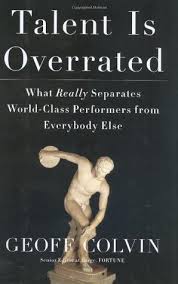
Talent Is Overrated: What Really Separates World-Class Performers from Everybody Else by Geoff Calvin

TALENT IS OVERRATED : WHAT REALLY SEPARATES WORLD CLASS PERFORMERS FROM EVERYBODY ELSE BY GEOFF CALVIN

1-Sentence-SummaryTalent Is Overrated debunks both talent and experience as the determining factors and instead makes a case for deliberate practice, intrinsic motivation and starting early. Not many books calm you down and make you excited to get going at the same time. This one does

One of the most popular Fortune articles in many years was a cover story called What It Takes to Be Great. Geoff Colvin offered new evidence that top performers in any field–from Tiger Woods and Winston Churchill to Warren Buffett and Jack Welch–are not determined by their inborn talents. Greatness doesn’t come from DNA but from practice and perseverance honed over decades.

And not just plain old hard work, like your grandmother might have advocated, but a very specific kind of work. The key is how you practice, how you analyze the results of your progress and learn from your mistakes, that enables you to achieve greatness.

Now Colvin has expanded his article with much more scientific background and real-world examples. He shows that the skills of business, negotiating deals, evaluating financial statements, and all the rest obey the principles that lead to greatness, so that anyone can get better at them with the right kind of effort. Even the hardest decisions and interactions can be systematically improved.

This new mind-set, combined with Colvin’s practical advice, will change the way you think about your job and career and will inspire you to achieve more in all you do.

Lessons from the Book

“People get extremely good at something because they work hard at it”.

In today’s business world the “scarce resource is no longer money, it’s human ability.”

“There’s more to life than work, and there’s more to be good at than your job”

Great performance is in our hands.

“Organisations are finding that the advantages of building a big reputation for developing people are even greater than they may have thought.”

Want to apply the principles of great performance in your organisation? Colvin would suggest you follow these rules:
  • Find ways to develop leaders within their jobs.
  • Encourage your leaders to be active in their communities.
  • Understand the critical roles of teachers and feedback: nothing stands in the way of good, regular feedback, except corporate culture.
  • Identify your high performers early: John Rice, General Electric’s vice chairman said that “Leadership capability can be evaluated on day one of employment.”
  • Developing people works best through inspiration, not authority.
  • Invest time, money and energy in developing people – it’s worth every bit.
  • Leadership development needs to be part of the culture.
  • Develop teams, not just individuals.
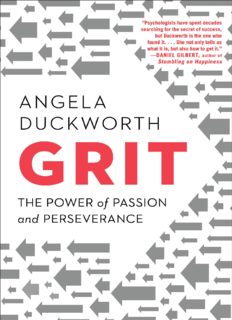
Grit – The Power of Passion and Perseverance by Angela Duckworth

GRIT – THE POWER OF PASSION AND PERSEVERANCE 
BY ANGELA DUCKWORTH

In this instant New York Times bestseller, pioneering psychologist Angela Duckworth shows anyone striving to succeed—be it parents, students, educators, athletes, or business people—that the secret to outstanding achievement is not talent but a special blend of passion and persistence she calls “grit.”

Drawing on her own powerful story as the daughter of a scientist who frequently noted her lack of “genius,” Duckworth, now a celebrated researcher and professor, describes her early eye-opening stints in teaching, business consulting, and neuroscience, which led to the hypothesis that what really drives success is not “genius” but a unique combination of passion and long-term perseverance.

In Grit, she takes readers into the field to visit cadets struggling through their first days at West Point, teachers working in some of the toughest schools, and young finalists in the National Spelling Bee. She also mines fascinating insights from history and shows what can be gleaned from modern experiments in peak performance. Finally, she shares what she’s learned from interviewing dozens of high achievers—from JP Morgan CEO Jamie Dimon to New Yorker cartoon editor Bob Mankoff to Seattle Seahawks Coach Pete Carroll.

The Book in Three Sentences

  1. The secret to outstanding achievement is not talent but grit: a special blend of passion and persistence.    
  2.  
  3. Grit is about having passion and perseverance for long-term goals.

  4. Gritty people are able to maintain their determination and motivation over long periods despite experiences with failure and adversity.

The Key Ideas


#1: The Psychology of Achievement: We consistently overestimate talent, but ignore the reality that effort counts twice. Skill requires talent and effort, and achievement requires skill and effort.

#2: Grit and Goal Structures: The grittiest high achievers tend to have a top-level goal (or “ultimate concern”) to which all their lower-level and middle-level goals coherently work.

#3: The Power of Passion and Practice: The grittiest embrace long-term deliberate practice. They work on weaknesses and develop a depth of interest in their specialism beyond the ordinary.

#4: The Guiding Light of Purpose and Hope: The gritty are optimistic self-improvers. They get up time and time again in the face of adversity.

#5: Creating Grit from the Outside In: Grit can be cultivated in our external environment, via parents and role models, extra-curricular activities, and teams and cultures.

Click here to read the book on Kindle 

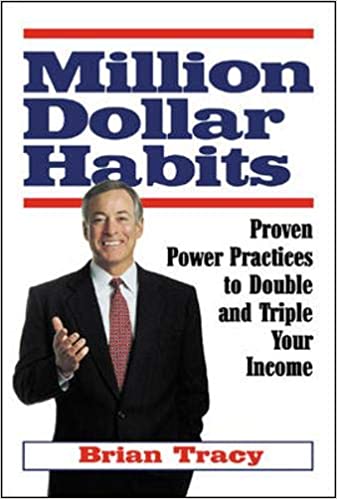
Million Dollar Habits – Proven Power Practices to Double and Triple Your Income by Brian Tracy

MILLION DOLLAR HABITS – PROVEN POWER PRACTICES TO DOUBLE AND TRIPLE YOUR INCOME 
BY BRIAN TRACY

You are what you are because of your own doing — this is what Million Dollar Habit by Brian Tracy primarily teaches readers. Nothing ever happens by accident or destiny. Your predicament, financial ranking, social status, and personalities are all defined by your choices. So if you want to become successful, you must take an active and conscious effort to get there, like all the other Millionaires who started from scratch.

But you may ask, where do you start? Author Tracy takes a step-by-step guide on developing a set of habits to begin your journey to financial independence. He provides all the essential theories, strategies, tips and explanations behind every Millionaire success story, and encourages readers to put it into practice.

Early on the book, Tracy discusses that raising your self-concept is important in achieving your fullest potential. The first component of the self-concept is the self-idea, which are your goals, dreams, and hopes about your future self. The second part is your self-image, which is how you see yourself in the present situation. The third component is self-esteem, which is the measure of how much you like yourself. The greater your perception is in these three components, the easier it is for you to adopt the Million Dollar Habits.

Key Lessons

Lesson 1: You are what you think

Most of what happen to our lives is the result of our actions and decisions. Whatever we feed our minds, we inevitably manifest. Therefore, the more we think positively, the more we do greater things.

Lesson 2: Habits make you successful

The only difference between successful people and unsuccessful people are habits.

Each one of us has the capacity to be successful; some just have not yet realized it. If we develop the set of habits stated in this book, we will set out on optimizing our fullest potential.

Lesson 3: Habits are difficult but essential to adopt

The keys to shedding old habits and developing new ones areperseverance and patience. It takes time, but it’s always possible if we don’t give up.

Lesson 4: Raising your self-concept motivates you to do better

We are more capable to improve ourselves once we boost our self-esteem.

Lesson 5: Importance of Self-discipline

Self-discipline is necessary to initiate your journey to success.

Planning is the first step to self-discipline. Don’t be haphazard in making choices. Things done in an organized and careful way assures a higher success rate.

Lesson 6: Make it happen

Don’t wait for things to happen; make it happen.

Lesson 7: Successful people have healthy relationships with people

Celebrating success by yourself does not yield that much happiness. Always keep the people you love close by yourself. Share success and happiness with others.

Lesson 8: Develop a healthy lifestyle

Above all, you must take care of your physical, mental, and emotional health.

Conclusion

You are capable of being successful, and you shall discover how to fulfill that potential by reading this wonderful book.

Although Million Dollar Habits seems centered around financial prosperity, this book tackles every aspect of a successful life. It is not simply philosophical and introspective, but actually gives out essential information and scientific data that may help us gain a positive outlook. Moreover, it is action-oriented, loaded with specific tasks and exercises for readers to practice in real life. This is a must-read for all entrepreneurs who are in the early stages of starting their own businesses. 

Click here to read the book

Zero to One – Notes on Startups, or How to Build the Future by Peter Thiel

ZERO TO ONE – NOTES ON STARTUPS, OR HOW TO BUILD THE FUTURE BY PETER THIEL

Summary: Zero to one  is an inside look at Peter Thiel’s philosophy and strategy for making your startup a success by looking at the lessons he learned from founding and selling PayPal, investing in Facebook and becoming a billionaire in the process.  A chess master under age 21, a doctorate in law by age 25, and a company sale for $1.5 billion at age 35.

Zero to one will teach you the way he thinks, how he approaches business, and what you can do to build your startup’s own future and shape the future of the world in the process.

If you want to build a better future, you must believe in secrets.

The great secret of our time is that there are still uncharted frontiers to explore and new inventions to create. In Zero to One, legendary entrepreneur and investor Peter Thiel shows how we can find singular ways to create those new things.

Thiel begins with the contrarian premise that we live in an age of technological stagnation, even if we’re too distracted by shiny mobile devices to notice. Information technology has improved rapidly, but there is no reason why progress should be limited to computers or Silicon Valley. Progress can be achieved in any industry or area of business. It comes from the most important skill that every leader must master: learning to think for yourself.


Doing what someone else already knows how to do takes the world from 1 to n, adding more of something familiar. But when you do something new, you go from 0 to 1. The next Bill Gates will not build an operating system. The next Larry Page or Sergey Brin won’t make a search engine. Tomorrow’s champions will not win by competing ruthlessly in today’s marketplace. They will escape competition altogether, because their businesses will be unique.
Lessons
1. Create a monopoly rather than competing with other businessesYou create a monopoly when you solve a unique problem, when you do something other companies don’t do, or when you do something so well nobody else can offer a reasonably close replacement.

2. From 0 to 1 : Make the new instead of copying the oldEvery moment in business happens only once. The next Bill Gates will not build an operating system. The next Larry Page or Sergey Brin won’t make a search engine. And the next Mark Zuckerberg won’t create a social network. If you are copying these guys, you aren’t learning from them.

3. The four sources of monopoly are : technology, networks, scale and brand. Peter Thiel says technology companies that create an enduring monopoly have a combination of these four characteristics.

4. Emphasise distribution/sales from the beginning, not as an afterthought. Sales, advertising and marketing are a core part of every successful business. Every startup needs to find a profitable channel of getting customers, whether they are running Facebook ads for low-cost products or training employees to sell high-priced products.

5. Dominate one small market first, then expand.  He says startups should start small. Find a group of people who are not being served, then offer a unique solution to them. That’s how to create a monopoly and escape competition. Then after you’ve dominated the niche market, you can expand into progressively larger markets.

6. Knowing a secret is the cornerstone of great businesses. Thiel says great businesses are centred around secrets, often hidden in plain sight. For example, Airbnb saw what others didn’t—the hidden supply of property owners having extra rooms they were willing to rent out at a lower price than expensive hotel rooms.

7. Entrepreneurship requires definite future plans rather than diversification. An entrepreneur cannot “diversify” herself: you cannot run dozens of companies at the same time and then hope that one of them works out well. Less obvious but just as important, an individual cannot diversify his own life by keeping dozens of equally possible careers in ready reserve.

8. Successful venture funds have mostly failed investments but one extreme winner. Conventional investing wisdom says we should diversify, putting our money into a variety of companies, some of which will do well and some will do poorly. But Thiel says in venture capital the only rule is to focus on finding those rare companies with the potential of growing into an extreme winner. Most startups simply don’t have that kind of potential.


The core lesson is that the best and most disruptive companies go “from zero to one,” from non-existence to existence, from no solution to solution, from nothing expected to something expected. Most companies, though, go from 1 to 1.1, or 1.1 to 1.11, they don’t make a huge disruptive change. To have a lasting impact, you must find a zero and create a new paradigm.


Zero to One presents at once an optimistic view of the future of progress in America and a new way of thinking about innovation: it starts by learning to ask the questions that lead you to find value in unexpected places.


The Perfect Formula Diet: How to Lose Weight and Get Healthy Now with Six Kinds of Whole Foods – Janice Stanger

THE PERFECT FORMULA DIET : HOW TO LOSE WEIGHT AND GET HEALTHY NOW WITH SIX KINDS OF WHOLE FOODS – JANICE STANGER

This simple, science-based, and affordable eating plan is built on six kinds of whole foods. You’ll melt stubborn weight permanently, reverse chronic illness, and feel the years melt away with the pounds. You can stay vigorous, healthy, lean, and looking good.

Donate your old diet books to a thrift store. Don’t they all give you pretty much the same advice? The Perfect Formula Diet, by using the full spectrum of fruits, vegetables, potatoes, beans, whole grains, nuts, seeds, herbs, and spices, gives you a new option that is fail-proof. Yes, you can enjoy bread, pasta, cereal, and baked potatoes (not to mention some occasional dark chocolate) and still wear size 6 pants.

Stop food cravings by giving your body what it needs. Maintain motivation with chapters of practical hints on strengthening commitment, shopping, eating out, lunching at work, and dining with friends. Choose from three options to get started on this eating plan gradually or on the fast track.

Forget hunger as you feast on plates and bowls of satisfying foods. No arbitrary portion control, calorie counting, or complicated diet rules. Throw away the tiny microwave meals that leave you famished for real food.

When you lose weight on the Perfect Formula Diet, your weight loss is permanent. You will not yo-yo or rebound to your prior weight as long as you follow this eating plan.

Enjoy life instead of warming the chair in your doctor’s waiting room. Discover the common processes (inflammation, growth factor, oxidation, unbalanced omega-3 and omega-6 fatty acids, hormones in food, toxic molecules from cooking) underlying most chronic illness (diabetes, arthritis, hypertension, headaches, cardiovascular disease, and more). You may reverse these processes through enjoyable food choices.

Learn about toxic chemicals in your everyday environment that can make you overweight by disrupting your hormones. Find out how to minimize this danger using both diet and personal care product choices.

Based on over 1,000 scientific studies, The Perfect Formula Diet is a jargon-free and fun read.


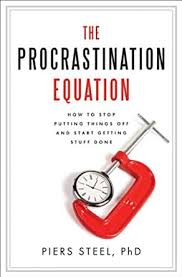
The Procrastination Equation: How to Stop Putting Things Off and Start Getting Stuff Done By Piers Steel

THE PROCRASTINATION EQUATION : HOW TO STOP PUTTING THINGS OFF AND START  GETTING STUFF  DONE
BY PIERS STEEL

Piers Steel is a recognized expert on topics like motivation and procrastination and in his book “The procrastination equation” he gives an equation you can use to analyze exactly why you procrastinate.

The Procrastination Equation

  • Different people procrastinate for different reasons, corresponding to the different variables in the Procrastination Equation: Motivation = (Expectancy x Value) / (Impulsiveness x Delay). Procrastination results from lowering Motivation too much.
    • Expectancy = how likely you think you are to reach your goal
    • Value = the value you place on the goal
    • Impulsiveness = how influenced you are by short-term vs. long-term gratifications
    • Delay = how far into the future the goal is
  • Understanding why you procrastinate is a major first step towards reducing procrastination.
    • The book has an assessment tool you can use to help you identify why you procrastinate.
  • Reasons for procrastination

    • Low Expectancy (= lack of optimism): Some people procrastinate because they lack the optimism that they’ll be able to achieve their goals, so why try too hard? 
    • High Expectancy (= overconfidence): This is the opposite of lack of optimism. People with this issue delay because “I can always do it later”. 
    • Low Value (= lack of enjoyment): Many people procrastinate because the goal isn’t high enough value to make them want to do the unenjoyable steps that lead up to it.
    • Tiredness (#1 reason for procrastination): This is really just a special case of the work being unenjoyable – people who are tired just want to relax and/or rest, not work.
    • Impulsiveness: People who are impulsive find it hard to focus on long-term goals and to keep from getting distracted or tempted along the way.

  • Suggestions   Goals should be:

      • Attainable but challenging (challenging is the more important)
        • Meaningful (tied to larger goals / values)
          • Short-term
            • [This reduces the Delay part of the Procrastination Equation.]
            • Day goals are good
            • 5-10 min. goals if main challenge is getting started
            • Specific
            • Break down large goals into sub-goals
            • Goals can be inputs (time worked) or outputs (words written) or both (e.g., whichever comes first)
          • Good habit formation makes work routine, subconscious, and effortless
            • Have a predictable environment, especially time and place
            • State an explicit intention to act, even just “if X happens then I’ll do Y” (really works!)
            • Habits are hard to start, and only start working after a bunch of repetitions, so keep that in mind when coming up with excuses for the first few times
            • Might be worth extra money to pay someone (coach, personal trainer, etc.) to help get it up and running

        • Set good goals

        The Procrastination Equation will teach you how to bust the excuses that are preventing you from doing your best work and living your best life….So don’t put it off any longer. 

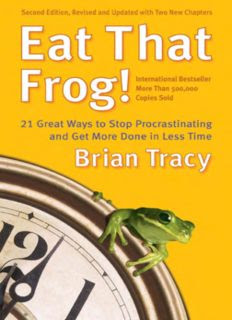
        Eat That Frog!_ 21 Great Ways to Stop Procrastinating and Get More Done in Less Time by Brian Tracy

        EAT THAT FROG – 21 WAYS TO STOP PROCRASTINATING AND GET MORE DONE IN LESS TIME  BY BRIAN TRACY

        Author Brian Tracy calls this “eating your frog,” quoting Mark Twain. Twain famously said that if the first thing you do in the morning is eat a live frog, you can go through the rest of the day knowing the worst is behind you. Your frog is your worst task, and you should do it first thing in the morning.

        Eat that Frog is a book written by Brian Tracy and it is a compilation of ideas and techniques from many influencers in the time management and personal productivity industry. The book covers many different ways of overcoming procrastination and it makes it very accessible for people to apply the techniques. It’s written in very simple terms – don’t expect any jargon or scientific studies to back up the methods. The advice given all comes from the real life experience of the author, and the focus of the book lies in actionable exercises and tips you implement right away

        There are 21 chapters and each chapter introduces a different idea, tip, or technique that will help you overcome procrastination and get more things done

        The Book in Three Sentences

        1. Your ‘frog’ is your biggest, most important task
        2. If you have two frogs, eat the ‘ugliest’ one first
        3. If you have to eat a frog, don’t procrastinate on it

        The Five Big Ideas

        1. “The key to reaching high levels of performance and productivity is to develop the lifelong habit of tackling your major task first thing each morning.”
        2. “Think about your goals and review them daily. Every morning when you begin, take action on the most important task you can accomplish to achieve your most important goal at the moment.”
        3. “Think on paper.”
        4. “Always work from a list.”
        5. “Your ability to choose between the important and the unimportant is the key determinant of your success in life and work.”
        A brief on the various chapters in the Book

         1. Set the Table  Think on paper.

        2. Plan Each Day in Advance. Always work from a list

        3. Apply the 80/20 Rule to Everything.   Before you begin work, always ask yourself, ‘Is this task in the top 20 percent of my activities or in the bottom 80 percent?’

        4. Consider the Consequences.  Long-term thinking improves short-term decision making.

        5. Apply Creative Procrastination.  The difference between high performers and low performers is largely determined by what they choose to procrastinate on.

        6. Use the ABCDE Method.  You start with a list of everything you have to do for the coming day. Think on paper. You then place an A, B, C, D, or E next to each item on your list before you begin the first task. A to do first then B, C is nice to do, D can be delegated, E can be eliminated.

        7. Focus On Key Result Areas.  What one skill, if I developed and did it in an excellent fashion, would have the greatest positive impact on my career?

        8. Apply The Law Of Three.   It is the quality of time at work that counts and the quantity of time at home that matters.

        9. Prepare Thoroughly Before You Begin.  Brian’s personal rule is “Get it 80 percent right and then correct it later.

        10. Take It One Step at a Time. Get your mind off the huge task in front of you and focus on a single action that you can take.

        11. Upgrade Your Key Skills.  Continuous learning is the minimum requirement for success in any field.

        12. Leverage Your Special Talents.  Continuously check your special talents and work on them to grow.

        13. Identify Your Key Constraints.  Successful people always begin the analysis of constraints by asking the question, “What is it in me that is holding me back?

        14. Apply Pressure On Yourself . Work as though you have only one day to get your most important jobs done.

        15. Maximize Your Personal Powers.  Whenever you feel overtired and overwhelmed with too much to do and too little time, stop yourself and just say, ‘All I can do is all I can do.

        16. Motivate Yourself Into Action.   Optimism is the most important quality you can develop for personal and professional success and happiness.

        17. Stop Technological Time Drain.  For you to stay calm, clearheaded, and capable of performing at your best, you need to detach on a regular basis from the technology and communication devices that can overwhelm you if you are not careful.

        18. Slice And Dice The Task. Cut a big task down to size using the “salami slice” method of getting work done.

        19. Create Large Chunks Of Time.  Make work appointments with yourself and then discipline yourself to keep them. Set aside thirty-, sixty- and ninety-minute time segments that you use to work on and complete important task.

        20. Develop A Sense Of Urgency.  When you work on your most important tasks at a high and continuous level of activity, you can actually enter into an amazing mental state called ‘flow.

        21. Single-Handle Every Task.  Single handling requires that once you begin, you keep working at the task without diversion or distraction until the job is 100 percent complete.


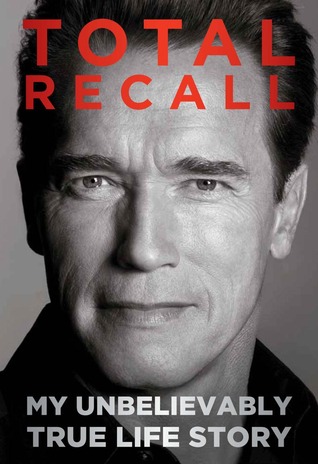
        Total Recall by Arnold Schwarzenegger

        TOTAL RECALL BY ARNOLD SCHWARZENEGGER

        One of the most anticipated autobiographies of this generation, Arnold Schwarzenegger’s Total Recall is the candid story by one of the world’s most remarkable actors, businessmen, and world leaders.

        Born in the small city of Thal, Austria, in 1947, Arnold Schwarzenegger moved to Los Angeles at the age of twenty-one. Within ten years, he was a millionaire businessman. After twenty years, he was the world’s biggest movie star. In 2003, he was elected governor of California and a household name around the world.

        Chronicling his embodiment of the American Dream, Total Recall covers Schwarzenegger’s high-stakes journey to the United States, from creating the international bodybuilding industry out of the sands of Venice Beach, to breathing life into cinema’s most iconic characters, and becoming one of the leading political figures of our time. Proud of his accomplishments and honest about his regrets, Schwarzenegger spares nothing in sharing his amazing story.

        “To be successful, you must be brutal with yourself and focus on the flaws.” 

        Arnold’s way to embrace failure

        One lesson from Arnold I liked very much was when he talked about how to embrace failure with a big smile instead of feeling bad.

        Quote

        ” That afternoon at the gym, I thought more about my loss to Frank Zane. Now that I’d stopped feeling sorry for myself, I came to harsher conclusions than those I’d reached the night before. I still felt the judging had been unfair, but I discovered this wasn’t the real cause of my pain. It was the fact that I had failed—not my body, but my vision and my drive. Losing to Chet Yorton in London in 1966 hadn’t felt bad because I’d done everything I could to prepare; it was just not my year. But something different had happened here. I was not as ripped as I could have been. I could have dieted the week before and not eaten so much fish and chips. I could have found a way to train more even without access to equipment: for instance, I could have done one thousand reps of abs or something that would have made me feel ready. I could have worked on my posing—nothing had stopped me from doing that. Never mind the judging; I hadn’t done everything in my power to prepare. Instead, I’d thought my momentum from winning in London would carry me. I’d told myself I’d just won Mr. Universe and I could let go. That was nonsense.

        Thinking this made me furious. “Even though you won the professional Mr. Universe contest in London, you are still a fucking amateur,” I told myself. “What happened here never should have happened. It only happens to an amateur. You’re an amateur, Arnold.”

        Staying in America, I decided, had to mean that I wouldn’t be an amateur ever again. Now the real game would begin. There was a lot of work ahead. And I had to start as a professional. I didn’t ever want to go away from a bodybuilding competition like I had in Miami. If I was going to beat guys like Sergio Oliva, that could never happen again. From now on if I lost, I would be able to walk away with a big smile because I had done everything I could to prepare.”


        Unquote


        Lessons from the book


        1. Forget Competing – Go into a battle to win and not compete.


        2. Your mind is what is holding you backOnce you believe in yourself, all you need is a second person to believe in you, and you can achieve amazing feats.


        3. Life is reps. The psychology of success that Arnold learned as a bodybuilder was something he used in everything else he went on to do in his career. Bodybuilding is about building muscle by doing repetitions (known as reps) of a certain exercise.


        4. Staying on top of the hill is harder than climbing itOnce Arnold reached the top in bodybuilding, he found himself at one point where he got lazy, complacent and distracted by study because he had already achieved his big goal. For him, it was harder to stay on top of the hill than climb it.


        5. Smile no matter what. Even when Arnold was lifting huge amounts of weight, he always had a smile on his face. The pain he must have been enduring in order to push such heavy weights should have made him look angry or frustrated. The reason he wasn’t angry or frustrated was because he had something on the other side of his goal to smile about.


        6. Passion hides the audienceThe first time Arnold did a proper TV interview he told the pre-interviewer that he doesn’t see the audience because he’s so passionate about what he’s talking about. By having the audience blocked out in his mind, he is able to minimise the nerves and stay focused.


        7. When they say no you hear yesThis could seem quite stupid, but it allows you to act in a way that is humble, brave, and unwavering in your pursuit. In a way, Arnold was lying to himself. He did this often, and these lies to himself are what allowed him only to see what he could do rather than what he couldn’t.


        8. Think beyond your own career. What was unique about Arnold’s bodybuilding career was that he felt it was his responsibility not just to make himself successful, but to use his success as a way to elevate and promote fitness. This is one of the primary reasons why he took part and became the star of the “Pumping Iron” documentary.


        9.  Make your peculiarities into assets. Instead of being embarrassed by his peculiarities he embraced and acknowledged them. He was vulnerable enough to trust his own abilities and to stay focused on how he could achieve his vision. The aspects that make you different can be utilised in the same way.


        10. You get harder and more durable the more you struggle. He knew that just like his muscles couldn’t grow without the struggle, neither could his mind or his life.


        11. The Whole world is not focused on your failureYour failure will consume you if you spend every waking minute thinking about how people are reacting to your pitfalls in life. Instead, focus on your next win and don’t dwell on the past.


        12. We need to look less at ourself and more at each other.  Entrepreneurship and life is not about you. This is why Arnold has been able to have so much success, and the people that have followed his footsteps have done the same. It’s one of the only secrets to success you need to understand to mirror his achievements.


        13. Be part of a cause that will outlive you. Find your cause, exploit it to your full potential, and serve the greater good.


        14. Celebrate the circumstances that traumatised youOur struggle defines us. In Arnold’s life, his father always put him down and physically hit him. When he was a kid this upset him, but as he grew older, he figured out that this pain and struggle is what motivated him to leave Austria and become world famous.


        Click here to read the book

        Getting Things Done – The Art of Stress Free Productivity by David Allen

        GETTING THINGS DONE – THE ART OF STRESS FREE PRODUCTIVITY –  BY DAVID ALLEN

        In today’s world, yesterday’s methods just don’t work. In Getting Things Done, veteran coach and management consultant David Allen shares the breakthrough methods for stress-free performance that he has introduced to tens of thousands of people.  Allen’s premise is simple: our productivity is directly proportional to our ability to relax. Only when our minds are clear and our thoughts are organized can we achieve effective productivity and unleash our creative potential. In Getting Things Done Allen shows how to:

        * Apply the “do it, delegate it, defer it, drop it” rule to get your in-box to empty
        * Reassess goals and stay focused in changing situations
        * Plan projects as well as get them unstuck
        * Overcome feelings of confusion, anxiety, and being overwhelmed
        * Feel fine about what you’re not doing

        From core principles to proven tricks, Getting Things Done can transform the way you work, showing you how to pick up the pace without wearing yourself down. 


        Major lessons from the book are.

            2 minute rule: if you remember to do something and it takes you less than two minutes to do it, just go ahead and do it.

            write things down in lists so that they don’t float around your head and nag at you all of the time.

            check your lists frequently and often, actually doing the things on the list (or delegating them, or archiving the info), otherwise you will lose faith in the system and it will never work.

             get a filing cabinet, label-maker, and shredder; create a simple filing system and use your filing system often.

            “tickler system” is a series of files for each day of the year. You file stuff away to be reminded or “tickled” on that specific day (i.e. magazine subscription renewal, buying tickets to a play, etc)
         .

        From core principles to proven tricks, Getting Things Done can transform the way you work, showing you how to pick up the pace without wearing yourself down. 


        <a href="” rel=”nofollow” style=”margin-left: 1em; margin-right: 1em;” target=”_blank”>

        The Habit of Winning by Prakash Iyer

        THE HABIT OF WINNING – STORIES TO INSPIRE, MOTIVATE AND UNLEASH THE WINNER WITHIN 
         BY PRAKASH IYER

        Motivation, positive attitudes and self beliefs together mold the success of individuals. Prakash Iyer’s Habit of Winning does not show the path to success, instead it shows one how to travel in the path towards success. 

        For this purpose, he has used the life stories of many achievers in diverse fields as evidence. Not only has he mentioned famous figures, but he has also cited examples of ordinary people. Success cannot be confined to a single aspect; it has many dimensions. This is the concept he delivers in each one of his stories. He has also written about goal planning, which is a crucial element for success. The Habit of Winning has made use of many interesting anecdotes throughout.

        Prakash Iyer has also included incidents from his personal and professional lives. Perception is an important factor which influences our attitude; he has illustrated this point in different ways. He also emphasizes the fact that strong determination and guts, along with a positive attitude can help everyone accomplish their goals in life. Using Rohit Sharma as an example, he has shown how a person can overcome mental barriers that inhibit our success.

        The various examples he has mentioned include cricketers such as Suresh Raina, Robin Utthapa, Navjot Singh Sidhu and Anil Kumble. In addition, he has also talked about what we can learn from the nature of animals such as cows and dogs. He has used the analogy of a caterpillar’s struggle to break out of the cocoon and emerge as a butterfly. 

        Key Features

        • His reference to famous individuals and how they fought the battles of their life is highly inspirational.
        • The Habit of Winning explains the key to success with proven examples from various people’s lives who have achieved their goals with persistent motivation.
        Few examples are given below.

        Don’t change your rabbit

        There are many rabbits running around you but if you try to chase all of them then you will end up with nothing. There are many opportunities to grab, many businesses to start but focus on one thing.  Even if you fail, change your tactics and strategies but don’t change your goals.

        Focus and persistence are key ingredients for success.

        Lesson : Identify rabbit you want to catch and focus only on that one. If you try and catch them all, you may end up with none. If the rabbit proves elusive change your tactics but don’t change the rabbit.

        Break your mental barrier

        In the 1950’s athletics, it was believed that human can not run a mile within 4 minutes. At that time the highest record of running was of 4 minutes & 1.4 seconds which was created in 1945 by Gunder Hegg & lasted for several years. Doctors believed that no human body can break this record without having significant damage to body.

        This 4-minute barrier continued until 1954 when Roger Bannister ran a mile in 3 minutes and 59.4 seconds. By the end of 1957, 16 other runners had broken the record & Doctors believed that no human body can break this record without having significant damage to body.

         What was happened? Have their bodies grown stronger. Actually not.

        What happened is that Roger not only broken the record but also broke the self
        limiting belief that no human can run a mile within 4 minutes. After breaking this
        barrier in mind other16 athelete’s also ran and broke the record.

        We all are like this. We carry our own self-limiting beliefs and never rise above that
        belief. We restrict our actions as well. So, what are your 4-minute barriers?

        Lesson: If you think you can, you can. If you think you can’t, you are right!


        Best Chess Teacher

        Offering courses for teaching chess from starter to intermediate level students, available online for all learners.

        Best Books to Read and Listen

        Best Books to Read and Listen

        Best Books to Read and Listen

        Best Books to Read and Listen

        WordCamp Nagpur 2019

        11th August – MIA Centre For Sports & Recreation

        Prabhat's Blog - Travel, Cricket and Shipbuilding

        Travel on shoestring budget, enjoy cricket

        Discover WordPress

        A daily selection of the best content published on WordPress, collected for you by humans who love to read.

        The Daily Post

        The Art and Craft of Blogging

        WordPress.com News

        The latest news on WordPress.com and the WordPress community.